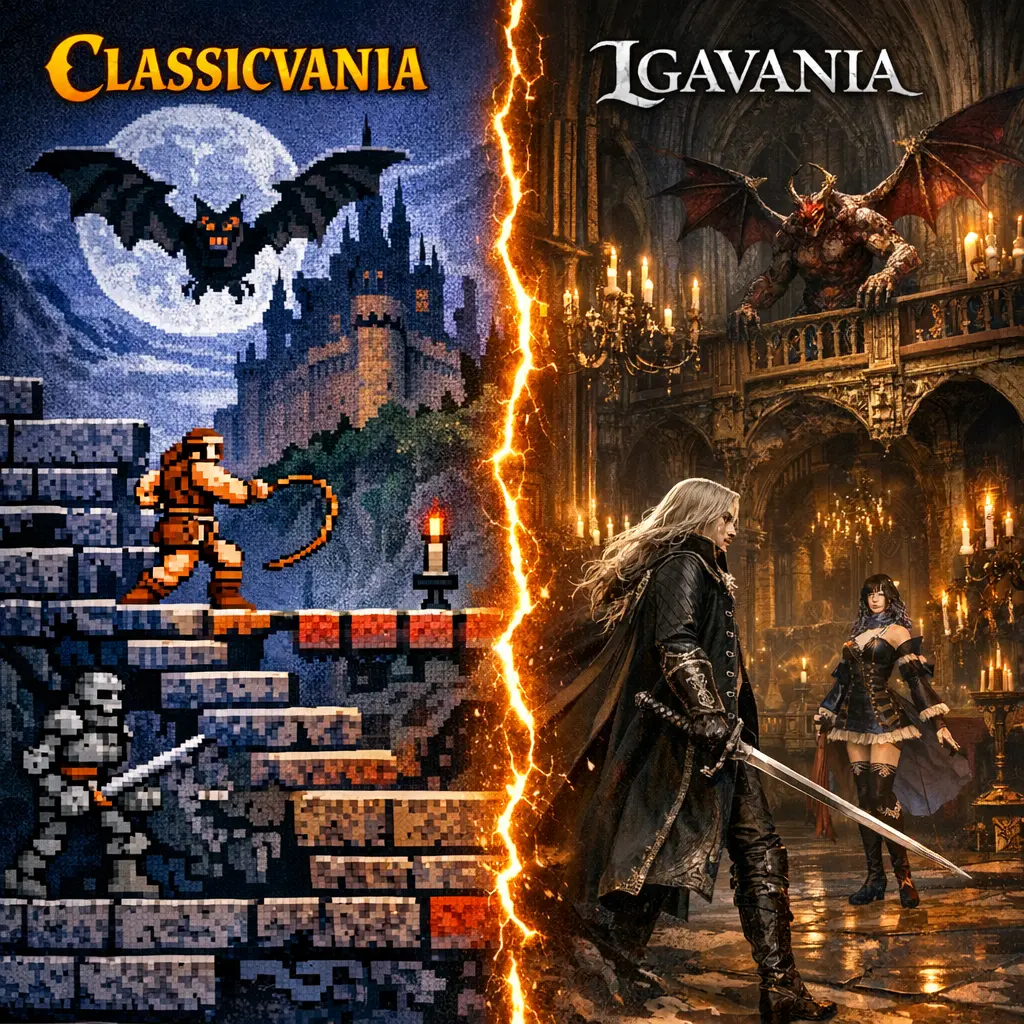
Castlevania "Classicvania" refers to the early series entries focused on linear, stage-based platforming with challenging action and limited exploration. In contrast, "Igavania" describes later games, especially those produced by Koji Igarashi, featuring open-ended, interconnected maps, RPG elements, and a focus on exploration and character progression. The distinction highlights the franchise’s evolution from straightforward action-platformers to more complex, exploration-driven experiences.
Castlevania Classicvania vs. Igavania
Castlevania "Classicvania" refers to the early series entries focused on linear, stage-based platforming with challenging action and limited exploration. In contrast, "Igavania" describes later games, especially those produced by Koji Igarashi, featuring open-ended, interconnected maps, RPG elements, and a focus on exploration and character progression. The distinction highlights the franchise’s evolution from straightforward action-platformers to more complex, exploration-driven experiences.
💡 Key Takeaways
- Distinguish Classicvania’s linear, stage-based design from Igavania’s open, interconnected maps.
- Describe how RPG elements (leveling, loot, gear) influence progression in Igavania games.
- Recognize Koji Igarashi’s influence on the genre and how it shaped Igavania titles.
- Compare pacing, exploration rewards, and map design to trace how Castlevania evolved from classic to Igavania.
❓ Frequently Asked Questions
What is Classicvania?
Classicvania refers to early Castlevania games that emphasize linear, stage-based action with challenging platforming and limited exploration.
What is Igavania?
Igavania is a term for later Castlevania titles, especially those by Koji Igarashi, featuring open-ended, interconnected maps and RPG-style progression.
How do map design and exploration differ between Classicvania and Igavania?
Classicvania uses self-contained, linear stages; Igavania uses a large, interconnected castle map with backtracking and hidden areas.
What RPG elements are common in Igavania games?
Experience-based leveling, equipment and stat upgrades, and optional side content or quests.
Can you name representative examples for each style?
Classicvania: Castlevania (1986) or Super Castlevania IV; Igavania: Castlevania: Symphony of the Night (1997).