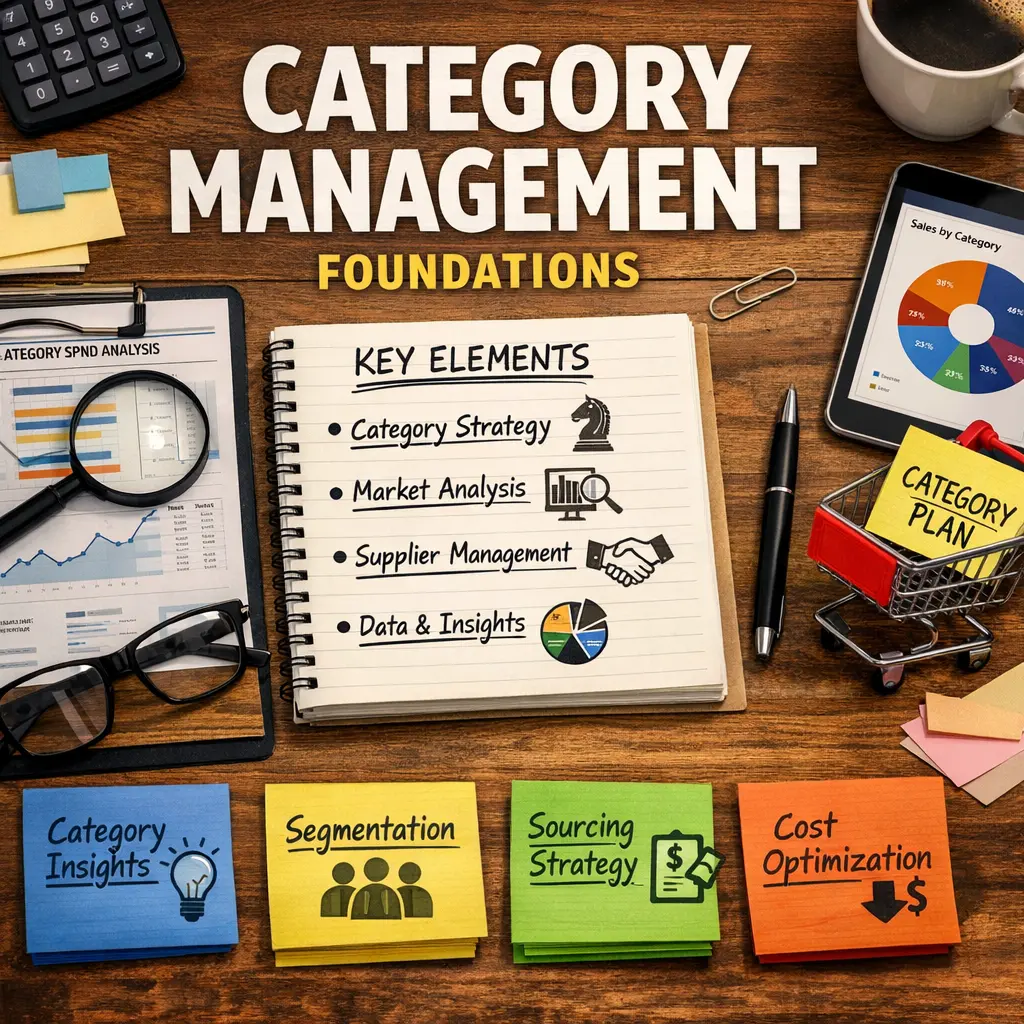
Category Management Foundations (Tender & Procurement) refers to the essential principles and practices involved in strategically managing groups of related products or services within procurement. It involves analyzing spend, understanding market dynamics, and developing sourcing strategies to maximize value and efficiency. The process includes running tenders, selecting suppliers, negotiating contracts, and managing supplier relationships, ensuring that procurement activities align with organizational goals and deliver cost savings, innovation, and risk mitigation.
Category Management Foundations
Category Management Foundations (Tender & Procurement) refers to the essential principles and practices involved in strategically managing groups of related products or services within procurement. It involves analyzing spend, understanding market dynamics, and developing sourcing strategies to maximize value and efficiency. The process includes running tenders, selecting suppliers, negotiating contracts, and managing supplier relationships, ensuring that procurement activities align with organizational goals and deliver cost savings, innovation, and risk mitigation.
💡 Key Takeaways
- Understand what category management is and why it matters for retailers and suppliers.
- Learn the core steps: data analysis, category role definition, strategy development, and execution.
- Explore how shopper insights and assortment optimization influence shelf plans and promotions.
- Identify key metrics and collaboration practices to monitor performance and drive ongoing improvements.
❓ Frequently Asked Questions
What is category management?
A strategic approach to sourcing and managing spend by grouping similar goods or services into categories, aligning procurement with business goals to maximize value.
What are the core steps in the category management process?
Define the category, collect and analyze data, segment and develop a strategy, create a category plan, execute sourcing and supplier management, and monitor performance to refine the approach.
How does data influence category management?
Data provides visibility into spend, demand, supplier performance, and market trends, enabling evidence-based decisions and smarter negotiation.
What is the role of cross-functional teams in category management?
Procurement, finance, operations, and business units collaborate to align objectives, share insights, and implement category strategies across the organization.
What metrics matter in category management?
Savings or value delivered, total cost of ownership, contract compliance, supplier performance, and cycle time for sourcing and onboarding.