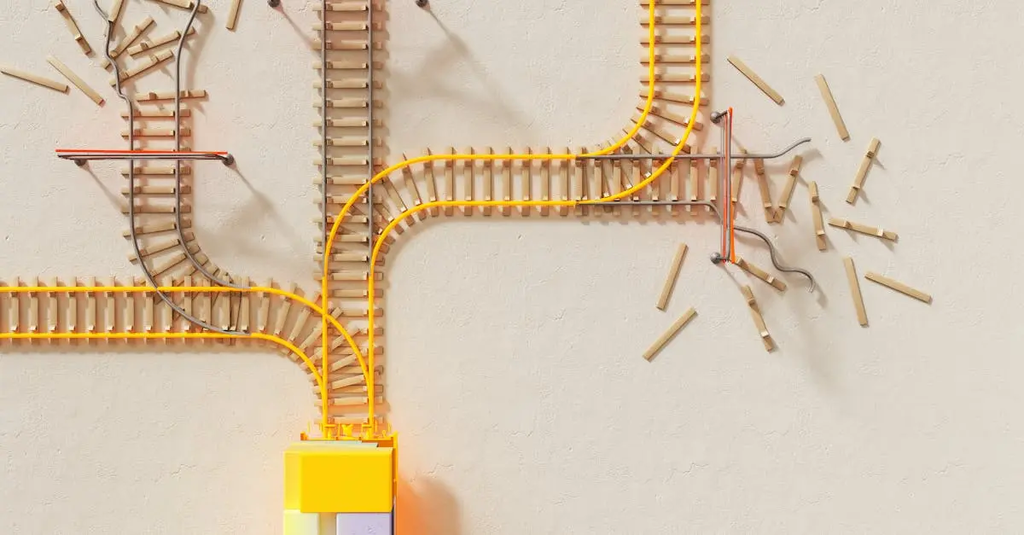
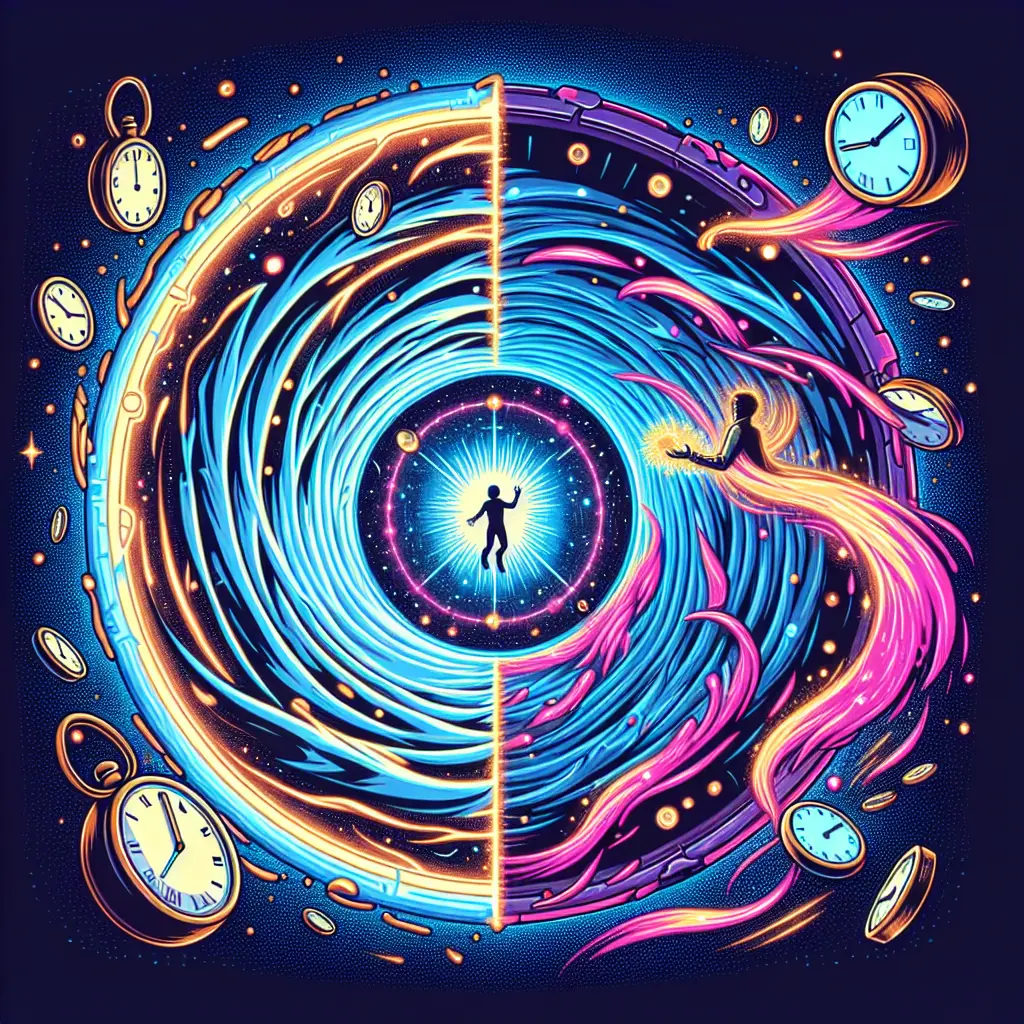
Causality violations occur when the normal sequence of cause and effect is disrupted, allowing effects to precede their causes. Bootstrap paradoxes are a specific type of causality violation where an object or information exists without a clear origin, often looping through time. For example, a person receives a book from their future self and later gives it to their past self, creating a paradox where the book has no true point of creation.
Causality Violations & Bootstrap Paradoxes
Causality violations occur when the normal sequence of cause and effect is disrupted, allowing effects to precede their causes. Bootstrap paradoxes are a specific type of causality violation where an object or information exists without a clear origin, often looping through time. For example, a person receives a book from their future self and later gives it to their past self, creating a paradox where the book has no true point of creation.
💡 Key Takeaways
- Understand what causality violations are and how they disrupt the normal cause-and-effect sequence.
- Learn how bootstrap paradoxes create looped objects or information with no clear origin.
- Identify common mechanisms and thought experiments used in time-travel fiction to illustrate paradoxes.
- Consider how sci-fi and cyber-future settings handle paradoxes, including worldbuilding strategies and hypothetical resolutions.
❓ Frequently Asked Questions
What is causality violation?
Causality violation is when the normal order of cause and effect is disrupted, such that an effect precedes its cause in time, a situation often discussed in time-travel scenarios.
What is a bootstrap paradox?
A bootstrap paradox is a causal loop in which an object or information exists without a clear origin, often because it is created or transmitted by someone from the future, thereby becoming its own cause.
What is a closed timelike curve (CTC)?
A closed timelike curve is a path in spacetime that returns to its starting point, allowing possible travel back in time and enabling potential causal loops.
How do physicists address bootstrap paradoxes?
Solutions include the Novikov self-consistency principle (events on a loop must be self-consistent), the many-worlds interpretation with branching timelines, and ideas that quantum effects might prevent such loops (chronology protection conjecture).
Are causality violations or bootstrap paradoxes observed?
No experimental evidence supports real causality violations; these ideas are theoretical or fictional concepts used to explore time-travel scenarios.