Change management in AI workflows refers to the structured approach for transitioning individuals, teams, and organizations when implementing or updating artificial intelligence systems. It involves planning, communication, training, and support to ensure smooth adoption and minimize resistance. Effective change management addresses concerns, aligns stakeholders, and ensures that new AI tools or processes integrate seamlessly with existing workflows, ultimately enhancing productivity and achieving desired business outcomes.
Change management in AI workflows
Change management in AI workflows refers to the structured approach for transitioning individuals, teams, and organizations when implementing or updating artificial intelligence systems. It involves planning, communication, training, and support to ensure smooth adoption and minimize resistance. Effective change management addresses concerns, aligns stakeholders, and ensures that new AI tools or processes integrate seamlessly with existing workflows, ultimately enhancing productivity and achieving desired business outcomes.
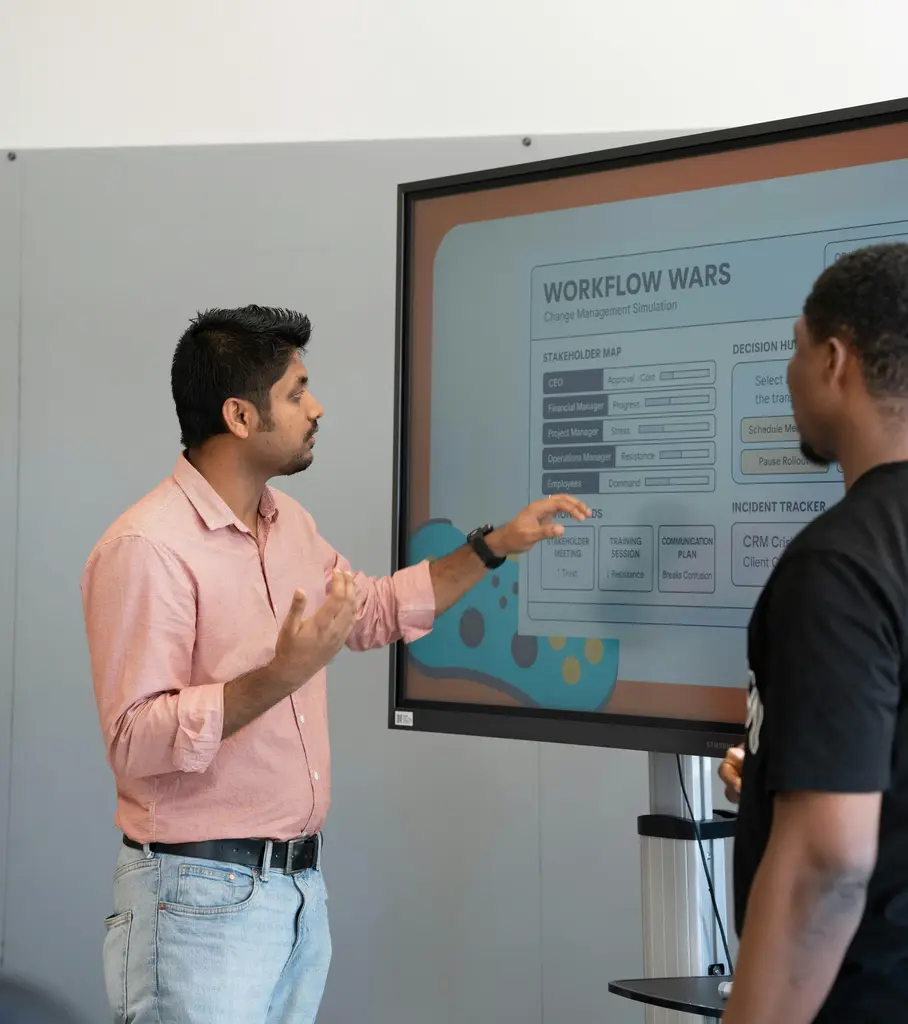
💡 Key Takeaways
- Understand why change management is essential for safe and effective AI deployments.
- Learn the core components of an AI change plan: planning, communication, training, and ongoing support.
- Discover strategies to engage stakeholders and minimize resistance during AI transitions.
- Recognize operational risk considerations for AI changes, including governance, monitoring, and metrics.
❓ Frequently Asked Questions
What is change management in AI workflows?
A structured approach to planning, communicating, training, and supporting people and processes during AI system changes to minimize disruption and ensure adoption.
Why is change management essential when deploying or updating AI systems?
It reduces resistance, aligns stakeholders, ensures governance and data readiness, and improves adoption and realized benefits.
What are the main components of an effective change management plan for AI?
Stakeholder analysis, clear communication, training and upskilling, governance and risk controls, rollout and support, and measurement of adoption.
How should training be approached in AI change management?
Provide role-based training, hands-on practice with new AI tools, ongoing support, and feedback loops to refine materials and approaches.