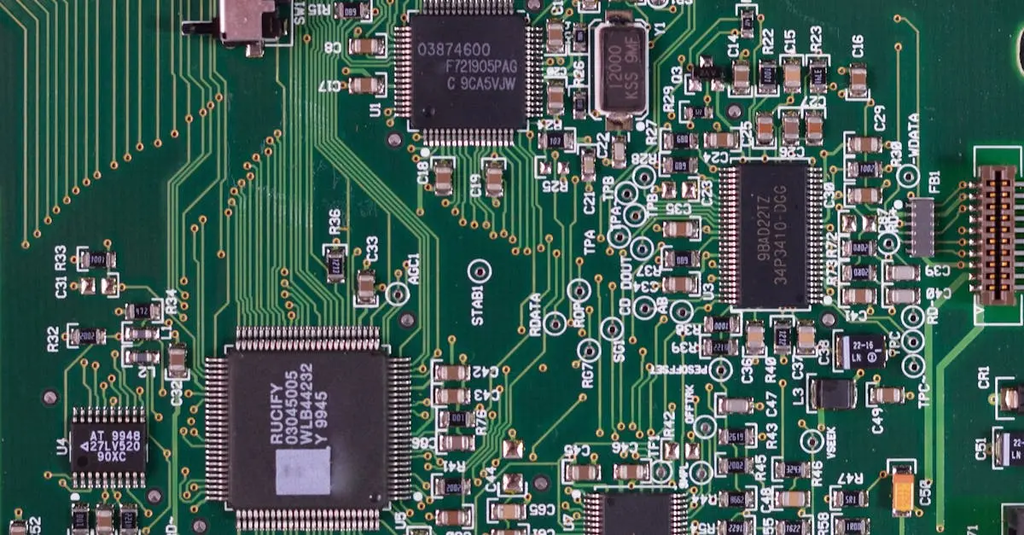
Resistors and capacitors are fundamental components in electrical circuits. Resistors limit or control the flow of electric current, helping to protect components and manage voltage levels. Capacitors store and release electrical energy, often used to smooth voltage fluctuations, filter signals, or provide bursts of power. Together, these components are essential for building, controlling, and stabilizing electronic devices and circuits, forming the basis of many electrical systems.
Circuit Components: Resistors & Capacitors+50
Resistors and capacitors are fundamental components in electrical circuits. Resistors limit or control the flow of electric current, helping to protect components and manage voltage levels. Capacitors store and release electrical energy, often used to smooth voltage fluctuations, filter signals, or provide bursts of power. Together, these components are essential for building, controlling, and stabilizing electronic devices and circuits, forming the basis of many electrical systems.
💡 Key Takeaways
- Understand how resistors control current and drop voltage in circuits using Ohm's law and series/parallel configurations.
- Explain how capacitors store energy, charge/discharge behavior, and how capacitance affects circuit response.
- Apply the RC time constant concept (tau = R × C) to predict charging and discharging in simple RC networks.
- Recognize practical considerations and common applications of resistors and capacitors, including tolerances, power/voltage ratings, and polarity for electrolytic capacitors.
❓ Frequently Asked Questions
What is a resistor and what does it do?
A resistor limits or controls current in a circuit by providing a defined resistance (ohms). It follows Ohm's law: V = IR.
What is a capacitor and what does it do?
A capacitor stores electrical energy as charge in an electric field. It smooths voltages, blocks DC, and passes AC; its value is measured in farads.
What is the RC time constant and why is it important?
For a resistor-capacitor pair, tau = RC sets how quickly the capacitor charges or discharges. Charging: Vc(t) = V(1 − e^(−t/RC)); discharging: Vc(t) = V0 e^(−t/RC).
How do you read resistor color codes?
Color bands encode resistance: the first two bands are digits, the third is the multiplier, and the fourth (if present) is tolerance.