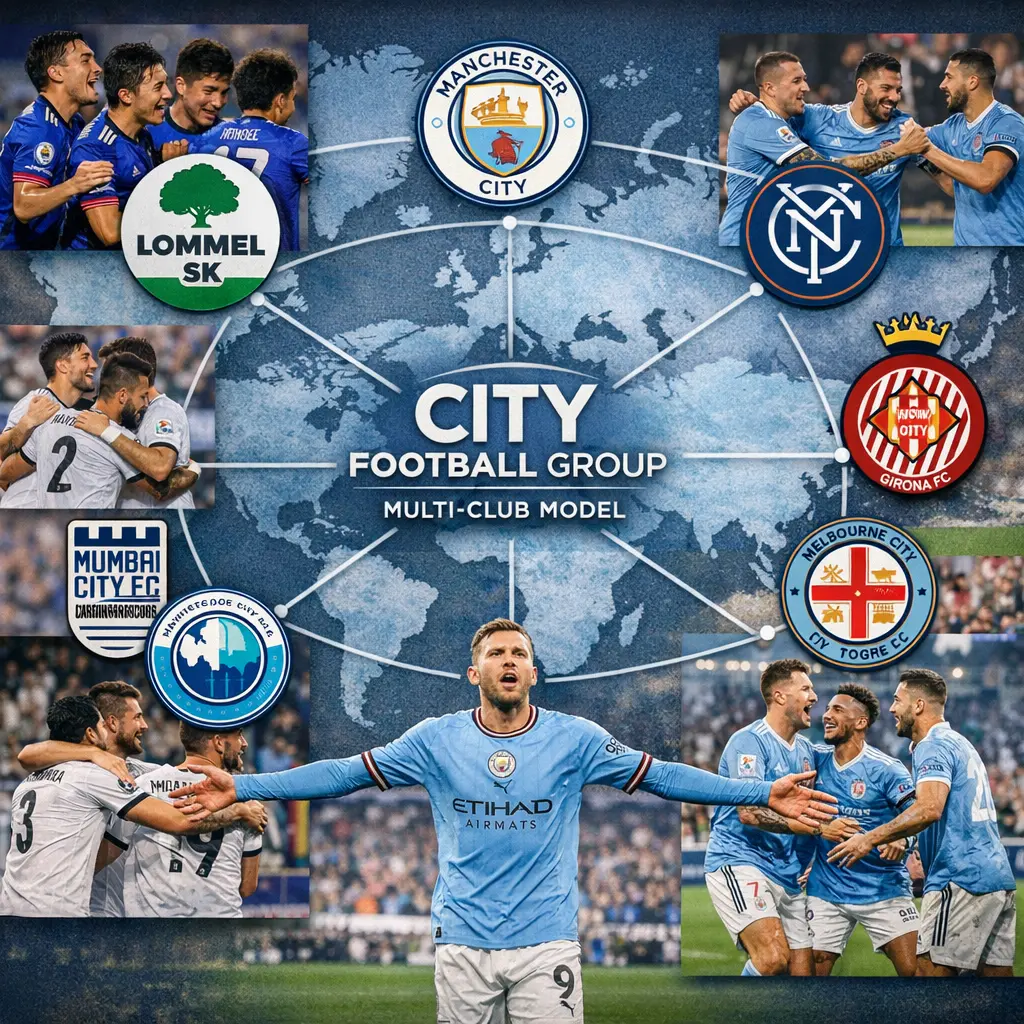
City Football Group is a global football organization that owns Manchester City F.C. and several other clubs worldwide. Its multi-club model involves acquiring and managing teams across various continents, sharing resources, scouting networks, and expertise. This strategy enhances talent development, commercial opportunities, and brand recognition, while facilitating player transfers and operational efficiencies among its clubs. Manchester City serves as the flagship team, benefiting from shared knowledge and a global football ecosystem.
City Football Group: Multi-Club Model
City Football Group is a global football organization that owns Manchester City F.C. and several other clubs worldwide. Its multi-club model involves acquiring and managing teams across various continents, sharing resources, scouting networks, and expertise. This strategy enhances talent development, commercial opportunities, and brand recognition, while facilitating player transfers and operational efficiencies among its clubs. Manchester City serves as the flagship team, benefiting from shared knowledge and a global football ecosystem.
💡 Key Takeaways
- Understand the concept of a multi-club ownership model and why City Football Group pursues it.
- Learn how CFG coordinates shared resources—scouting, analytics, coaching, and development—across its clubs.
- See how player development works within the network, including loans and progression to first teams.
- Discuss the benefits and criticisms of the model, including brand strength, talent pipelines, and potential conflicts of interest.
❓ Frequently Asked Questions
What is the City Football Group's multi-club model?
CFG’s multi-club model involves owning or investing in several football clubs worldwide, operating under a shared framework of scouting, coaching, analytics, and development to funnel players toward Manchester City and expand the group’s reach.
What are the main benefits of CFG's multi-club approach?
Access to a wider talent pool, cost efficiencies from centralized services (scouting, data, medical), a clear player development pathway, and enhanced global branding and sponsorship opportunities.
How do CFG clubs collaborate on scouting and development?
CFG runs a centralized scouting network and uses shared analytics and coaching philosophies across clubs, with players often loaned or transferred between clubs to gain experience and progress toward the flagship team.
What are common criticisms or challenges of a multi-club model?
Potential conflicts over player movement, unequal resources among clubs, risks to competitive balance, and regulatory scrutiny related to transfers and competition rules.