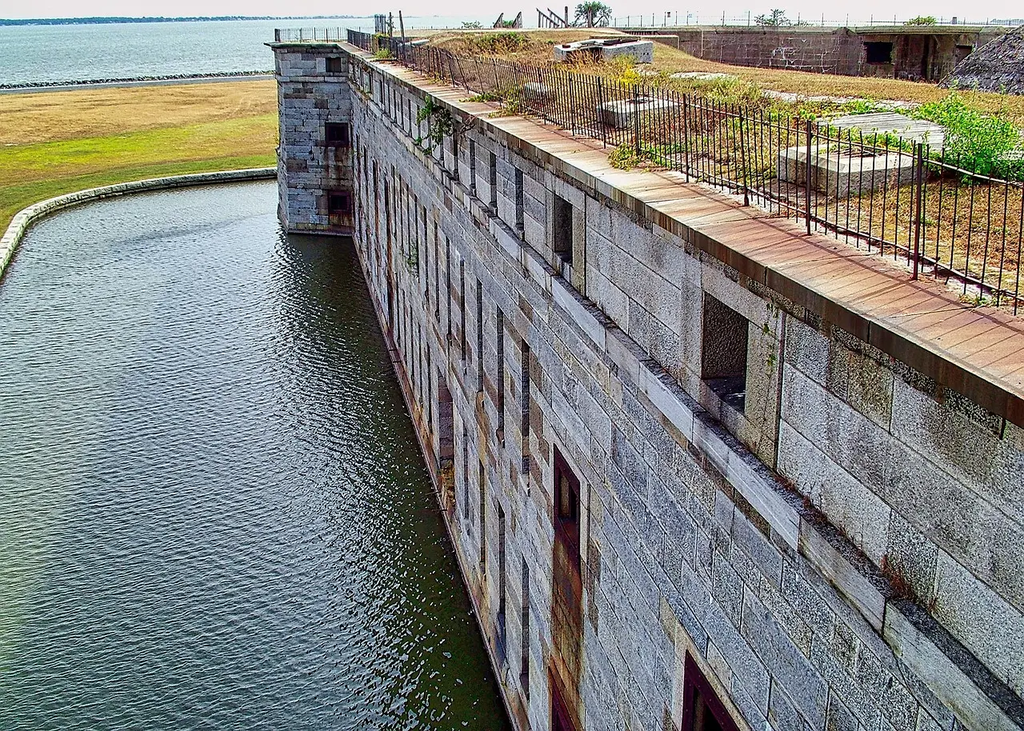
Civil War Coastal Forts and Freedom's Fortress at Fort Monroe refers to the network of strongholds built along the U.S. coastline during the Civil War, with Fort Monroe in Virginia being especially significant. Known as "Freedom's Fortress," Fort Monroe became a refuge for enslaved people seeking freedom after Union forces declared them "contraband of war." The site symbolizes both military strategy and a pivotal step toward emancipation during the conflict.
Civil War Coastal Forts and Freedom's Fortress at Fort Monroe
Civil War Coastal Forts and Freedom's Fortress at Fort Monroe refers to the network of strongholds built along the U.S. coastline during the Civil War, with Fort Monroe in Virginia being especially significant. Known as "Freedom's Fortress," Fort Monroe became a refuge for enslaved people seeking freedom after Union forces declared them "contraband of war." The site symbolizes both military strategy and a pivotal step toward emancipation during the conflict.
💡 Key Takeaways
- Understand the strategic role of Civil War coastal forts in defending harbors, enforcing blockades, and securing sea lanes.
- Learn why Fort Monroe is nicknamed 'Freedom's Fortress' and how it became a sanctuary for enslaved people seeking liberty.
- Discover the Contraband of War concept at Fort Monroe and its impact on emancipation efforts.
- Explore the design, location, and armament of coastal forts and how geography shaped their defenses.
- Recognize how a network of coastal forts along the Atlantic and Gulf coasts supported Union military operations.
❓ Frequently Asked Questions
What were Civil War coastal forts and why were they built?
They were fortifications along U.S. coastlines built or reinforced during the Civil War to defend harbors, protect supply lines, and deter Confederate attacks.
Why is Fort Monroe called 'Freedom's Fortress'?
Because it served as a refuge for enslaved people seeking liberty after Union forces occupied the fort, becoming a symbol of emancipation.
What is Fort Monroe's significance in Virginia?
It was a major Union stronghold on Hampton Roads and the largest stone fort; it played a key role in emancipation and is now designated as Fort Monroe National Monument.
What does the term 'contraband' mean in this context, and how does Fort Monroe relate?
'Contraband' referred to enslaved people who escaped to Union lines; Fort Monroe offered them asylum, highlighting the war's impact on freedom.
Can you visit Fort Monroe today?
Yes. As part of Fort Monroe National Monument, it preserves Civil War history and offers educational resources; check the National Park Service for current hours and access.