Cleanroom and controlled environment construction refers to specialized building techniques and technologies used to create spaces with tightly regulated levels of contaminants, temperature, humidity, and airflow. These environments are essential for industries like pharmaceuticals, electronics, and biotechnology, where even minor impurities can compromise product quality. Construction involves meticulous planning, use of advanced materials, air filtration systems, and strict adherence to standards to ensure spaces remain contaminant-free and maintain precise environmental conditions.
Cleanroom and Controlled Environment Construction
Cleanroom and controlled environment construction refers to specialized building techniques and technologies used to create spaces with tightly regulated levels of contaminants, temperature, humidity, and airflow. These environments are essential for industries like pharmaceuticals, electronics, and biotechnology, where even minor impurities can compromise product quality. Construction involves meticulous planning, use of advanced materials, air filtration systems, and strict adherence to standards to ensure spaces remain contaminant-free and maintain precise environmental conditions.
💡 Key Takeaways
- Understand the purpose of cleanrooms and how ISO/class levels guide construction decisions.
- Learn how HVAC, filtration (HEPA/ULPA), and airflow design affect cleanliness.
- Identify essential construction features: materials, seamless finishes, joints, doors, and vibration control.
- Recognize validation and contamination-control steps (particle testing, differential pressure, leak checks, and gowning) used to ensure compliance.
❓ Frequently Asked Questions
What is a cleanroom and why is it used?
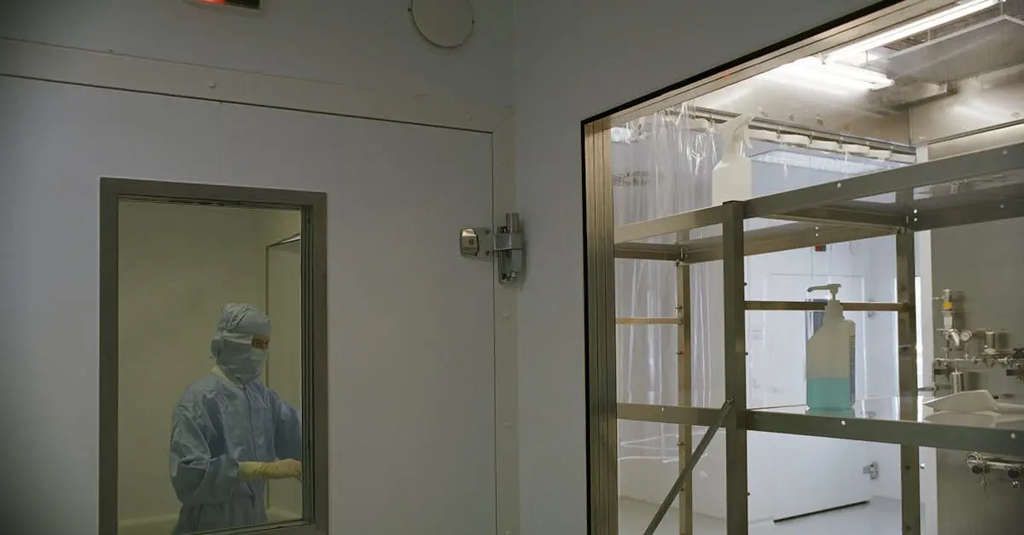
A cleanroom is a controlled environment designed to minimize airborne particulates and environmental variations (temperature, humidity). It protects products and processes in industries like pharmaceuticals, electronics, and biotechnology by using filtered air, cleanable surfaces, and controlled airflow.
How is a cleanroom classified according to ISO 14644, and what do the classes mean?
ISO 14644 classifications specify maximum allowable particle counts per cubic meter at 0.5 μm and smaller. Lower class numbers mean cleaner air (e.g., ISO 5 is very clean; ISO 8 is less strict). Class is determined via validated particle counting and monitoring.
What are essential design and construction features of a cleanroom?
Smooth, cleanable surfaces (stainless steel, epoxy); seamless floors; properly sealed walls and penetrations; dedicated HVAC with HEPA/ULPA filtration; controlled pressure, airflow patterns, and sufficient air changes per hour; anterooms and pass-throughs; and validated installation.
What is the difference between HEPA and ULPA filters, and where are they used?
HEPA filters remove ≥99.97% of 0.3 μm particles, while ULPA filters remove ≥99.999% of 0.12 μm particles. ULPA provides higher filtration efficiency for ultra-clean environments but with higher pressure drop and cost; selection depends on required cleanroom class and process sensitivity.