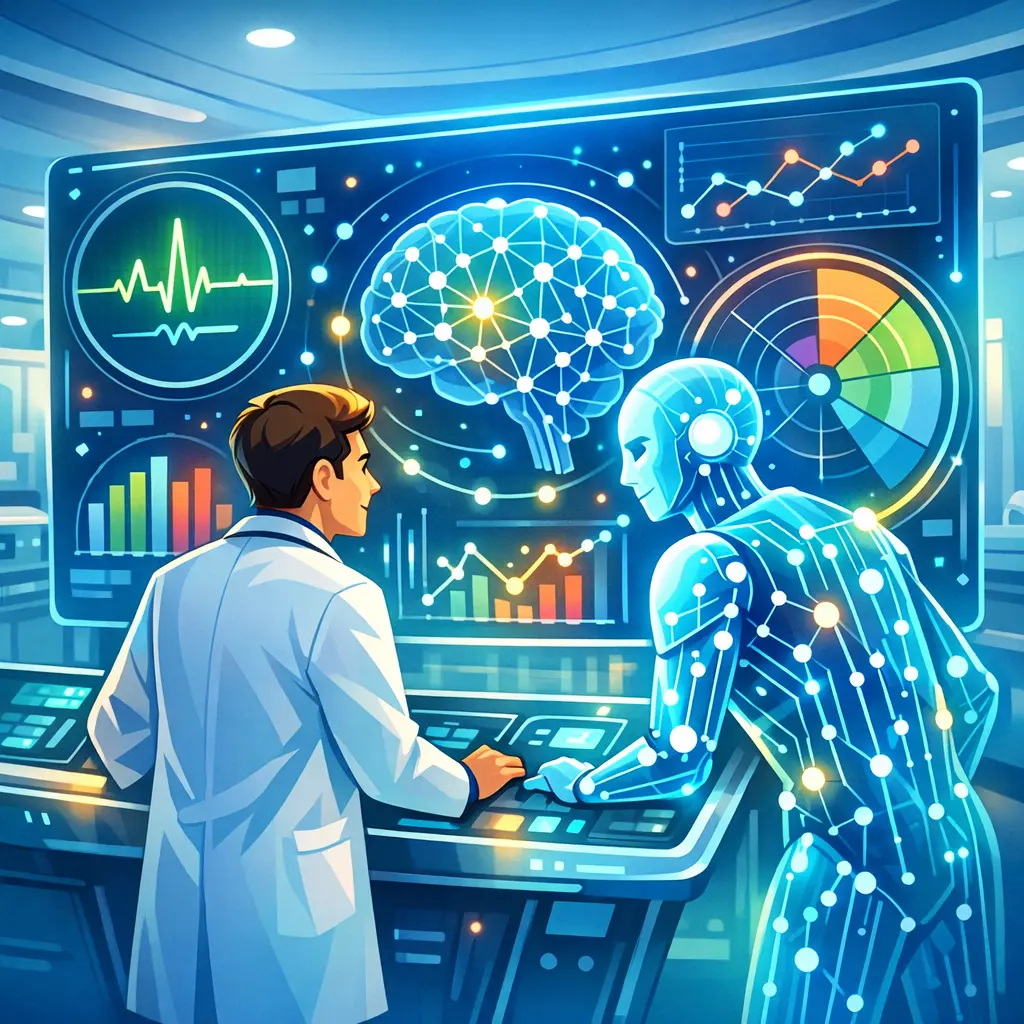
Clinical Decision Support (CDS) and Artificial Intelligence (AI) are transforming healthcare and medicine careers by providing tools that assist clinicians in making informed decisions. CDS systems use patient data and evidence-based guidelines to offer recommendations, while AI analyzes large datasets to identify patterns, predict outcomes, and personalize treatment. These technologies enhance diagnostic accuracy, improve patient care, and streamline workflows, creating new roles for healthcare professionals in data analysis, system development, and implementation.
Clinical Decision Support & AI
Clinical Decision Support (CDS) and Artificial Intelligence (AI) are transforming healthcare and medicine careers by providing tools that assist clinicians in making informed decisions. CDS systems use patient data and evidence-based guidelines to offer recommendations, while AI analyzes large datasets to identify patterns, predict outcomes, and personalize treatment. These technologies enhance diagnostic accuracy, improve patient care, and streamline workflows, creating new roles for healthcare professionals in data analysis, system development, and implementation.
💡 Key Takeaways
- Understand what clinical decision support (CDS) is and how AI can augment it in patient care.
- Identify common AI-powered CDS tools (risk calculators, diagnostic aids, treatment recommendations) and their use cases.
- Recognize benefits (faster decisions, consistency) and risks (bias, overreliance, safety) of AI in CDS.
- Learn how AI-CDS integrates with electronic health records (EHRs) and clinician workflows.
- Know how to evaluate AI-CDS tools for safety, effectiveness, and ethical considerations in real-world settings.
❓ Frequently Asked Questions
What is Clinical Decision Support (CDS) and how does AI help?
CDS provides patient-specific recommendations or alerts to clinicians. AI analyzes large data to uncover patterns, supporting risk assessment, diagnosis, and treatment options while leaving final decisions to clinicians.
How is AI integrated into a Clinical Decision Support system?
AI models are embedded in CDS or EHR platforms and use patient data to generate alerts, risk scores, and suggestions. They require proper training, validation, and ongoing monitoring.
What are the key benefits and risks of AI-powered CDS?
Benefits include faster insights and standardized guidance. Risks involve data bias, errors from poor data quality, overreliance, limited explainability, and privacy concerns; clinician oversight is essential.
What do we mean by explainability and validation in AI CDS?
Explainability means showing why a recommendation was made. Validation evaluates performance on new data and in real-world use to ensure safety and effectiveness.