Manchester City F.C. was founded in 1880 as St. Mark’s (West Gorton), later becoming Ardwick A.F.C. before adopting the Manchester City name in 1894. The club has experienced periods of success and struggle, including early FA Cup and league triumphs, financial difficulties, and relegations. Since 2008, significant investment has transformed City into a dominant force in English and European football, winning multiple Premier League titles and domestic trophies.
Club History & Foundation (1880-Present)+50
Manchester City F.C. was founded in 1880 as St. Mark’s (West Gorton), later becoming Ardwick A.F.C. before adopting the Manchester City name in 1894. The club has experienced periods of success and struggle, including early FA Cup and league triumphs, financial difficulties, and relegations. Since 2008, significant investment has transformed City into a dominant force in English and European football, winning multiple Premier League titles and domestic trophies.
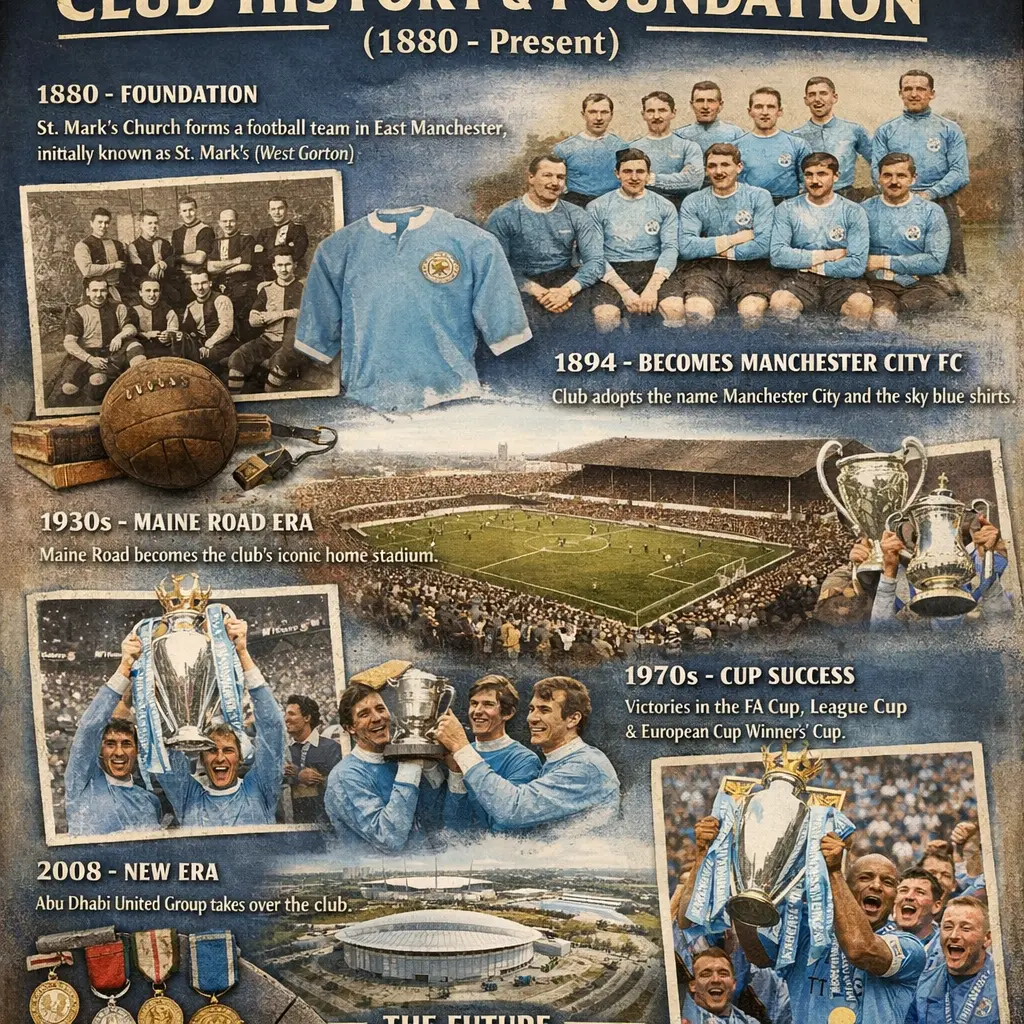
💡 Key Takeaways
- Trace the club's founding in 1880 and the social context behind its creation.
- Identify key historical periods and milestones that shaped its development up to the present.
- Explain how governance, membership, and facilities evolved over time.
- Describe the club's impact on the local community and enduring traditions.
❓ Frequently Asked Questions
What does 'founded' mean in club history, and how is a founding date determined?
The founding date is when the club was legally formed or first recognized as a formal organization; verify with charter, bylaws, incorporation papers, or earliest meeting records, noting that informal beginnings may precede formal status.
What kinds of milestones typically mark a club's history from 1880 to the present?
Milestones include the founding, early activities, first major achievements, leadership changes, relocations, name changes, mergers or rebrandings, expansions, and notable anniversaries.
How can I verify a club's early history or founding date?
Check official club archives and history pages, charter or bylaws, governing-body records, local newspapers, yearbooks, and museum or library archives; compare multiple sources for accuracy.
Why is understanding foundation and early history helpful for answering quiz questions?
It provides context for dating events, explains era-specific terminology or naming, and helps interpret clues about location, leadership, or evolution that quizzes may reference.