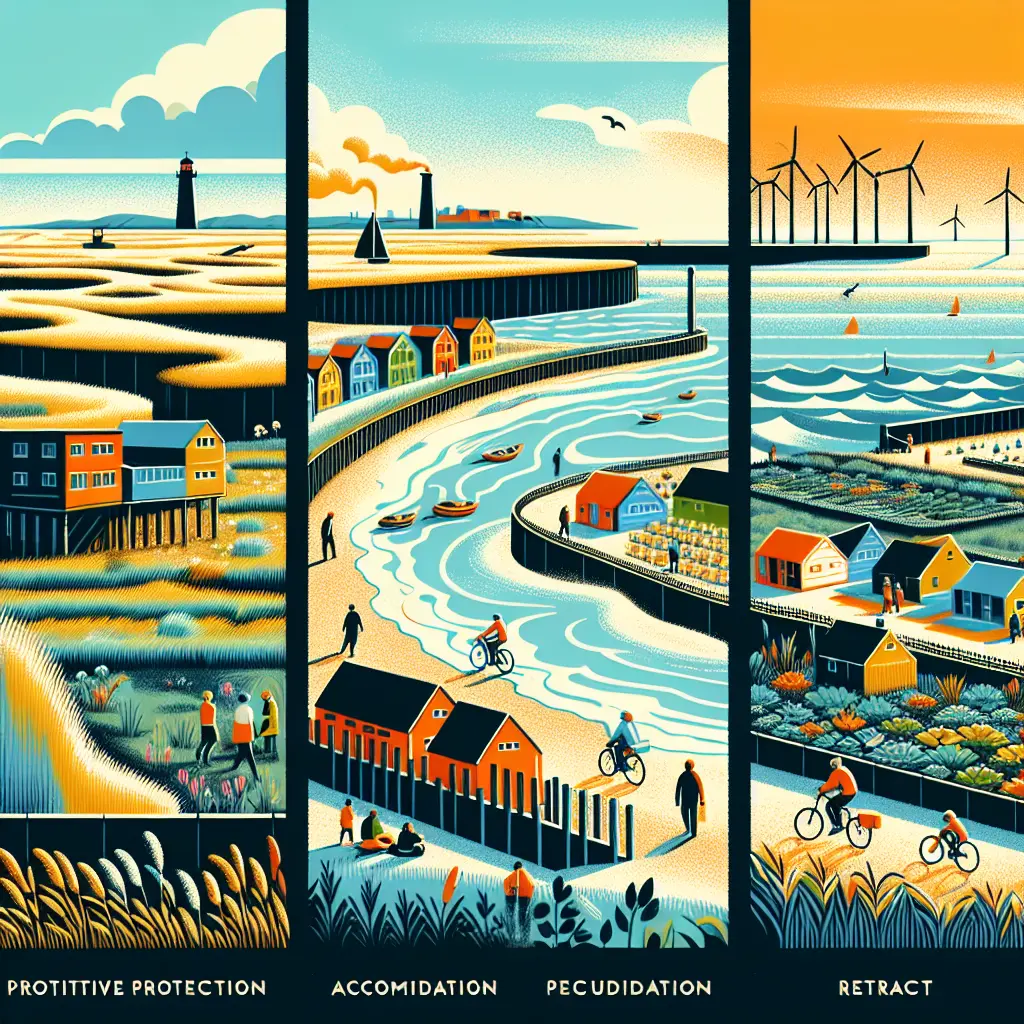
Coastal Adaptation Pathways: Protect, Accommodate, Retreat refers to strategies for managing coastal areas threatened by sea-level rise and climate change. "Protect" involves building barriers or defenses to shield communities, "Accommodate" means adjusting living or infrastructure to tolerate changes, and "Retreat" entails relocating people or assets away from vulnerable zones. These pathways help policymakers choose flexible, long-term responses to evolving coastal risks, balancing environmental, economic, and social considerations.
Coastal Adaptation Pathways: Protect, Accommodate, Retreat
Coastal Adaptation Pathways: Protect, Accommodate, Retreat refers to strategies for managing coastal areas threatened by sea-level rise and climate change. "Protect" involves building barriers or defenses to shield communities, "Accommodate" means adjusting living or infrastructure to tolerate changes, and "Retreat" entails relocating people or assets away from vulnerable zones. These pathways help policymakers choose flexible, long-term responses to evolving coastal risks, balancing environmental, economic, and social considerations.
💡 Key Takeaways
- Define the three Coastal Adaptation Pathways: Protect, Accommodate, and Retreat, and how they apply to sea level rise and climate change in U.S. coasts.
- Identify common Protect measures (sea walls, levees, dune restoration) and discuss their benefits and environmental trade-offs.
- Explain Accommodate strategies that modify buildings and infrastructure (elevation, floodproofing, redesigned drainage) to tolerate change.
- Discuss when Retreat (managed retreat) may be appropriate, including governance, equity, and cost considerations in American contexts.
❓ Frequently Asked Questions
What are coastal adaptation pathways?
A set of strategies for managing coastal areas facing sea-level rise and climate impacts, commonly described as Protect, Accommodate, and Retreat to reduce risk over time.
What does 'Protect' mean in coastal adaptation?
Protect involves building barriers and defenses (e.g., seawalls, levees, dunes) to shield communities and assets from flooding and erosion.
What does 'Accommodate' mean in coastal adaptation?
Accommodate means adjusting land use and infrastructure to tolerate higher water levels or more frequent flooding, such as elevating buildings, floodproofing, and flexible zoning.
What does 'Retreat' mean in coastal adaptation?
Retreat, or managed retreat, involves moving people, homes, and critical facilities away from vulnerable coastal areas through planning, buyouts, and relocation.
How are these pathways chosen and used over time?
Choices depend on risk, cost, feasibility, and equity; communities may start with Protect, shift to Accommodate, and, if needed, pursue Retreat as conditions worsen.