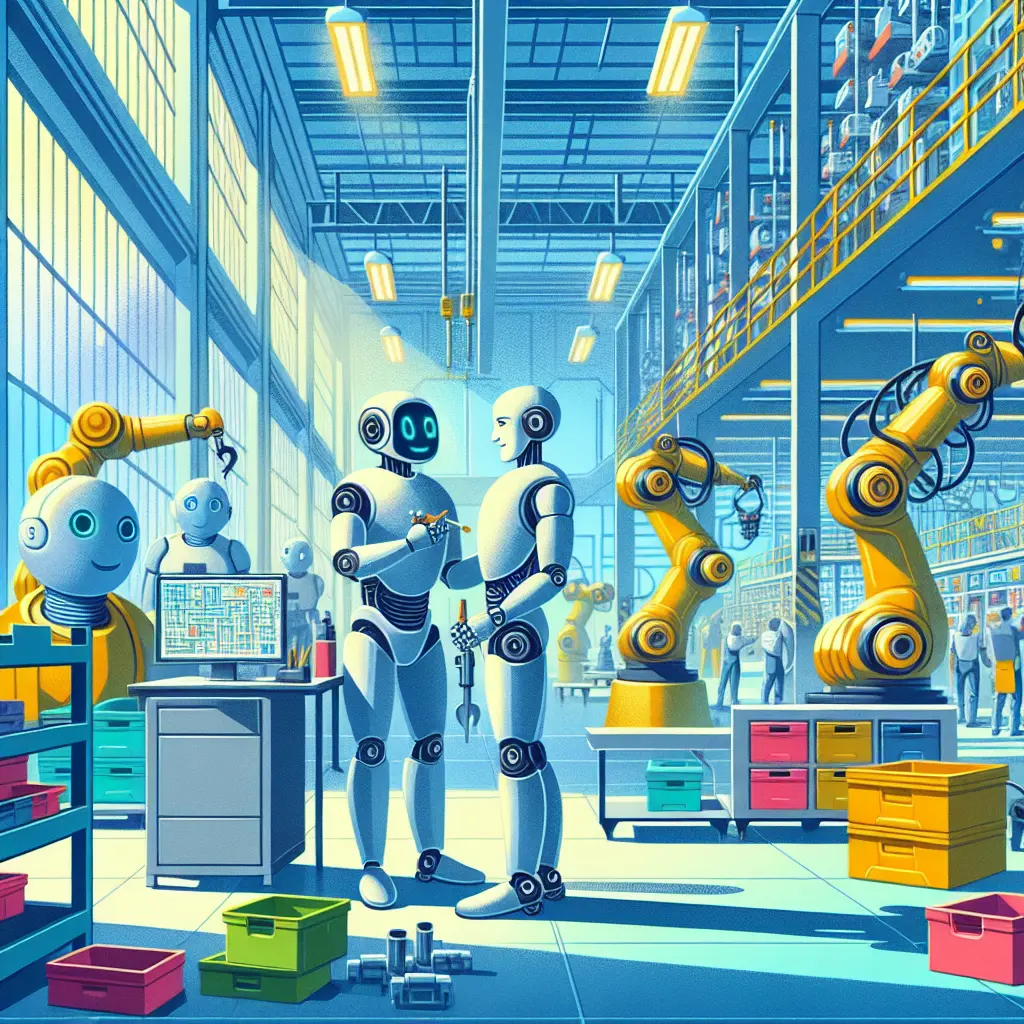
Collaborative robots, or cobots, are advanced robotic systems designed to work safely alongside human workers in shared environments. Unlike traditional industrial robots that operate in isolation, cobots are equipped with sensors and safety features that enable them to interact directly with people. They assist with tasks such as assembly, packaging, and quality inspection, increasing productivity and efficiency while reducing the risk of workplace injuries and enhancing human-robot collaboration.
Collaborative Robots (Cobots)
Collaborative robots, or cobots, are advanced robotic systems designed to work safely alongside human workers in shared environments. Unlike traditional industrial robots that operate in isolation, cobots are equipped with sensors and safety features that enable them to interact directly with people. They assist with tasks such as assembly, packaging, and quality inspection, increasing productivity and efficiency while reducing the risk of workplace injuries and enhancing human-robot collaboration.
💡 Key Takeaways
- Understand what cobots are and how they differ from traditional industrial robots.
- Learn how sensors, safety features, and collaborative modes enable safe interaction with humans in shared spaces.
- Identify common tasks and workflows where cobots assist in manufacturing and future-tech settings.
- Explore simple programming approaches for cobots and how they learn from human operators.
- Recognize safety standards and risk considerations when deploying cobots in the workplace.
❓ Frequently Asked Questions
What is a cobot and how is it different from traditional industrial robots?
A cobot, or collaborative robot, is designed to work safely alongside humans in shared spaces. Unlike traditional robots that operate behind barriers, cobots have built‑in safety features and can interact directly with people.
What safety features help cobots work with people?
Cobots use sensors and safety systems such as power/force limiting, speed/torque limits, speed and separation monitoring, hand‑guiding, and emergency stops to prevent harm during human–robot interaction.
Where are cobots typically used, and how might they fit into space and future tech?
They’re common in manufacturing, logistics, and laboratories for automation and assistance. In space and future tech contexts, cobots could assist astronauts, handle repetitive tasks, or support remote maintenance and research.
How do cobots learn new tasks and adapt to changes?
They support easy programming (teach‑by‑demonstration or offline programming), use vision and sensor data to adapt, and operate within safety constraints to allow quick reconfiguration without reengineering.