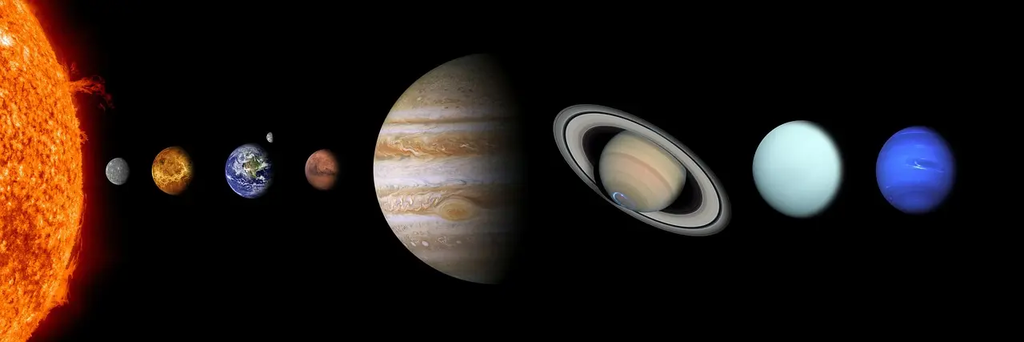
Comparative planetology is the scientific study of planets, moons, and other bodies within our solar system by comparing their physical and chemical properties. By analyzing similarities and differences among these celestial objects, scientists gain insights into their origins, evolution, and current states. This approach helps to reveal fundamental planetary processes, such as volcanism, atmospheric dynamics, and tectonics, and provides a broader understanding of Earth's place in the solar system.
Comparative Planetology
Comparative planetology is the scientific study of planets, moons, and other bodies within our solar system by comparing their physical and chemical properties. By analyzing similarities and differences among these celestial objects, scientists gain insights into their origins, evolution, and current states. This approach helps to reveal fundamental planetary processes, such as volcanism, atmospheric dynamics, and tectonics, and provides a broader understanding of Earth's place in the solar system.
💡 Key Takeaways
- Compare fundamental planetary properties (size, mass, density, and gravity) across planets and moons.
- Explain how atmospheres form and vary due to composition, temperature, and atmospheric escape.
- Contrast surfaces and geologic activity among rocky, icy, and gaseous worlds.
- Understand how distance from the Sun and stellar radiation shapes climate, weather, and habitability.
- Learn how scientists use comparative data to test theories of planet formation and evolution.
❓ Frequently Asked Questions
What is comparative planetology?
The study of planets by comparing their properties and processes across the Solar System (and beyond) to understand how planets form, evolve, and vary.
What properties do scientists compare across planets?
Size, mass, composition, atmospheres, surface geology, internal structure, orbits, climate, magnetic fields, and geological activity.
How do researchers study planets when data is limited?
They use remote sensing, spectroscopy, spacecraft data, Earth-based analogies, computer models, and scaling relationships, while noting uncertainties.
Why is comparative planetology important?
It explains the diversity of worlds, informs us about Earth's place in the cosmos, and guides the search for habitable planets and future exploration.