Comparative politics examines differences between parliamentary and presidential systems, focusing on how executive and legislative branches interact. In parliamentary systems, the executive derives authority from the legislature and can be dismissed by a legislative vote. In contrast, presidential systems separate executive and legislative powers, with the president elected independently. These systems influence lawmaking, government stability, and public service delivery, shaping political accountability and citizen representation within a country’s governance structure.
Comparative Politics: Parliamentary vs Presidential Systems
Comparative politics examines differences between parliamentary and presidential systems, focusing on how executive and legislative branches interact. In parliamentary systems, the executive derives authority from the legislature and can be dismissed by a legislative vote. In contrast, presidential systems separate executive and legislative powers, with the president elected independently. These systems influence lawmaking, government stability, and public service delivery, shaping political accountability and citizen representation within a country’s governance structure.
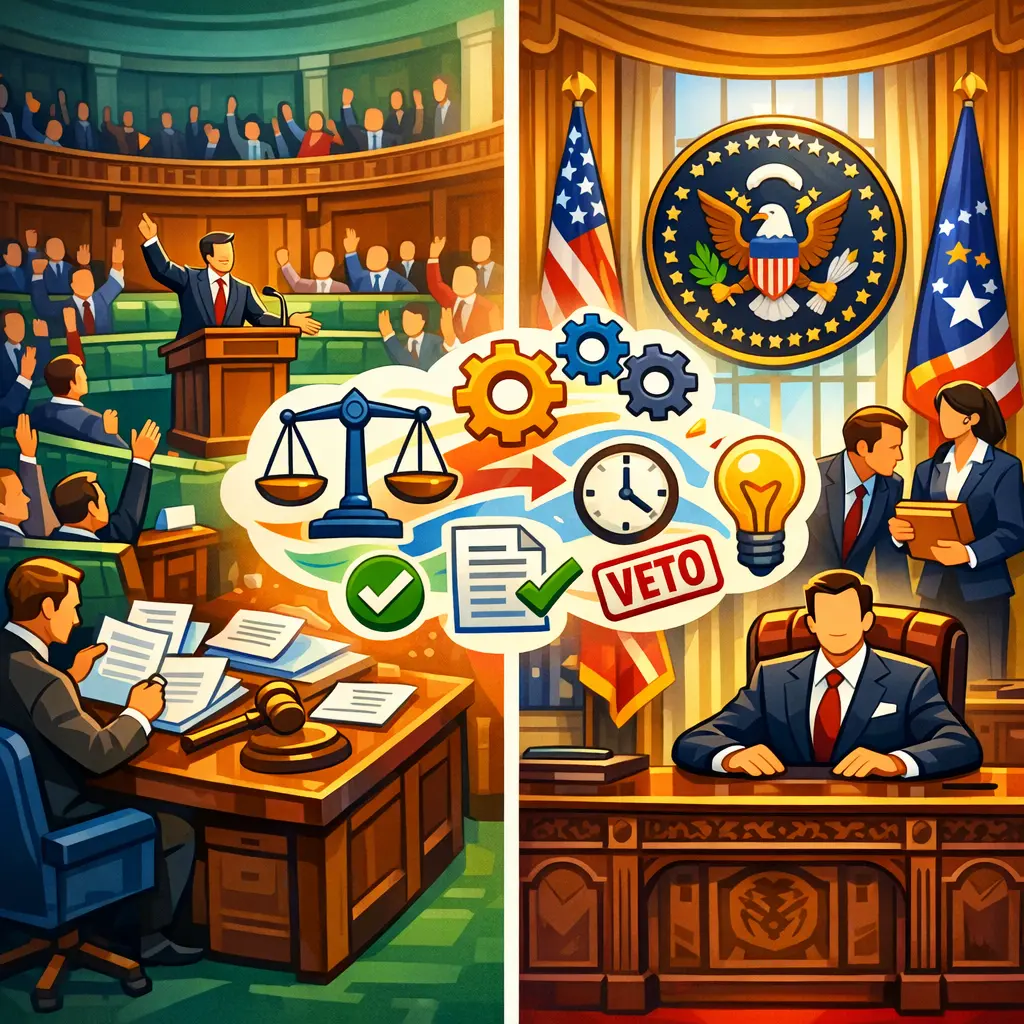
💡 Key Takeaways
- Identify how parliamentary and presidential systems fuse or separate executive and legislative powers.
- Explain how leaders are chosen (prime minister from the legislature vs a separately elected president) and how this affects accountability.
- Describe cabinet formation, votes of confidence, and how government stability differs between the systems.
- Compare policy-making speed, checks and balances, and the risk of gridlock or early elections in each system.
❓ Frequently Asked Questions
What is a parliamentary system?
The government (prime minister and cabinet) is elected from the legislature and must retain its confidence; the head of state is separate and often ceremonial.
What is a presidential system?
The president is elected separately from the legislature and serves as both head of state and head of government; terms are usually fixed and removal is by impeachment.
How are leaders chosen in each system?
Parliamentary: voters elect the parliament, and the majority party or coalition forms the government with a prime minister. Presidential: voters directly elect the president, who appoints the cabinet (often with legislative approval).
What are common strengths and weaknesses of these systems?
Parliamentary: quick government formation and removal via votes of no confidence, but can lead to unstable coalitions. Presidential: clear separation of powers and stable terms, but can suffer from gridlock when branches are controlled by different parties.