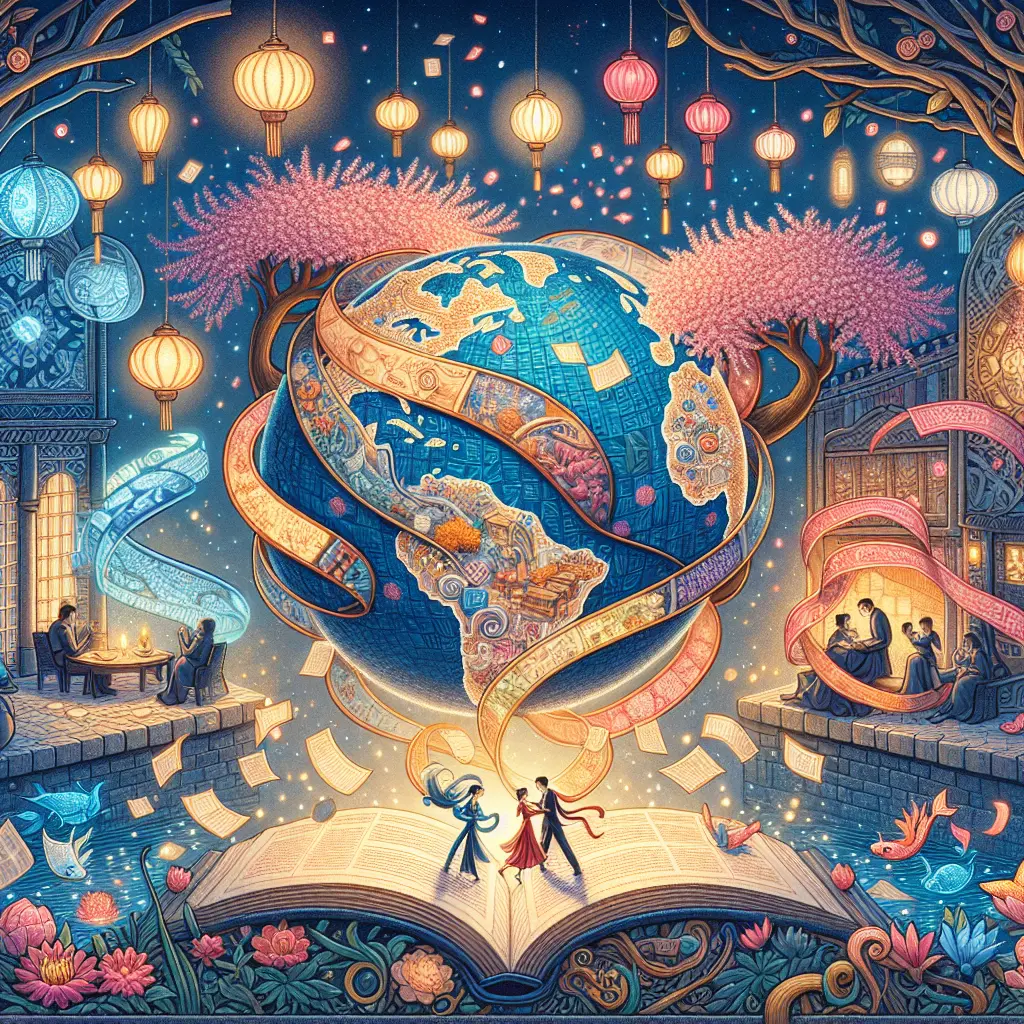
"Comparative Romance: Global Narrative Structures" refers to the study and analysis of romantic stories across different cultures and literary traditions. It examines how love, desire, and relationships are depicted in narratives worldwide, identifying both universal patterns and unique cultural variations. This comparative approach highlights the ways in which romance as a genre adapts to diverse social, historical, and aesthetic contexts, revealing the interconnectedness and distinctiveness of global storytelling traditions.
Comparative Romance: Global Narrative Structures
"Comparative Romance: Global Narrative Structures" refers to the study and analysis of romantic stories across different cultures and literary traditions. It examines how love, desire, and relationships are depicted in narratives worldwide, identifying both universal patterns and unique cultural variations. This comparative approach highlights the ways in which romance as a genre adapts to diverse social, historical, and aesthetic contexts, revealing the interconnectedness and distinctiveness of global storytelling traditions.
💡 Key Takeaways
- Identify universal romance plot patterns (e.g., meeting, obstacles, separation, reconciliation) that recur across cultures.
- Compare how love and relationships are portrayed differently across cultural contexts, including gender roles and social norms.
- Spot common narrative devices (quests, tests, disguises, magical elements) that drive romantic stories.
- Use global romance insights to enhance date-night trivia by recognizing archetypes and symbols from world literature and media.
❓ Frequently Asked Questions
What is the focus of Comparative Romance: Global Narrative Structures?
It studies how romantic stories are constructed across cultures, highlighting universal patterns and culturally specific twists.
What are universal romance patterns or tropes?
Common motifs include forbidden love, love across social classes, arranged marriage, tests or obstacles for lovers, journeys or quests, and endings that are hopeful or tragic.
How does culture influence the depiction of love and dating?
Cultural norms shape who initiates romance, expectations around marriage, family involvement, gender roles, and acceptable expressions of affection in narratives.
How can I use this quiz to analyze romantic stories?
Look for narrative structure (setup, conflict, resolution), identify archetypes, note cultural context and rituals, and compare similarities and differences across traditions.