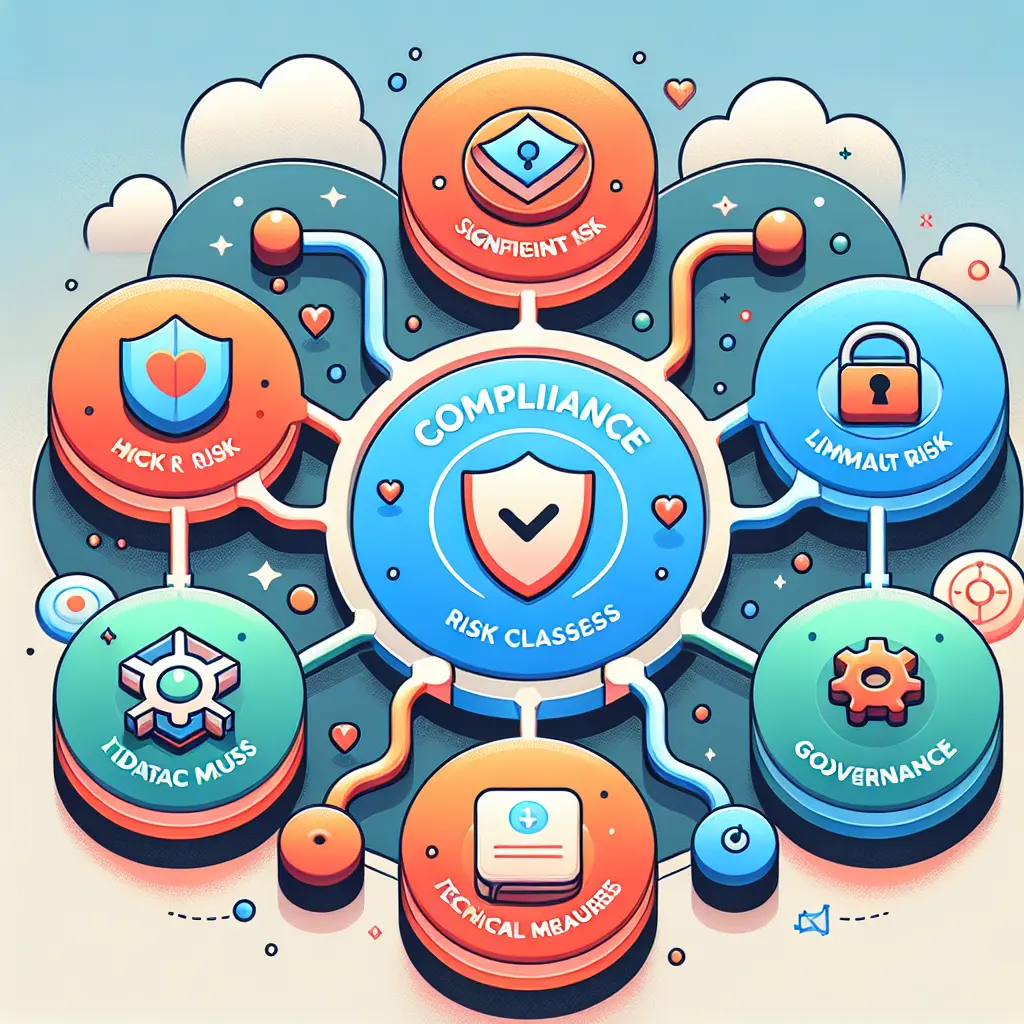
Compliance mappings between EU AI Act risk classes and controls involve systematically aligning the specific risk categories defined by the EU AI Act—such as unacceptable, high, limited, and minimal risk—with corresponding organizational controls and safeguards. This process ensures that each AI system’s risk level is matched with appropriate technical, legal, and procedural measures, facilitating adherence to regulatory requirements and supporting effective risk management and accountability within AI governance frameworks.
Compliance mappings: EU AI Act risk classes to controls
Compliance mappings between EU AI Act risk classes and controls involve systematically aligning the specific risk categories defined by the EU AI Act—such as unacceptable, high, limited, and minimal risk—with corresponding organizational controls and safeguards. This process ensures that each AI system’s risk level is matched with appropriate technical, legal, and procedural measures, facilitating adherence to regulatory requirements and supporting effective risk management and accountability within AI governance frameworks.
💡 Key Takeaways
- Identify EU AI Act risk classes (unacceptable, high, limited, minimal) and what each implies for controls.
- Map each risk class to appropriate organizational controls and safeguards in generative AI systems.
- Follow a practical workflow to create, validate, and maintain compliance mappings across the AI lifecycle.
- Document mappings for audits and set up ongoing monitoring to demonstrate compliance.
❓ Frequently Asked Questions
What are the four EU AI Act risk classes and their implications?
Unacceptable risk: prohibited uses; High risk: requires strict controls and conformity assessment; Limited risk: some transparency and risk mitigations; Minimal risk: no specific obligations beyond general safeguards.
What is compliance mapping in the context of EU AI Act risk classes?
A systematic process that links each risk class to corresponding organizational controls and safeguards to ensure alignment with EU AI Act requirements.
What are typical controls associated with high-risk AI systems under the EU AI Act?
Controls include data governance and quality management, risk assessment and management, logging/traceability, user transparency where required, human oversight, security measures, and documentation for conformity.
How do limited-risk and minimal-risk classifications affect required controls?
Limited risk calls for proportionate controls and some transparency; minimal risk generally relies on general safety practices with no extra regulatory obligations.