Constitutional Law II: Speech, Religion & Equality examines the principles and legal frameworks governing individual rights under the U.S. Constitution, particularly focusing on freedom of speech, freedom of religion, and equality protections. This area of law analyzes landmark Supreme Court decisions, the First and Fourteenth Amendments, and their impact on government action, civil liberties, and public policy, preparing students for roles in law, government, and public service.
Constitutional Law II: Speech, Religion & Equality
Constitutional Law II: Speech, Religion & Equality examines the principles and legal frameworks governing individual rights under the U.S. Constitution, particularly focusing on freedom of speech, freedom of religion, and equality protections. This area of law analyzes landmark Supreme Court decisions, the First and Fourteenth Amendments, and their impact on government action, civil liberties, and public policy, preparing students for roles in law, government, and public service.
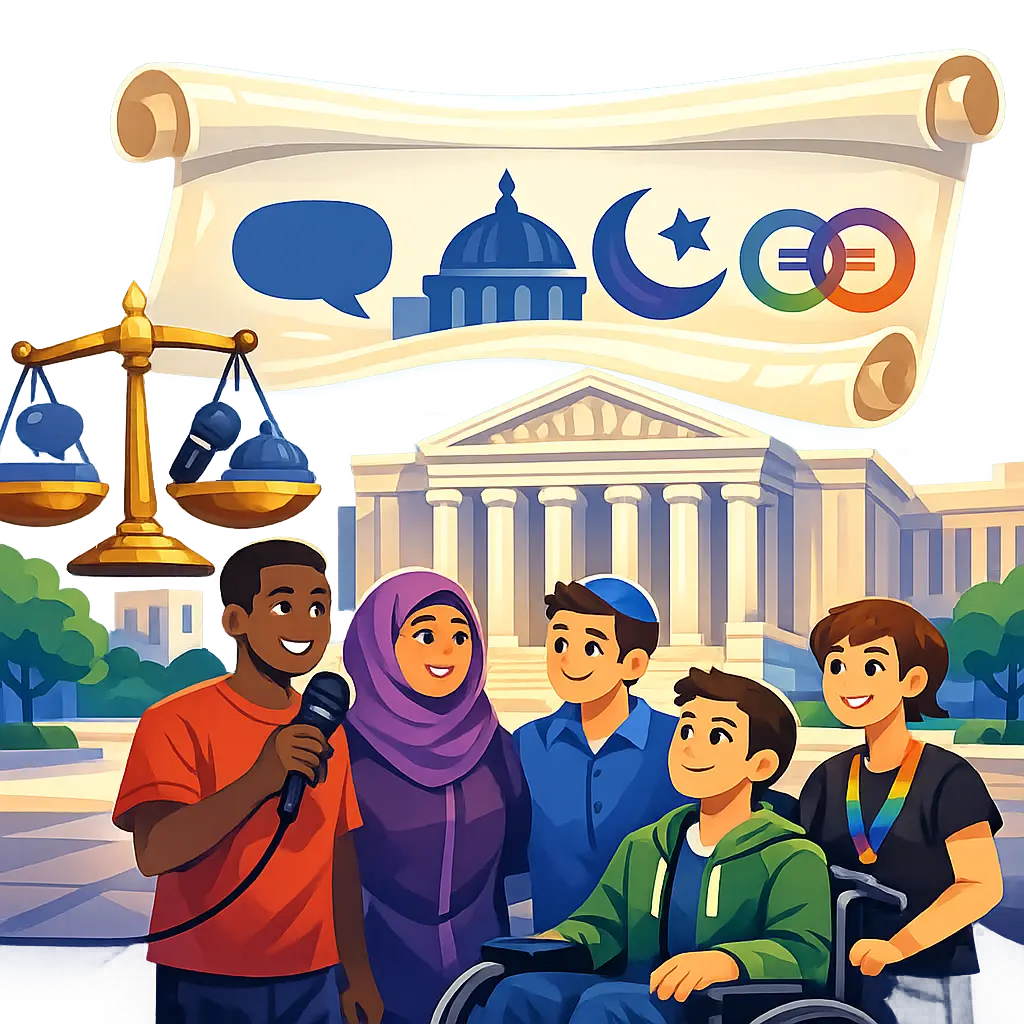
💡 Key Takeaways
- Grasp First Amendment free speech protections and how courts distinguish content-based from content-neutral restrictions.
- Understand the Free Exercise and Establishment Clauses and the scrutiny applied to laws affecting religious practice.
- Explore Equal Protection principles and how they shape decisions involving speech and religious liberty.
- Identify common patterns in speech, religion, and equality jurisprudence and how courts balance competing rights.
❓ Frequently Asked Questions
What does the First Amendment protect about freedom of speech?
It protects individuals from government censorship of most speech, especially political expression. Limitations exist for incitement to imminent lawless action, true threats, defamation, obscenity, and other narrowly defined categories.
What is the difference between content-based and content-neutral restrictions on speech?
Content-based restrictions target particular ideas or viewpoints and are typically subject to strict scrutiny (often invalid unless narrowly tailored to a compelling interest). Content-neutral restrictions regulate when, where, or how speech occurs and are evaluated under intermediate scrutiny (substantial interest, narrowly tailored, and no greater than necessary).
What are the Establishment Clause and Free Exercise Clause about religion?
The Establishment Clause bars government establishment or endorsement of religion. The Free Exercise Clause protects individuals' rights to practice religion, with laws burdening religious practice analyzed for neutrality and general applicability, with higher scrutiny in certain cases.
What is a public forum and how does it affect government regulation of speech?
A public forum (e.g., streets, parks) is a government space open for expressive activity. In a public forum, content-based restrictions face strict scrutiny, while content-neutral time/place/manner rules face intermediate scrutiny; nonpublic forums use different standards.