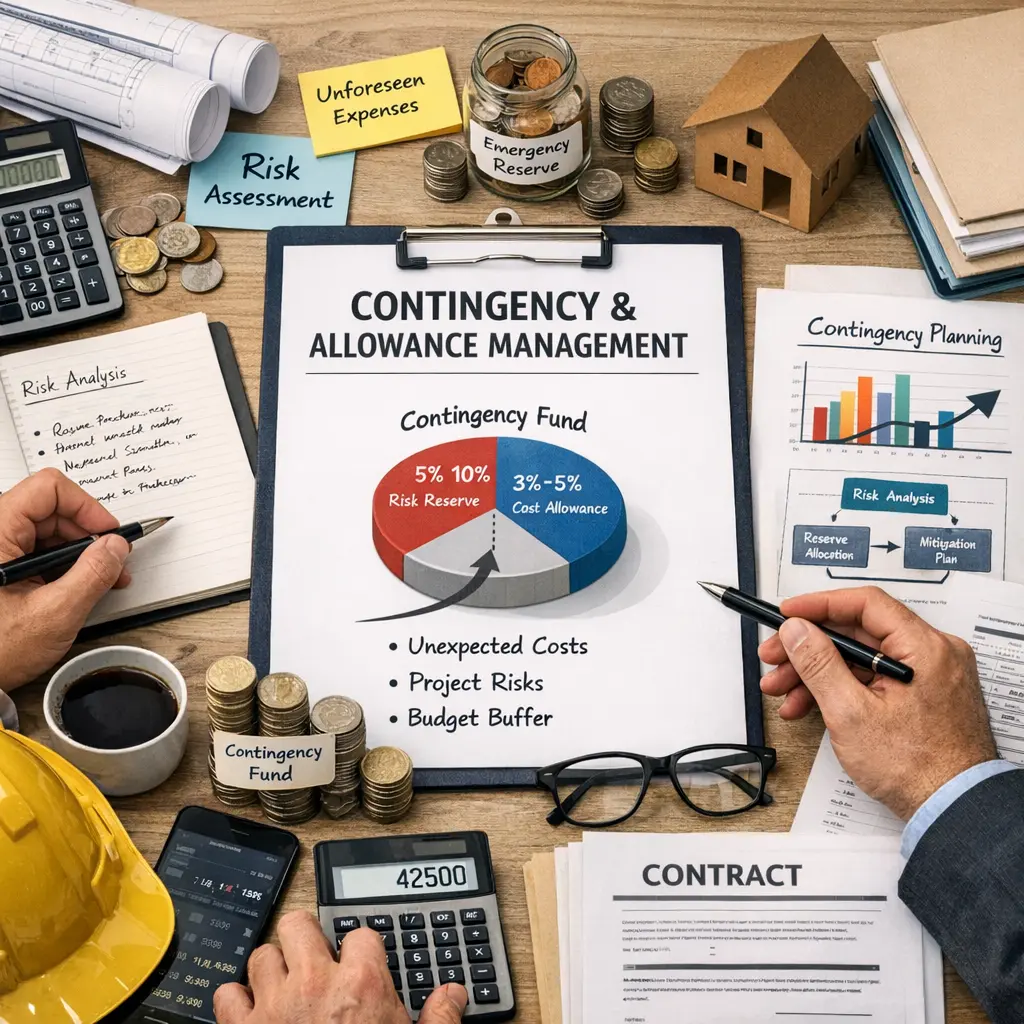
Contingency & Allowance Management in financial management and business practices involves planning and allocating funds to address unexpected events, risks, or uncertainties during a project or operation. It ensures that organizations are financially prepared for unforeseen circumstances by setting aside reserves or allowances, thus minimizing disruptions, maintaining budget control, and supporting informed decision-making. Effective management of contingencies and allowances enhances financial stability and project success by proactively addressing potential challenges.
Contingency & Allowance Management
Contingency & Allowance Management in financial management and business practices involves planning and allocating funds to address unexpected events, risks, or uncertainties during a project or operation. It ensures that organizations are financially prepared for unforeseen circumstances by setting aside reserves or allowances, thus minimizing disruptions, maintaining budget control, and supporting informed decision-making. Effective management of contingencies and allowances enhances financial stability and project success by proactively addressing potential challenges.
💡 Key Takeaways
- Distinguish between contingency reserves and allowances, and know when to apply each in budgeting.
- Learn how to estimate reserves using risk assessment methods and set appropriate levels.
- Understand governance for reserves, including approval, thresholds, and change-control processes.
- Know how to monitor actual costs against reserves, update forecasts, and report to stakeholders.
- Identify common pitfalls and best practices to ensure reserves reflect risk and contractual requirements.
❓ Frequently Asked Questions
What is contingency in project budgeting?
A reserve of funds set aside to cover unforeseen costs or risks that aren’t fully known during planning, helping the project stay on track when surprises arise.
What is an allowance in budgeting?
A placeholder amount for items with uncertain cost or scope (e.g., finishes or fixtures). The exact cost is determined later, and adjustments are made via change orders if needed.
How do contingency and allowance differ?
Contingency covers unknown project risks; allowances cover defined items whose costs aren’t yet known. Contingency is for risk events, while allowances are for specific components.
How is the appropriate level of contingency determined?
Through risk assessment, past project data, and project complexity. Methods may include expert judgment and simple probabilistic estimates to set a reasonable reserve.