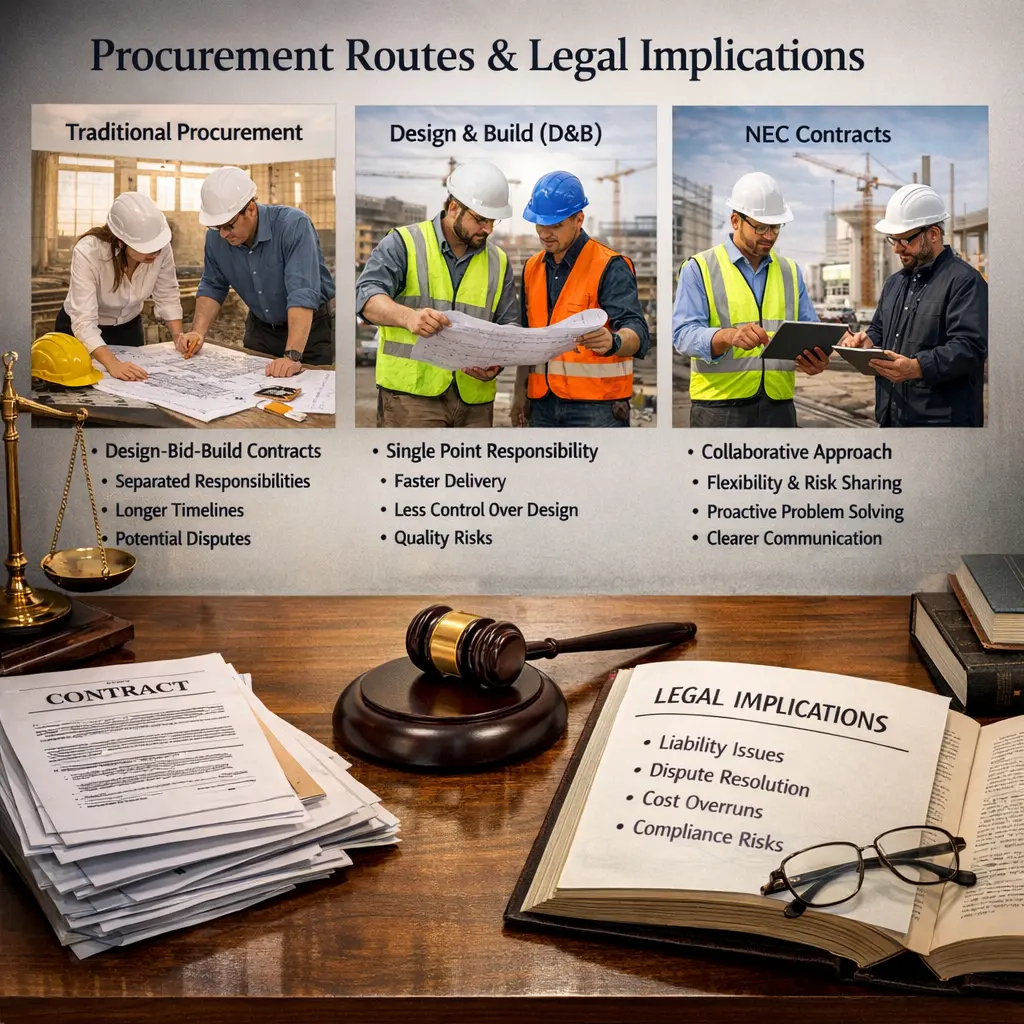
Contract Law Fundamentals for construction (Legal & Statutory Requirements) refers to the essential legal principles and statutory obligations that govern construction contracts. This includes understanding how contracts are formed, the rights and duties of parties, risk allocation, dispute resolution, and compliance with relevant laws and regulations. Adhering to these fundamentals ensures that construction projects are legally sound, minimizes disputes, and protects the interests of all stakeholders involved in the construction process.
Contract Law Fundamentals for construction+50
Contract Law Fundamentals for construction (Legal & Statutory Requirements) refers to the essential legal principles and statutory obligations that govern construction contracts. This includes understanding how contracts are formed, the rights and duties of parties, risk allocation, dispute resolution, and compliance with relevant laws and regulations. Adhering to these fundamentals ensures that construction projects are legally sound, minimizes disputes, and protects the interests of all stakeholders involved in the construction process.
💡 Key Takeaways
- Understand the essential elements of a valid construction contract (offer, acceptance, consideration) and the importance of a clear scope.
- Learn how risk is allocated through contract terms for changes, delays, and extensions of time.
- Identify typical payment terms, security measures, and how to prevent payment disputes.
- Explore the role of standard forms (e.g., AIA, FIDIC) and governing law in construction contracts and how they shape obligations.
- Recognize remedies for breach (damages, termination, liquidated damages) and the importance of effective change management to avoid disputes.
❓ Frequently Asked Questions
What is a construction contract?
A written agreement that defines project scope, responsibilities, schedule, price, payment terms, and dispute resolution between owners, contractors, and subcontractors.
What is a change order?
A formal written amendment to the contract that modifies scope, cost, or schedule, requiring approval from the parties.
What are common contract types in construction?
Lump-sum (fixed price), cost-plus, unit-price, and design-build. Each type allocates risk and payment differently and affects how changes are managed.
What are liquidated damages in construction contracts?
A pre-estimated amount payable if the project is delayed or milestones are missed, intended to compensate for anticipated damages rather than serve as a penalty.