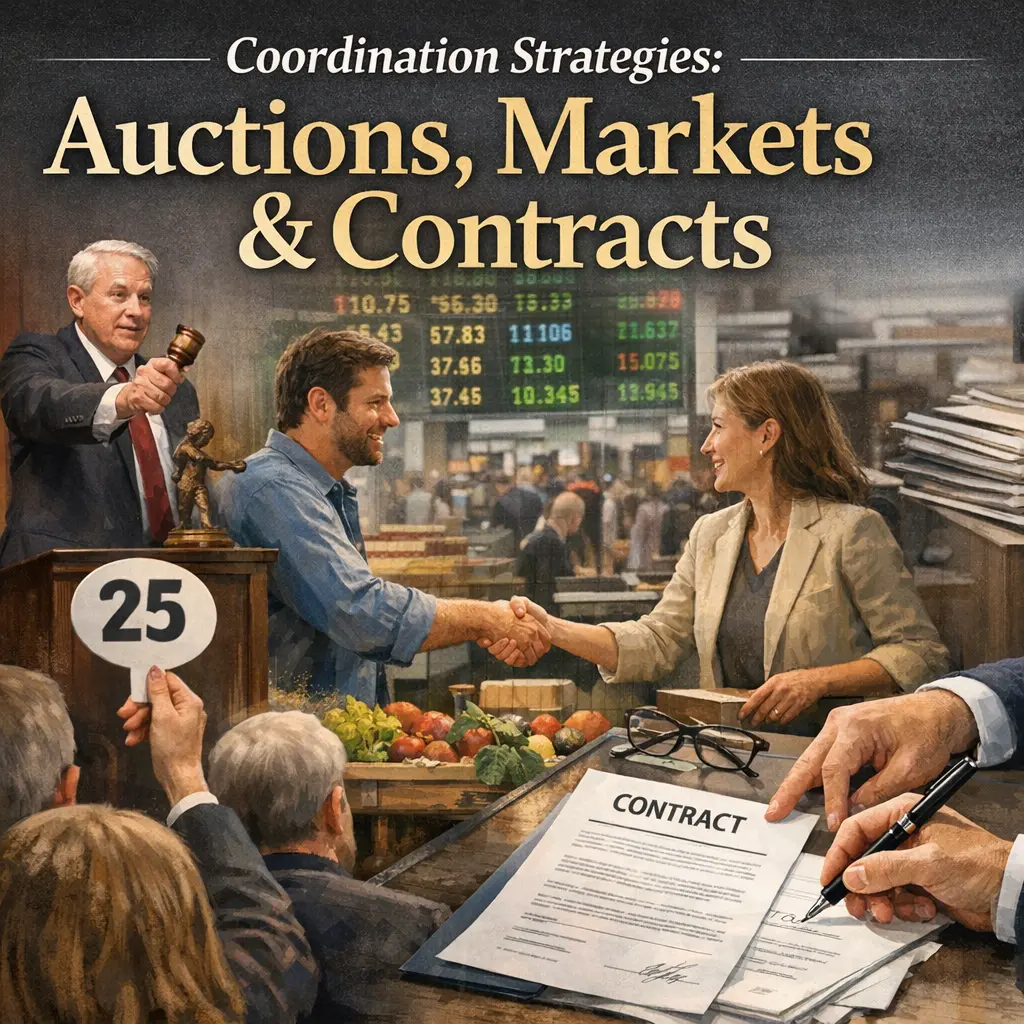
Coordination strategies such as auctions, markets, and contracts are mechanisms used within agent architectures to manage interactions and resource allocation among autonomous agents. Auctions facilitate competitive bidding, markets enable dynamic price-based exchanges, and contracts formalize agreements for cooperation or service provision. These strategies help agents achieve individual and collective goals efficiently, resolve conflicts, and adapt to changing environments by providing structured frameworks for negotiation, decision-making, and task distribution.
Coordination Strategies: Auctions, Markets & Contracts
Coordination strategies such as auctions, markets, and contracts are mechanisms used within agent architectures to manage interactions and resource allocation among autonomous agents. Auctions facilitate competitive bidding, markets enable dynamic price-based exchanges, and contracts formalize agreements for cooperation or service provision. These strategies help agents achieve individual and collective goals efficiently, resolve conflicts, and adapt to changing environments by providing structured frameworks for negotiation, decision-making, and task distribution.
💡 Key Takeaways
- Explain how auctions coordinate the allocation of scarce goods and reveal bidders' true valuations.
- Identify common auction formats (English, Dutch, sealed-bid) and when each is most effective.
- Compare market-based coordination with contract-based coordination, focusing on incentives, risk-sharing, and information gaps.
- Describe essential contract features that align incentives and reduce transaction costs (rights, duties, penalties, contingencies).
❓ Frequently Asked Questions
What are coordination strategies in economics?
Coordination strategies are ways to align incentives and decisions among multiple agents to achieve efficient outcomes. They include auctions, markets, and contracts that help allocate resources and information.
What is an auction and how does it help allocate resources?
An auction is a bidding process in which the good or right goes to the bidder offering the most value, helping reveal willingness to pay and allocate scarce resources efficiently.
How do markets coordinate production and pricing?
Markets use price signals to balance supply and demand; prices rise or fall to clear surpluses or shortages, guiding decisions about what and how much to produce.
What is a contract and why is it used for coordination?
A contract is a formal agreement specifying duties, payments, and penalties. It reduces uncertainty and aligns incentives so parties follow through on commitments.