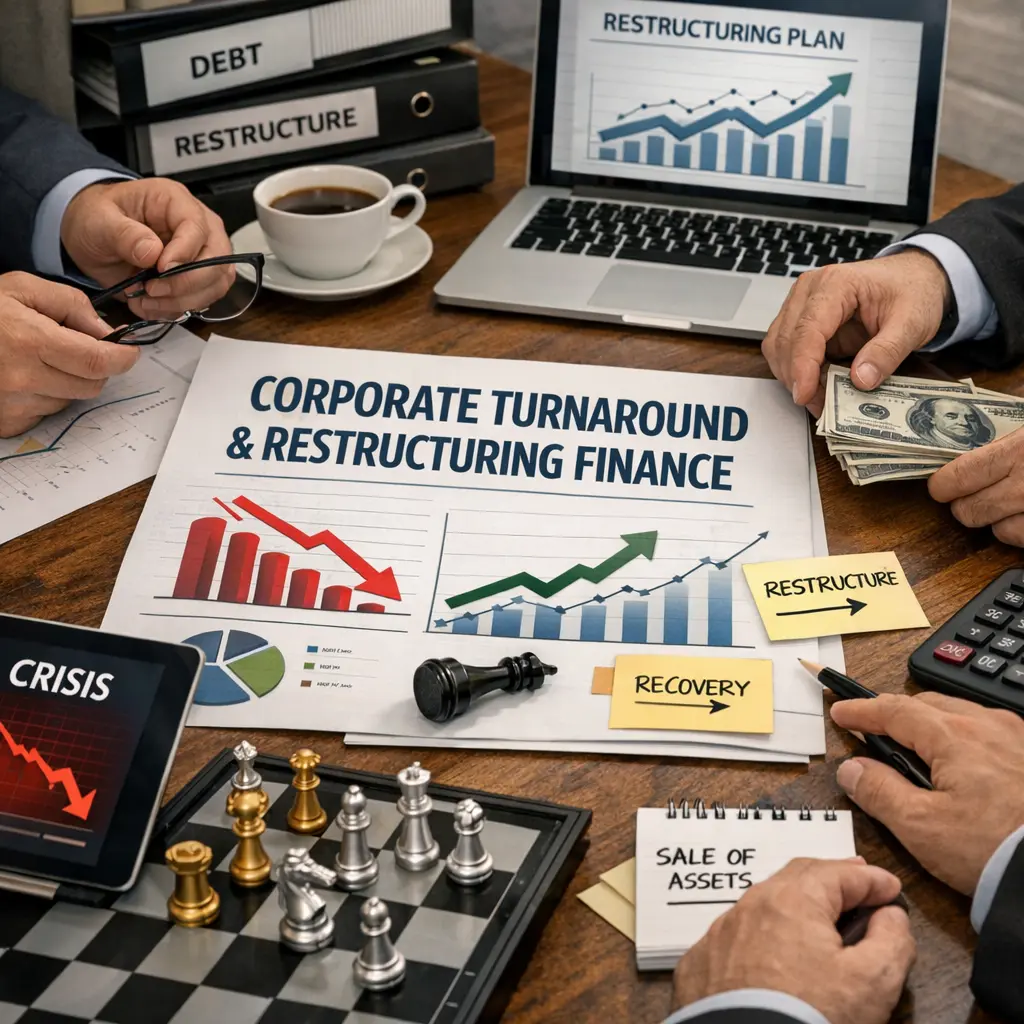
Corporate Turnaround & Restructuring Finance refers to the strategic financial management and business practices employed when a company is facing financial distress or operational challenges. It involves analyzing the root causes of underperformance, developing and implementing restructuring plans, renegotiating debt, improving cash flow, and optimizing operations. The goal is to restore profitability, stabilize the business, and position it for sustainable growth, while balancing the interests of stakeholders such as creditors, investors, and employees.
Corporate Turnaround & Restructuring Finance
Corporate Turnaround & Restructuring Finance refers to the strategic financial management and business practices employed when a company is facing financial distress or operational challenges. It involves analyzing the root causes of underperformance, developing and implementing restructuring plans, renegotiating debt, improving cash flow, and optimizing operations. The goal is to restore profitability, stabilize the business, and position it for sustainable growth, while balancing the interests of stakeholders such as creditors, investors, and employees.
💡 Key Takeaways
- Identify early warning signs of financial distress and the typical turnaround lifecycle.
- Select and structure financing options for a turnaround, including debt refinancing, DIP financing, and equity injections.
- Optimize liquidity through precise cash flow forecasting, working capital management, and cost reduction.
- Navigate stakeholder dynamics and governance during restructuring, including lenders, management, employees, and creditors.
❓ Frequently Asked Questions
What is corporate turnaround and restructuring finance?
It’s the set of strategies and funding used to revive a distressed company, stabilize cash flow, cut costs, renegotiate debts, and reposition the business for sustainable profitability.
What is DIP financing?
Debtor-in-possession financing provides new funds to a company in bankruptcy or formal restructuring and typically has priority claims over existing debt to keep operations running during the process.
What is the difference between out-of-court restructuring and Chapter 11 (insolvency) restructuring?
Out-of-court restructuring is a voluntary, non-bankruptcy plan to renegotiate debts and costs; Chapter 11 is a court-supervised process that legally restructures debts and operations and may involve approved financing and plans.
What are common sources of financing in a turnaround?
DIP/bridge financing, asset-based lending, supplier or vendor financing, mezzanine debt, equity injections, and revised credit facilities, often augmented by government support where available.
What metrics help assess turnaround feasibility?
Liquidity runway, cash burn rate, EBITDA stability, debt service coverage, and improved operating metrics such as gross margin and working capital efficiency.