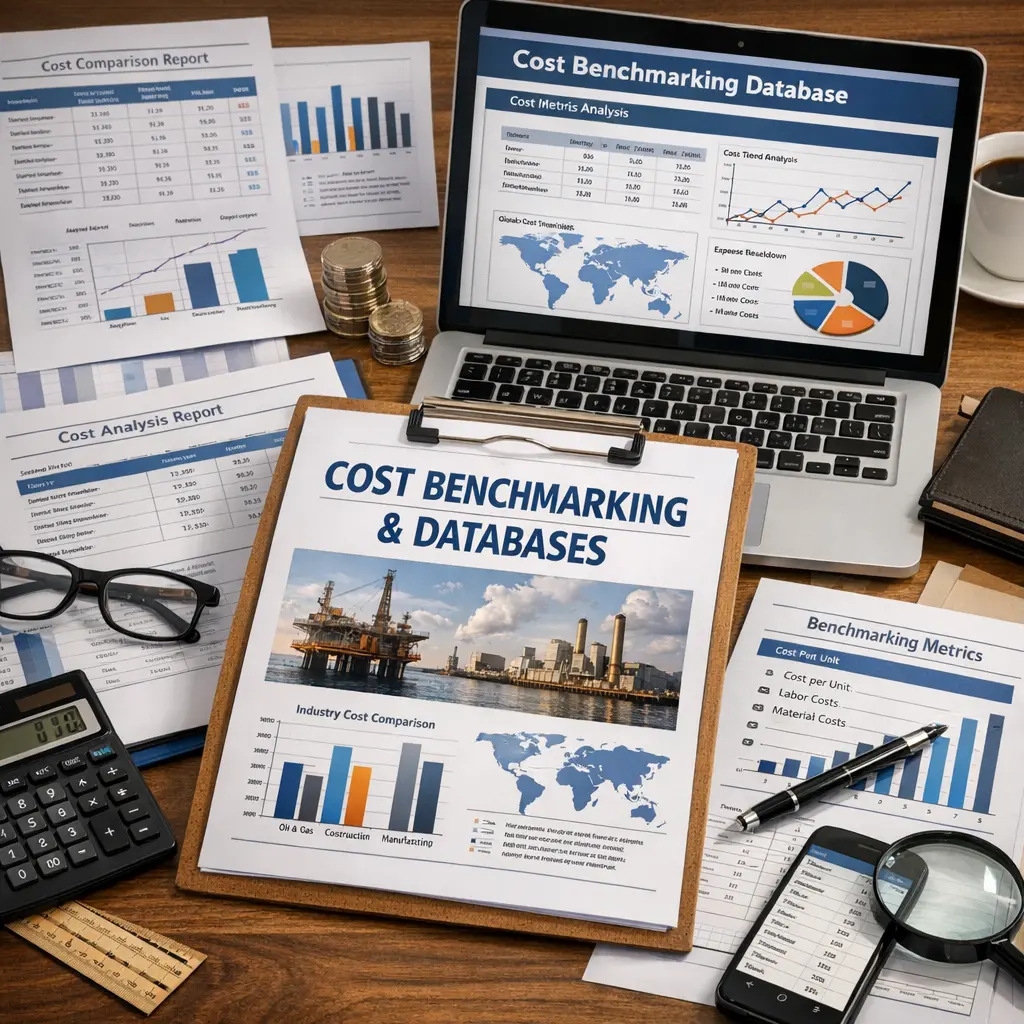
Cost benchmarking and databases in financial management and business practices involve systematically comparing an organization’s costs with industry standards or best-in-class companies. This process uses comprehensive databases to collect, analyze, and interpret cost data across various functions. The insights gained help identify inefficiencies, set realistic budgets, and drive continuous improvement. Ultimately, cost benchmarking supports informed decision-making, enhances competitiveness, and ensures optimal allocation of financial resources within an organization.
Cost Benchmarking & Databases
Cost benchmarking and databases in financial management and business practices involve systematically comparing an organization’s costs with industry standards or best-in-class companies. This process uses comprehensive databases to collect, analyze, and interpret cost data across various functions. The insights gained help identify inefficiencies, set realistic budgets, and drive continuous improvement. Ultimately, cost benchmarking supports informed decision-making, enhances competitiveness, and ensures optimal allocation of financial resources within an organization.
💡 Key Takeaways
- Define cost benchmarking and its role in budgeting and performance measurement.
- Identify key databases and data sources used for cost benchmarks.
- Learn how to normalize costs for fair comparisons (unit costs, currency, inflation).
- Apply benchmarks to set targets and uncover cost-saving opportunities specific to your industry and size.
❓ Frequently Asked Questions
What is cost benchmarking?
Cost benchmarking is a systematic process of comparing your organization’s costs and cost structure to peers or industry standards to identify efficiency gaps and opportunities for savings.
What data sources are used in a cost benchmarking database?
Internal spend data (historic purchases, unit costs, volumes) plus external benchmarks from surveys, vendor catalogs, and market price indexes, all normalized for currency, units, and time.
How can benchmarking data be used in budgeting and cost reduction?
Use normalized benchmark figures to spot variances, set realistic targets, prioritize cost-reduction initiatives, and track progress over time.
What are common limitations of cost benchmarks?
Benchmarks may differ in scope, data quality, geography, and time frame; they provide guidance, not exact targets, and should be interpreted in context.