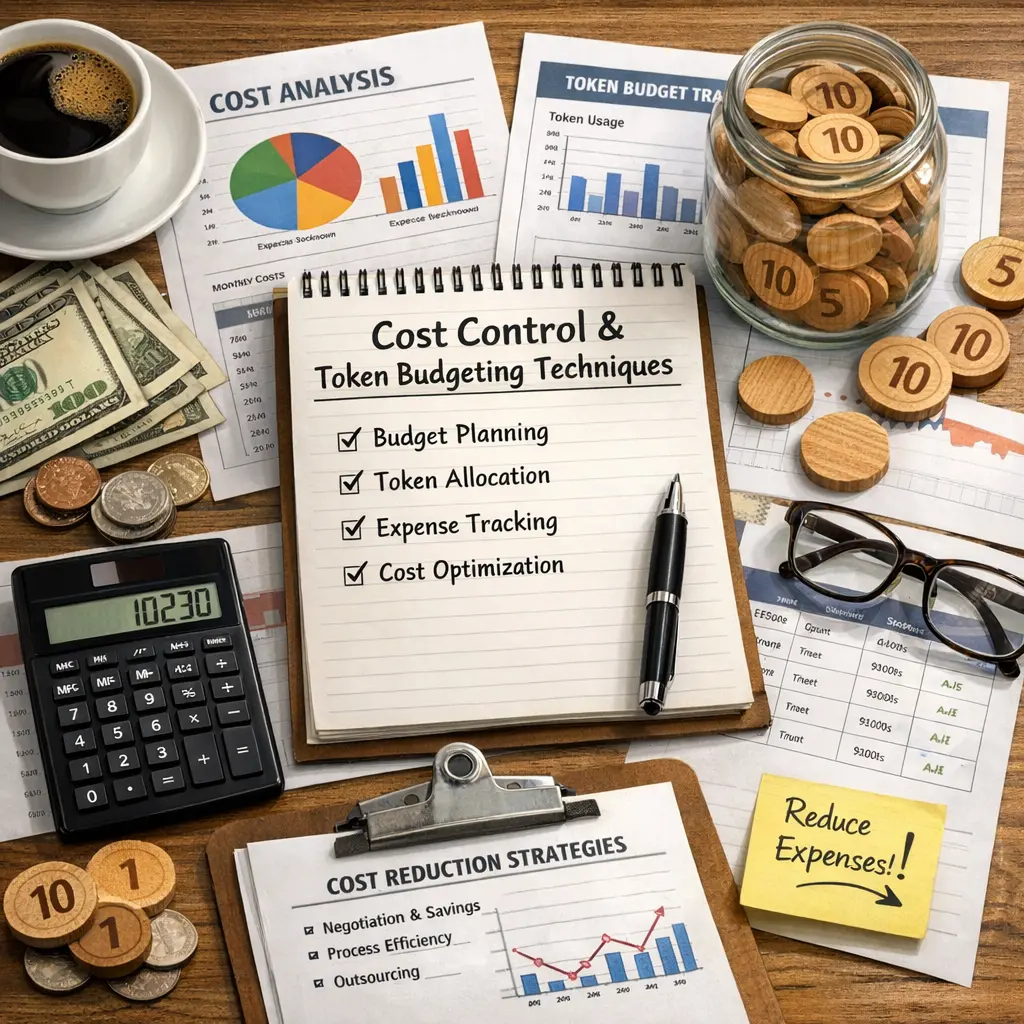
Cost Control & Token Budgeting Techniques in agent architecture refer to strategies and methods used to manage and optimize the computational and monetary resources consumed by AI agents. These techniques involve monitoring token usage, setting usage limits, prioritizing essential tasks, and dynamically allocating resources. Effective cost control ensures that agents operate efficiently within budget constraints, prevent overuse of expensive API calls, and maintain high performance without incurring unnecessary expenses.
Cost Control & Token Budgeting Techniques
Cost Control & Token Budgeting Techniques in agent architecture refer to strategies and methods used to manage and optimize the computational and monetary resources consumed by AI agents. These techniques involve monitoring token usage, setting usage limits, prioritizing essential tasks, and dynamically allocating resources. Effective cost control ensures that agents operate efficiently within budget constraints, prevent overuse of expensive API calls, and maintain high performance without incurring unnecessary expenses.
💡 Key Takeaways
- Understand token budgeting and how it drives cost control for AI prompts and responses.
- Learn how to estimate token usage upfront to forecast spending accurately.
- Discover techniques to minimize token consumption, such as concise prompts, trimming outputs, and caching results.
- Implement budgets, alerts, and spending caps to prevent overruns while preserving answer quality.
❓ Frequently Asked Questions
What is cost control in budgeting?
Cost control is the process of planning, monitoring, and adjusting expenses to keep spending within a defined budget and ensure efficient use of resources.
What does token budgeting mean in the context of API usage?
Token budgeting assigns a fixed number of tokens (or usage units) to tasks or time periods to cap spending on token-based services like AI APIs.
How can you estimate token usage for a project?
Review historical token counts for similar tasks, estimate prompt and output lengths, and apply a conservative margin to set a realistic budget.
What strategies help reduce costs without sacrificing quality?
Prioritize essential calls, batch requests, cache results, use cheaper models for non-critical tasks, and enforce usage quotas or limits.
How can you monitor and adjust token budgets in real time?
Use dashboards to track current vs. projected usage, set alerts for thresholds, and pause or throttle non-critical tasks if the budget is tight.