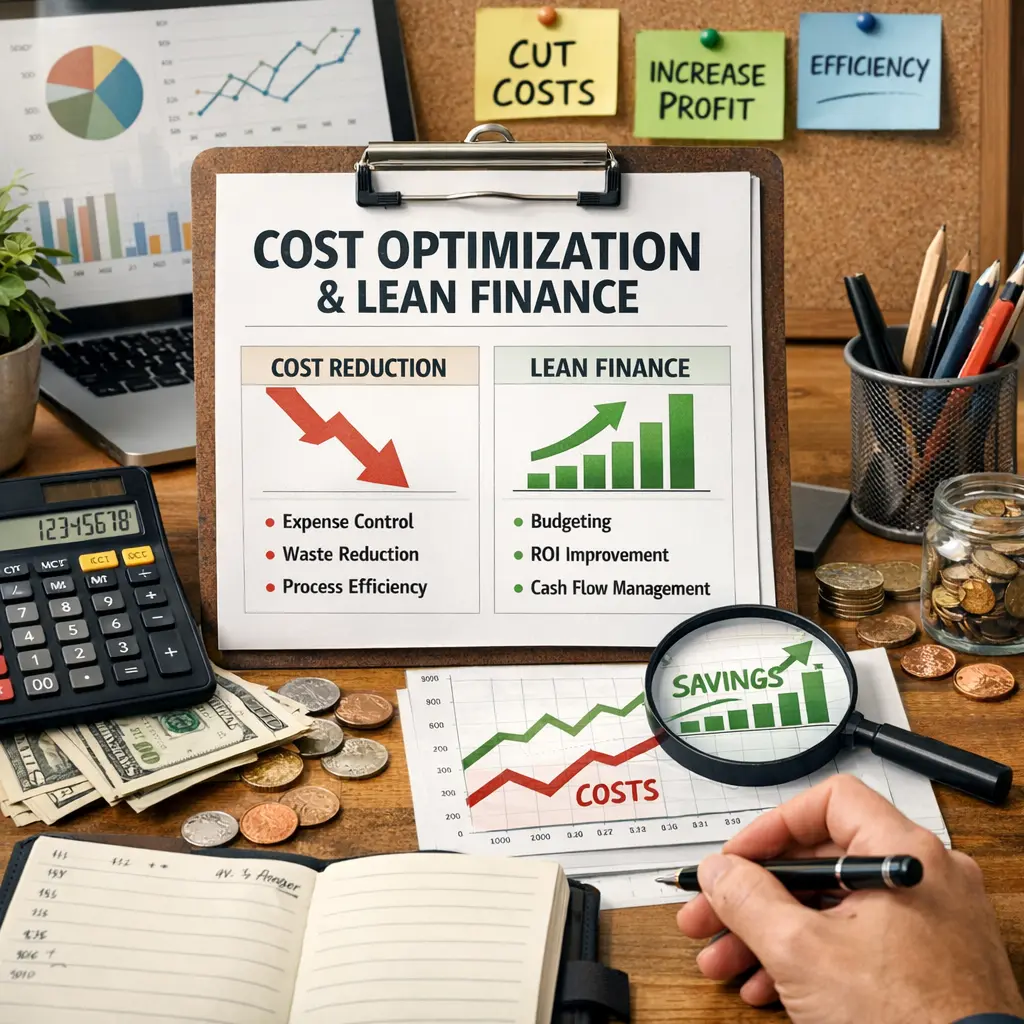
Cost Optimization & Lean Finance refers to strategic approaches in financial management and business practices aimed at maximizing value while minimizing expenses. It involves identifying inefficiencies, streamlining processes, and eliminating waste to ensure resources are used effectively. By adopting lean principles, organizations focus on continuous improvement, data-driven decision-making, and resource allocation, ultimately enhancing profitability, sustainability, and competitiveness without compromising quality or performance.
Cost Optimization & Lean Finance
Cost Optimization & Lean Finance refers to strategic approaches in financial management and business practices aimed at maximizing value while minimizing expenses. It involves identifying inefficiencies, streamlining processes, and eliminating waste to ensure resources are used effectively. By adopting lean principles, organizations focus on continuous improvement, data-driven decision-making, and resource allocation, ultimately enhancing profitability, sustainability, and competitiveness without compromising quality or performance.
💡 Key Takeaways
- Grasp the core principles of lean finance and how they focus on eliminating waste in financial processes rather than across-the-board cuts
- Identify common sources of waste and cost leakage in budgeting, procurement, and cash flow, and learn how to measure them
- Learn cost-optimization techniques such as activity-based costing, zero-based budgeting, vendor negotiation, and total cost of ownership to reduce total costs
- Use key financial metrics and dashboards (cash flow, working capital, ROI, payback) to monitor and sustain cost optimization efforts
❓ Frequently Asked Questions
What is cost optimization in lean finance?
A systematic approach to reducing wasteful costs while preserving value, improving efficiency, cash flow, and profitability.
How is cost optimization different from mere cost cutting?
Cost cutting reduces expenses quickly, often at the expense of quality or capacity; cost optimization eliminates waste and enhances value for long‑term profitability.
Which lean tool helps pinpoint non-value-added steps in processes?
Value stream mapping, which visualizes the full process to identify delays, excess inventory, and waste to eliminate.
How can you improve cash flow as part of cost optimization?
Optimize working capital by speeding collections, extending payment terms where possible, and reducing excess inventory and overproduction.
What metric indicates how efficiently revenue is turned into profit after operating costs?
Operating margin (or EBITDA margin); a higher margin signals better cost control and lean execution.