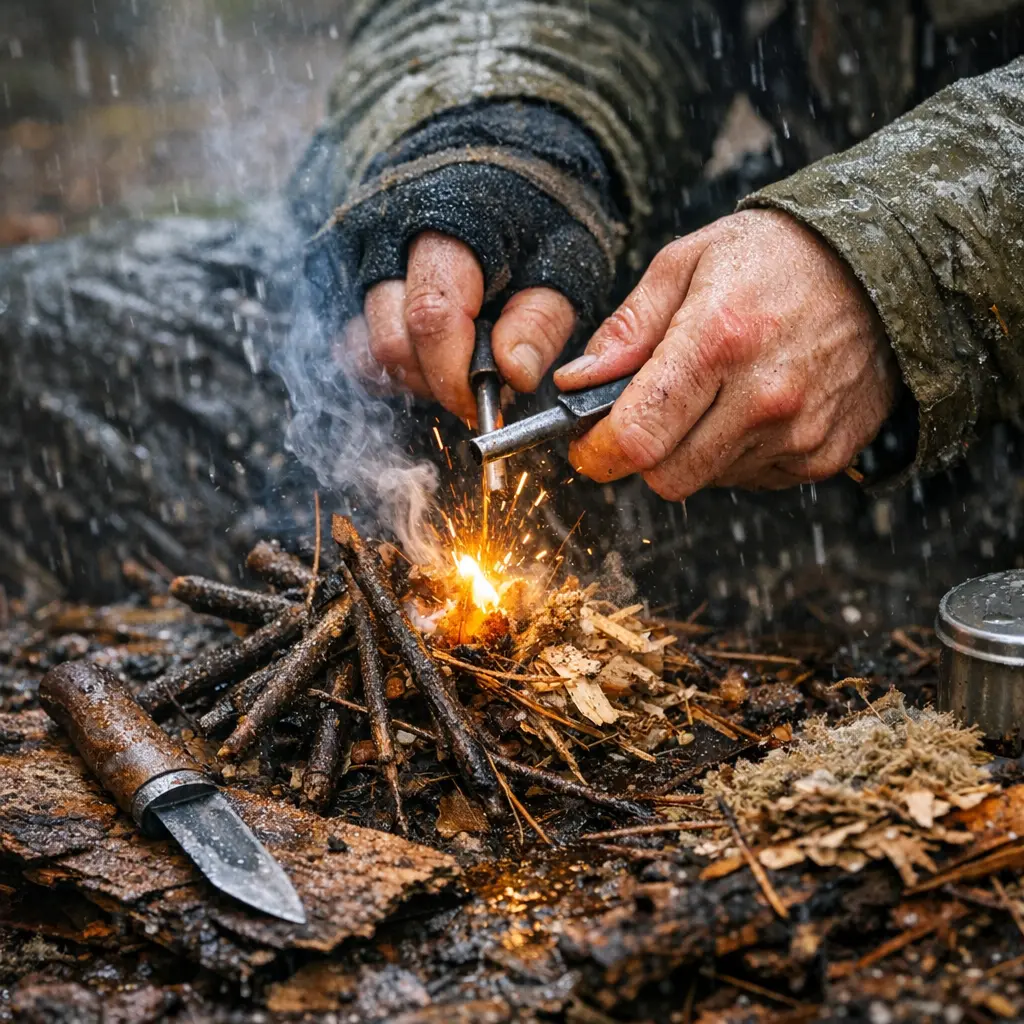
Creating a fire in wet conditions is a crucial survival skill, often highlighted in survival stories. It involves overcoming challenges like damp wood, rain, and humidity to produce warmth and a means to cook food or signal for help. Survivors use techniques such as finding dry tinder under bark, using waterproof matches, or building a shelter to protect the fire. Success demonstrates resourcefulness, perseverance, and adaptability in harsh environments.
Creating a Fire in Wet Conditions
Creating a fire in wet conditions is a crucial survival skill, often highlighted in survival stories. It involves overcoming challenges like damp wood, rain, and humidity to produce warmth and a means to cook food or signal for help. Survivors use techniques such as finding dry tinder under bark, using waterproof matches, or building a shelter to protect the fire. Success demonstrates resourcefulness, perseverance, and adaptability in harsh environments.
💡 Key Takeaways
- Identify dry tinder and kindling in wet conditions to ignite a fire.
- Build a fire lay that shields the flame from rain and wind while keeping fuel dry.
- Choose reliable ignition and fuel options for wet weather (waterproof tinder, ferro rod, or waxed tinder) to start and sustain a fire.
- Practice safety and environmental responsibility: select a safe site, monitor the fire, and fully extinguish it when finished.
❓ Frequently Asked Questions
What makes it difficult to start a fire in wet conditions?
Moisture in tinder and fuel raises ignition temperatures and steals heat, while rain-wetted surfaces hinder flame formation and burning.
Which materials tend to light more reliably in wet weather?
Dry tinder and seasoned wood ignite more easily than damp materials; keeping tinder dry and using reliable fire starters helps in wet conditions.
How does moisture affect burn quality and heat output?
Water in the fuel absorbs heat to evaporate, slowing ignition and producing cooler, smokier flames with less heat.
What safety steps should you follow when trying to light a fire in wet conditions?
Choose a safe, sheltered site away from flammables, have a means to extinguish the fire, never leave it unattended, and fully extinguish it when done.
What alternatives or prep steps can help in wet conditions if starting a fire is unreliable?
Carry reliable fire-starting tools, keep dry tinder in a waterproof container, and consider non-fire warmth options if conditions prevent safe lighting.