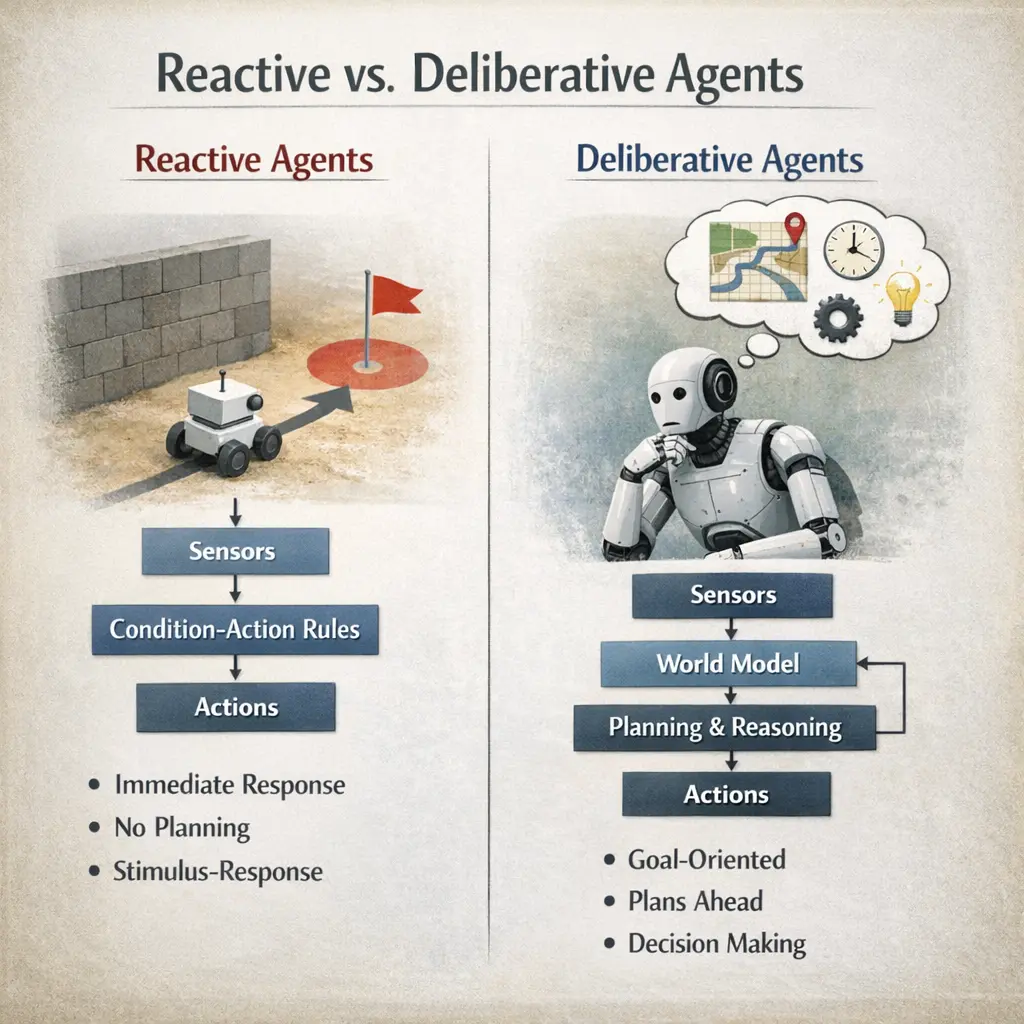
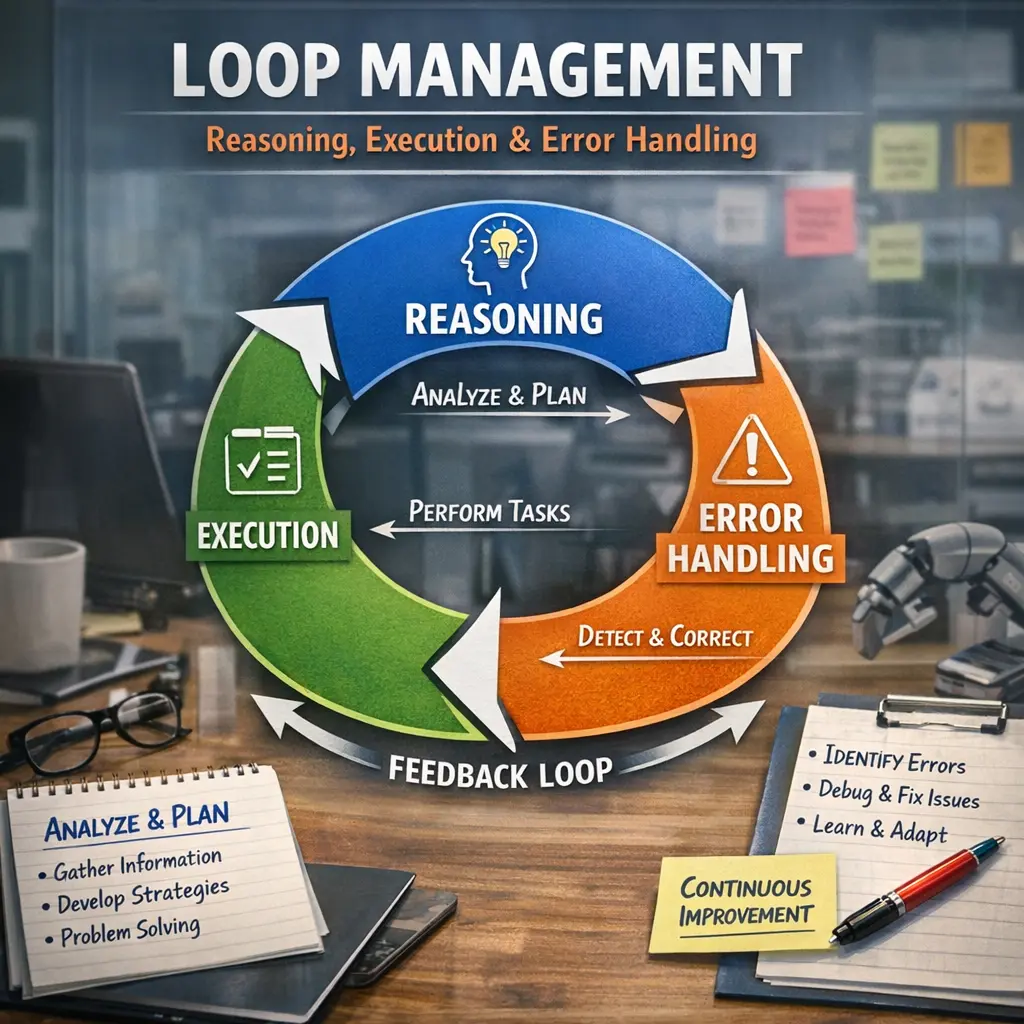
Critic-Assistant Loops in agent architecture refer to a system where two components—the “assistant” (an agent generating solutions or actions) and the “critic” (an evaluator or verifier)—interact iteratively. The assistant proposes outputs, while the critic reviews, provides feedback, or requests revisions. This loop continues until the output meets the desired criteria. Such architectures enhance reliability, creativity, and self-improvement in AI systems by integrating evaluation and refinement directly into the workflow.
Critic-Assistant Loops
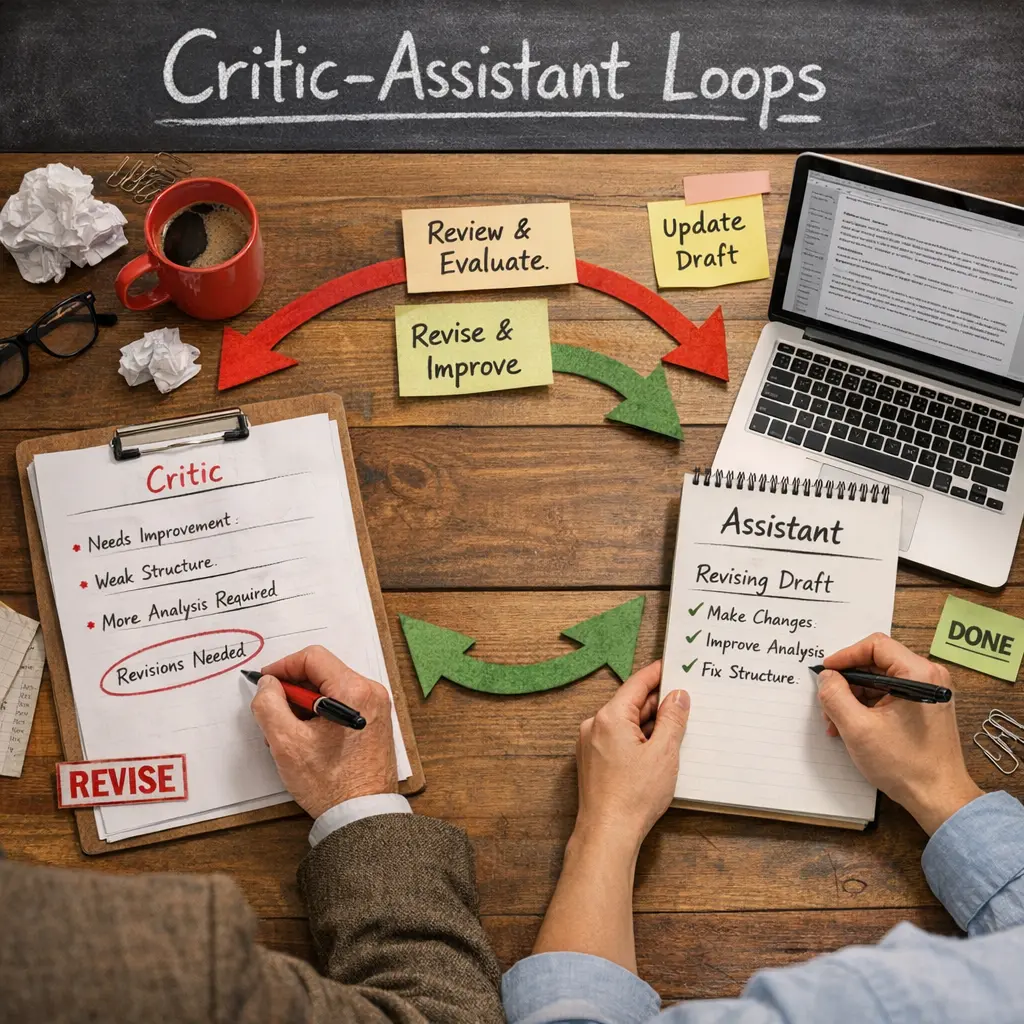
Critic-Assistant Loops in agent architecture refer to a system where two components—the “assistant” (an agent generating solutions or actions) and the “critic” (an evaluator or verifier)—interact iteratively. The assistant proposes outputs, while the critic reviews, provides feedback, or requests revisions. This loop continues until the output meets the desired criteria. Such architectures enhance reliability, creativity, and self-improvement in AI systems by integrating evaluation and refinement directly into the workflow.
💡 Key Takeaways
- Understand how critic and assistant collaborate in iterative feedback loops to improve content.
- Learn to craft concise, actionable critiques that drive concrete edits.
- Recognize common pitfalls in loops (repetition, bias, over-editing) and how to avoid them.
- Apply the critic-assistant loop to enhance accuracy, clarity, and usefulness of outputs.
❓ Frequently Asked Questions
What is a critic-assistant loop?
An iterative process where an assistant generates an answer, a separate critic evaluates it for accuracy and clarity, and the assistant revises the response based on the critique, repeating as needed.
How does this loop improve accuracy and reasoning?
The critic helps catch errors, biases, and unclear reasoning, guiding the assistant to refine and strengthen the final answer.
What are the typical steps in a critic-assistant loop?
Generate → Critique → Revise → (repeat as needed) → Final answer, with optional summarization after refinement.
What should you watch out for when using these loops?
Be mindful of slower responses, reliance on the critic's quality, and potential bias reinforcement; ensure diverse, independent critiques and purposeful stopping criteria.