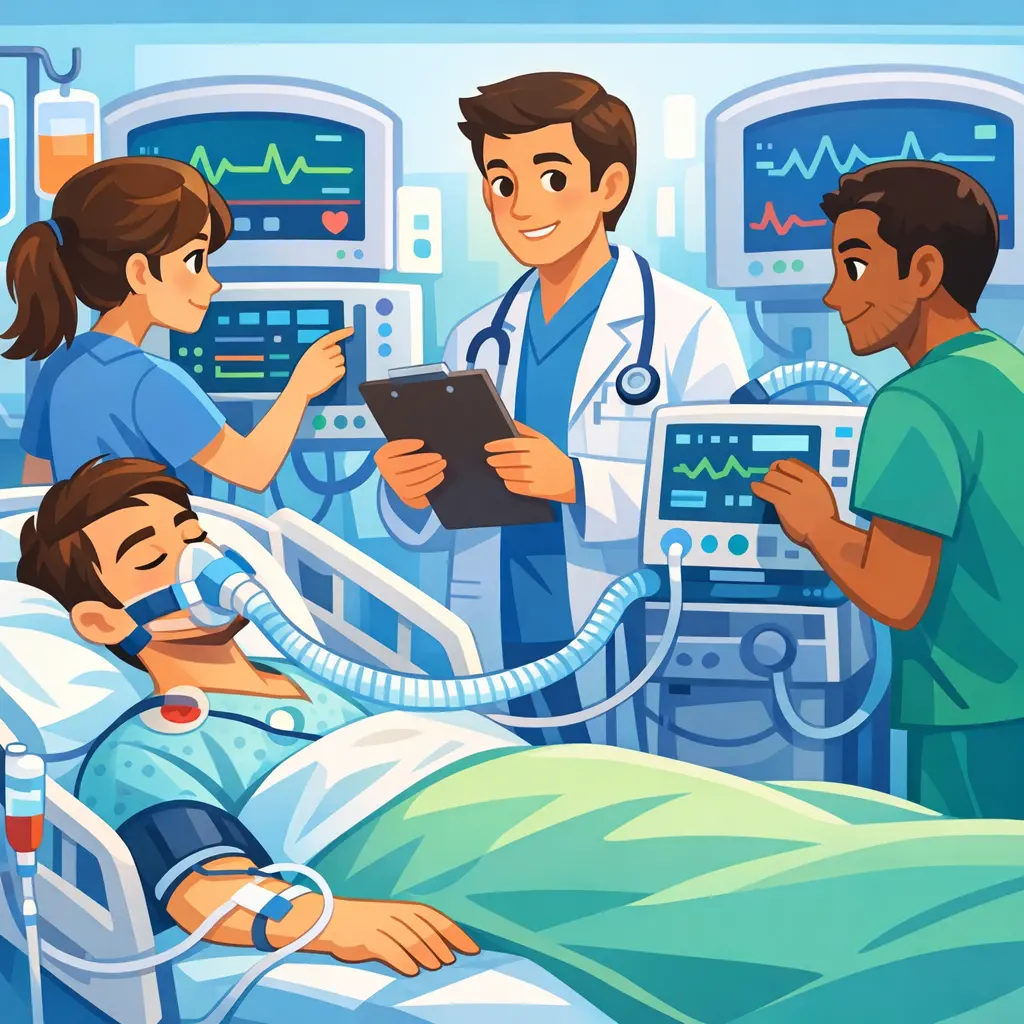
Critical Care and ICU roles involve healthcare professionals who provide specialized care to patients with life-threatening conditions. Working in intensive care units, these professionals—such as critical care nurses, intensivists, and respiratory therapists—monitor vital signs, administer advanced treatments, and respond rapidly to emergencies. They collaborate closely with multidisciplinary teams to stabilize patients, manage complex medical equipment, and deliver continuous, high-level care, ensuring the best possible outcomes for critically ill individuals.
Critical Care & ICU Roles
Critical Care and ICU roles involve healthcare professionals who provide specialized care to patients with life-threatening conditions. Working in intensive care units, these professionals—such as critical care nurses, intensivists, and respiratory therapists—monitor vital signs, administer advanced treatments, and respond rapidly to emergencies. They collaborate closely with multidisciplinary teams to stabilize patients, manage complex medical equipment, and deliver continuous, high-level care, ensuring the best possible outcomes for critically ill individuals.
💡 Key Takeaways
- Identify the core ICU team members and how they collaborate to care for critically ill patients.
- Describe common ICU monitoring and life-support tools (e.g., ventilators, monitors) and what they do.
- Explain the decision-making process in the ICU, including admission criteria and goals of care.
- Understand key ICU safety practices and care coordination, such as infection control and sedation/delirium management.
❓ Frequently Asked Questions
What is critical care and what is the ICU?
Critical care provides life‑sustaining medical treatment for patients with life‑threatening conditions; the ICU is a specialized hospital unit with continuous monitoring and advanced supports (e.g., ventilation, vasopressors, organ support).
Who typically makes up the ICU care team?
The ICU team usually includes intensivists (critical care physicians), specially trained ICU nurses, respiratory therapists, pharmacists, physical/occupational therapists, social workers, and dietitians, all collaborating on patient care.
What kinds of monitoring and treatments are common in the ICU?
ICU care involves continuous monitoring of vital signs, use of invasive lines (arterial/central venous), mechanical ventilation when needed, medications to support blood pressure and organ function, fluids, and frequent labs and imaging to guide decisions.
How are decisions about care and goals made in the ICU?
Care is coordinated through regular rounds, with discussions about prognosis, goals, and preferred outcomes with patients or their surrogates; ethics and palliative care consults may be involved to align treatment with values.