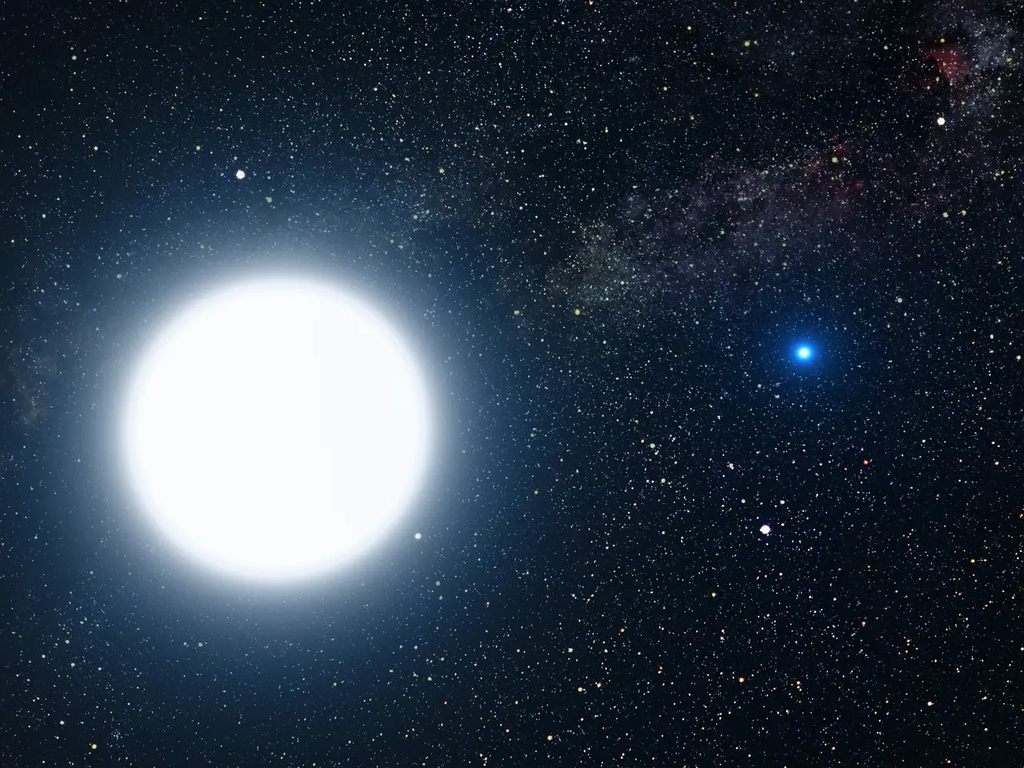
"Dark Matter Basics" refers to the fundamental concepts about dark matter, a mysterious and invisible substance that makes up most of the universe’s mass. In the context of "Space Quest: Explore the Planets and Stars," it involves understanding how dark matter influences the movement of galaxies, shapes cosmic structures, and affects the behavior of visible matter, even though it cannot be directly observed with telescopes.
Dark Matter Basics
"Dark Matter Basics" refers to the fundamental concepts about dark matter, a mysterious and invisible substance that makes up most of the universe’s mass. In the context of "Space Quest: Explore the Planets and Stars," it involves understanding how dark matter influences the movement of galaxies, shapes cosmic structures, and affects the behavior of visible matter, even though it cannot be directly observed with telescopes.
💡 Key Takeaways
- Define dark matter and why it matters in cosmology
- Recognize major evidence for dark matter (galaxy rotation curves, gravitational lensing, and the cosmic microwave background)
- Describe leading dark matter candidates and how scientists search for them
- Explain dark matter's role in structure formation and galaxy evolution
❓ Frequently Asked Questions
What is dark matter?
Dark matter is invisible matter that does not emit, absorb, or reflect light. It interacts mainly through gravity and helps explain why galaxies rotate as they do and how structures form in the universe.
What evidence supports the existence of dark matter?
Key evidence includes galaxy rotation curves, the dynamics of galaxy clusters, gravitational lensing, and fluctuations in the cosmic microwave background, all pointing to unseen mass.
What are common dark matter candidates?
Popular candidates include WIMPs (weakly interacting massive particles), axions, and sterile neutrinos; none has been conclusively detected yet.
How do scientists attempt to detect dark matter?
Direct detection searches look for tiny nuclear recoils in underground detectors; indirect detection looks for byproducts of dark matter annihilation or decay; collider experiments search for events with missing energy that could indicate dark matter production.
Could dark matter be explained by modifying gravity?
Some theories modify gravity at large scales (e.g., MOND), but most data are best explained with dark matter; researchers continue to explore both ideas.