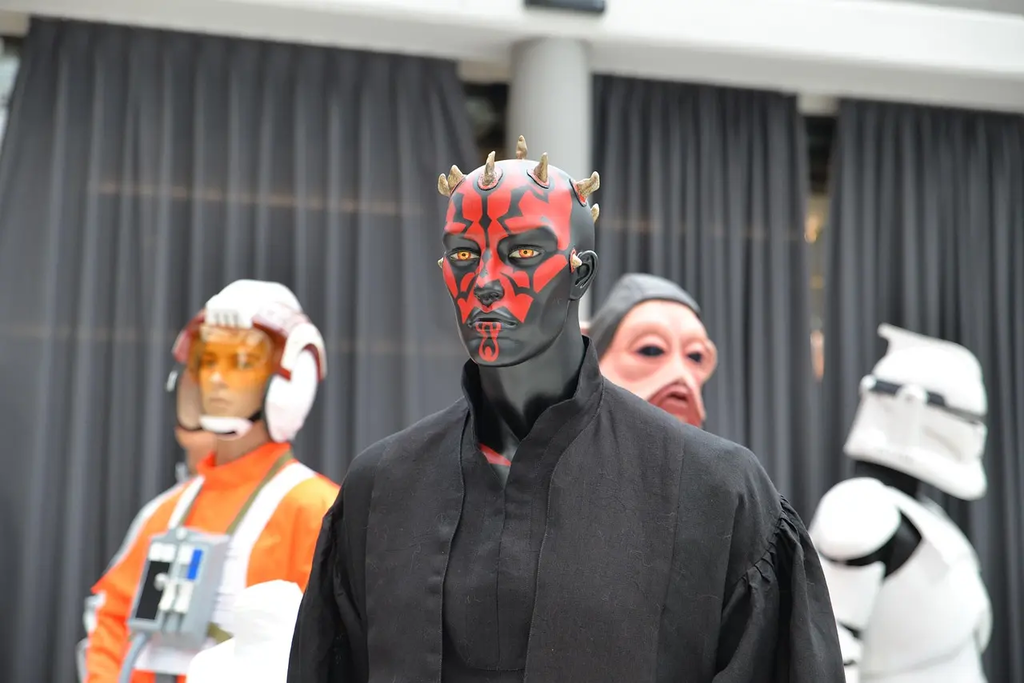
Darth Maul’s resurrection refers to his survival after being defeated by Obi-Wan Kenobi in "The Phantom Menace." Fueled by hatred, he returns with cybernetic legs and seeks revenge. Later, Maul becomes the mastermind behind the criminal syndicate Crimson Dawn, manipulating galactic events from the shadows. His leadership of Crimson Dawn showcases his cunning and ambition, establishing him as a formidable force in the criminal underworld and expanding his legacy beyond the Sith.
Darth Maul Resurrection and Crimson Dawn
Darth Maul’s resurrection refers to his survival after being defeated by Obi-Wan Kenobi in "The Phantom Menace." Fueled by hatred, he returns with cybernetic legs and seeks revenge. Later, Maul becomes the mastermind behind the criminal syndicate Crimson Dawn, manipulating galactic events from the shadows. His leadership of Crimson Dawn showcases his cunning and ambition, establishing him as a formidable force in the criminal underworld and expanding his legacy beyond the Sith.
💡 Key Takeaways
- Understand Darth Maul's resurrection after The Phantom Menace and what fuels his return.
- Recognize how Maul's cybernetic legs affect his combat style and presence.
- Learn how Maul becomes the mastermind behind Crimson Dawn and the syndicate's role in galactic affairs.
- Grasp how Maul's personal vengeance evolves into strategic manipulation of galactic events.
❓ Frequently Asked Questions
How did Darth Maul survive after his defeat by Obi-Wan Kenobi in The Phantom Menace?
Maul survived thanks to the Nightsisters of Dathomir and their magic, then was rebuilt with cybernetic legs to regain mobility and continue his quest for revenge.
What is Crimson Dawn?
Crimson Dawn is a galactic criminal syndicate built and run by Maul, uniting various gangs under his influence and manipulating events from the shadows.
What is Darth Maul's role in Crimson Dawn?
Maul acts as the mastermind behind Crimson Dawn, orchestrating its operations and steering galactic events through covert manipulation rather than direct leadership.
Who leads Crimson Dawn publicly, and how does Maul fit into the leadership?
Qi'ra leads Crimson Dawn publicly in the Solo era, while Maul remains the true power behind the scenes, having established and guided the syndicate’s actions.