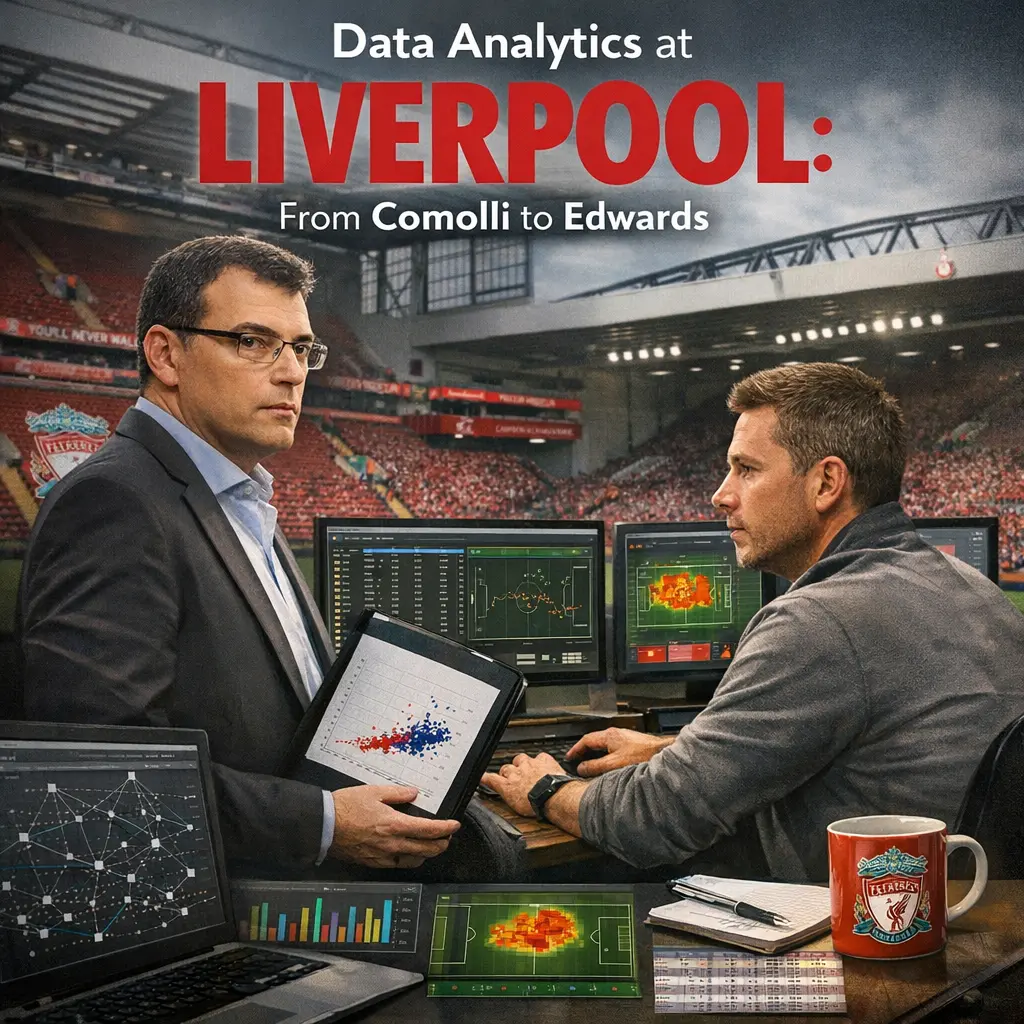
"Data Analytics at Liverpool: From Comolli to Edwards" refers to Liverpool F.C.'s evolution in using data-driven decision-making in football operations. Damien Comolli, as Director of Football, introduced early analytics to player recruitment. Later, Michael Edwards, as Sporting Director, advanced these methods, integrating sophisticated statistical analysis into scouting, transfers, and match preparation. This strategic shift contributed significantly to Liverpool’s recent successes, highlighting the club’s commitment to innovation and evidence-based management in football.
Data Analytics at Liverpool: From Comolli to Edwards
"Data Analytics at Liverpool: From Comolli to Edwards" refers to Liverpool F.C.'s evolution in using data-driven decision-making in football operations. Damien Comolli, as Director of Football, introduced early analytics to player recruitment. Later, Michael Edwards, as Sporting Director, advanced these methods, integrating sophisticated statistical analysis into scouting, transfers, and match preparation. This strategic shift contributed significantly to Liverpool’s recent successes, highlighting the club’s commitment to innovation and evidence-based management in football.
💡 Key Takeaways
- Compare Liverpool's data-driven recruitment approach under Comolli and Edwards and how decisions evolved.
- Identify key metrics and data sources used in player evaluation and how they complement traditional scouting.
- Explain how analytics shapes transfer targets, squad balance, and long-term planning.
- Highlight challenges in interpreting data and the role of human judgment and cross-functional collaboration.
- Emphasize the importance of data culture, leadership, and governance in a football analytics program.
❓ Frequently Asked Questions
What is data analytics in football?
The systematic collection and analysis of match and player data to measure performance, compare options, and inform decisions like signings and tactics.
Who were Damien Comolli and Michael Edwards in Liverpool's recruitment history?
They were Liverpool's football executives responsible for player recruitment; Comolli helped establish a more formal, data-informed scouting approach, while Edwards later led a broader, data-driven recruitment strategy.
How can data analytics influence recruitment decisions?
By providing objective metrics on performance, potential, cost, and risk, which complement scouts’ judgments and help target players who fit the team’s style and budget.
What are common data sources and metrics used in football analytics?
Event data from matches (passes, shots, tackles), advanced metrics like xG/xA, defensive and pressing stats, and factors such as age, contract length, and market value.
What is the difference between a data-driven approach and traditional scouting?
A data-driven approach uses quantitative metrics to evaluate players and predict future performance, while traditional scouting relies more on qualitative observations; the best teams blend both.