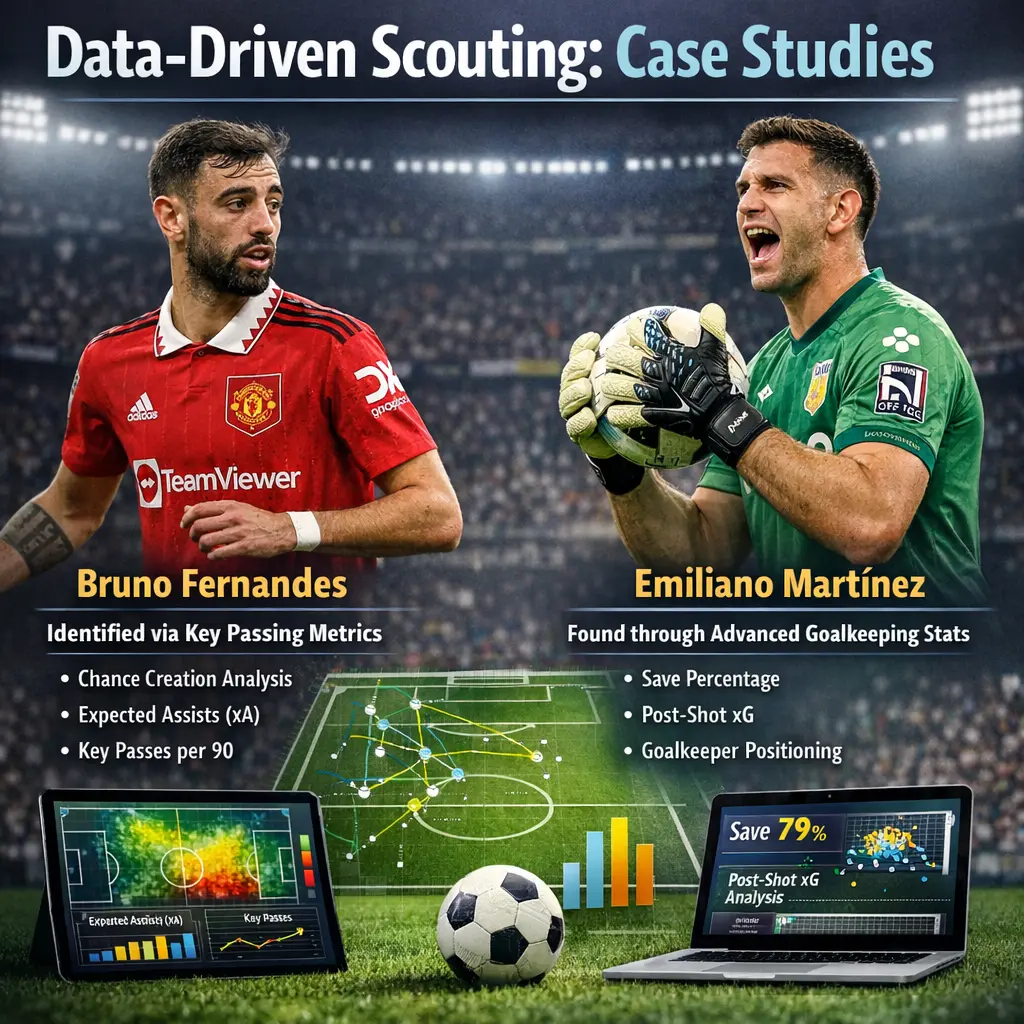
Data-driven scouting refers to the use of advanced analytics and statistical models to identify and evaluate football talent. Case studies involving players like Bruno Fernandes and Lisandro Martínez at Manchester United F.C. highlight how the club leveraged data to assess player performance, suitability, and potential impact. These examples demonstrate the effectiveness of integrating quantitative insights with traditional scouting, leading to informed recruitment decisions and improved team performance.
Data-Driven Scouting: Case Studies (Fernandes, Martínez)
Data-driven scouting refers to the use of advanced analytics and statistical models to identify and evaluate football talent. Case studies involving players like Bruno Fernandes and Lisandro Martínez at Manchester United F.C. highlight how the club leveraged data to assess player performance, suitability, and potential impact. These examples demonstrate the effectiveness of integrating quantitative insights with traditional scouting, leading to informed recruitment decisions and improved team performance.
💡 Key Takeaways
- Grasp what data-driven scouting is and why it changes traditional talent evaluation.
- Identify common data sources and metrics used in scouting (performance stats, tracking data, and contextual factors).
- See how Fernandes and Martínez's case studies illustrate turning data insights into concrete scouting recommendations.
- Recognize limitations and biases in data-driven scouting and learn strategies to mitigate them.
❓ Frequently Asked Questions
What is data-driven scouting?
A scouting approach that relies on quantitative data (stats and metrics) alongside qualitative observations to evaluate talent, rather than relying on intuition alone.
What insights can the Fernandes and Martínez case studies illustrate about data-driven scouting?
They show how data analyses can identify promising players, compare candidates, and reveal both the strengths and limitations of metrics in predicting future performance.
What types of data are used in data-driven scouting?
Performance stats (goals, assists, passes), physical data (speed, stamina), context (level of competition, team role), and advanced metrics (xG, xA, defensive actions), plus qualitative notes.
How does data-driven scouting complement traditional scouting?
It provides objective signals, helps manage large candidate pools, and reduces bias, while still benefiting from expert judgment on fit, attitude, and adaptability.