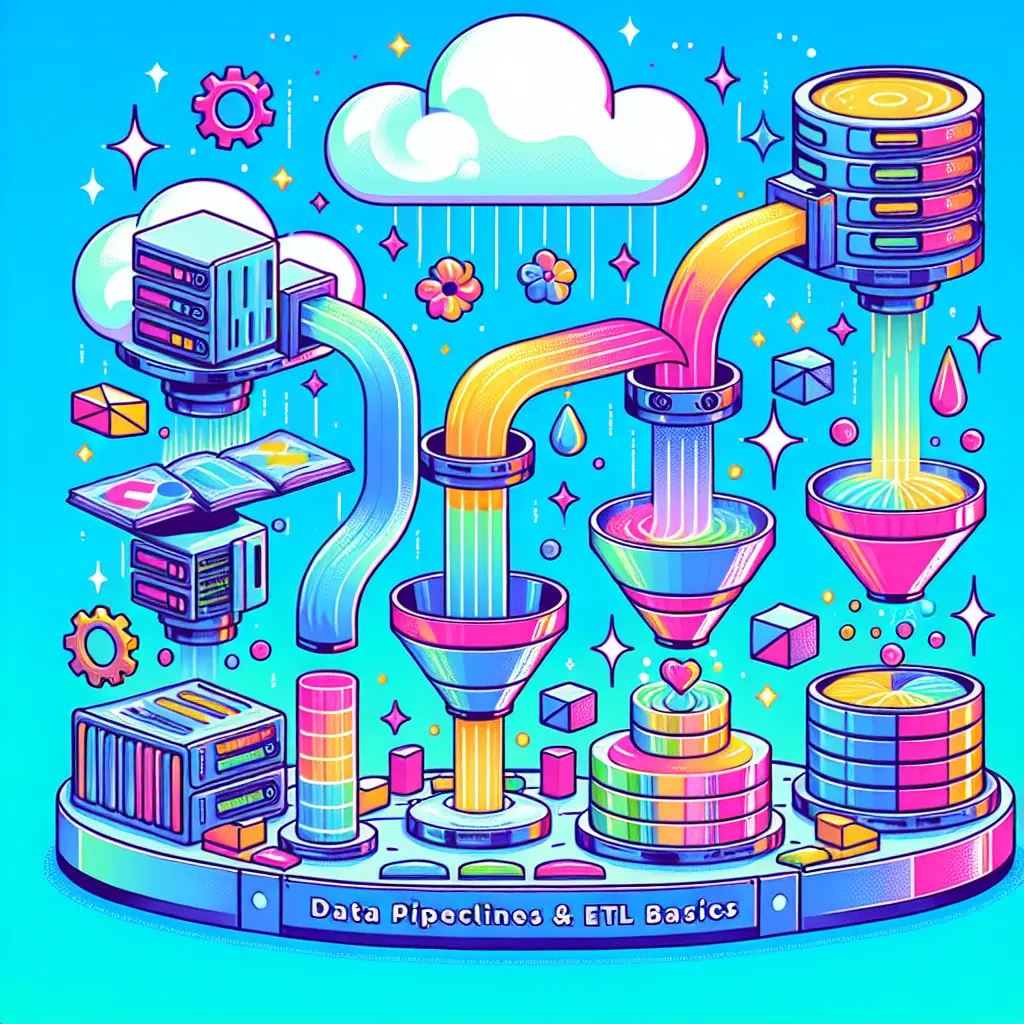
Data pipelines are systems that move and process data from various sources to destinations, often for analysis or storage. ETL stands for Extract, Transform, Load, which are the key steps in this process. Extraction gathers data from different sources, transformation cleans and formats it, and loading places the processed data into a target system like a database or data warehouse. Together, they ensure efficient, reliable, and organized data flow for business needs.
Data Pipelines & ETL Basics
Data pipelines are systems that move and process data from various sources to destinations, often for analysis or storage. ETL stands for Extract, Transform, Load, which are the key steps in this process. Extraction gathers data from different sources, transformation cleans and formats it, and loading places the processed data into a target system like a database or data warehouse. Together, they ensure efficient, reliable, and organized data flow for business needs.
💡 Key Takeaways
- Understand what data pipelines are and why they matter for moving data from multiple sources to analysis-ready destinations
- Learn the ETL framework: Extract data from sources, Transform it (clean/format/validate), and Load it into the target store
- Identify common data sources and destinations (databases, data lakes, data warehouses) and what happens during the transformation
- Recognize core ETL design considerations such as data quality, error handling, scheduling, and scalability
❓ Frequently Asked Questions
What is a data pipeline?
A set of automated steps that move and process data from various sources to a destination for storage or analysis.
What does ETL stand for and what does each step do?
Extract gathers data from sources; Transform cleans, formats, and enriches it; Load writes the processed data into a destination such as a data warehouse.
What is the difference between ETL and ELT?
In ETL, data is transformed before loading; in ELT, data is loaded first (often in raw form) and transformed inside the destination system using its compute resources.
What is data transformation in the ETL process?
The process of cleaning, reshaping, and formatting data to make it suitable for analysis (e.g., removing errors and normalizing formats).