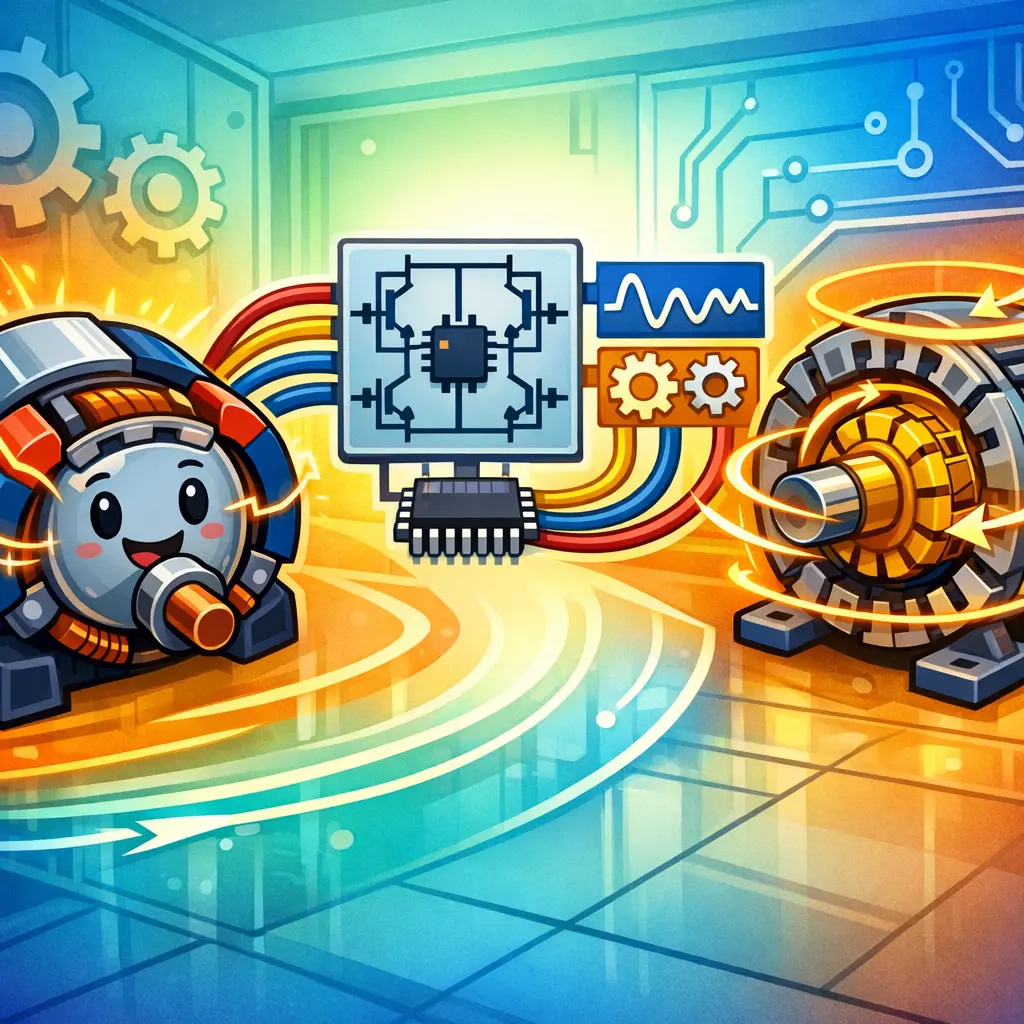
DC motors and induction motors are fundamental types of electric motors used in various applications. DC motors operate on direct current, offering precise speed control, while induction motors use alternating current and are known for their robustness and simplicity. Basic drive concepts involve understanding how these motors are powered, controlled, and integrated into circuits, focusing on core principles of electricity, such as voltage, current, resistance, and the behavior of electrical circuits.
DC Motors, Induction Motors & Basic Drive Concepts
DC motors and induction motors are fundamental types of electric motors used in various applications. DC motors operate on direct current, offering precise speed control, while induction motors use alternating current and are known for their robustness and simplicity. Basic drive concepts involve understanding how these motors are powered, controlled, and integrated into circuits, focusing on core principles of electricity, such as voltage, current, resistance, and the behavior of electrical circuits.
💡 Key Takeaways
- Differentiate DC motors from induction motors in construction, operation, and typical applications.
- Explain basic drive concepts and how voltage/current (and frequency for AC) set speed and torque.
- Identify common control methods for each motor: PWM for DC motors and V/f or VFDs for induction motors.
- Compare startup current, efficiency, maintenance, and typical use cases for DC and induction motors.
❓ Frequently Asked Questions
What is a DC motor?
A DC motor converts direct current into mechanical rotation using wound windings and a commutation method (brushes or electronic) to switch current.
What is back-EMF in a DC motor and why does it matter?
Back-EMF is the voltage generated by the spinning rotor that opposes the supply. It reduces net voltage, limits current, and provides natural speed feedback.
What is an induction motor and what is slip?
An induction motor uses AC to create a rotating magnetic field in the stator; the rotor lags behind by a small speed difference called slip, which enables torque.
What is a motor drive and how does it control speed?
A drive uses power electronics and control algorithms to adjust motor voltage and/or frequency. For DC motors, speed is controlled by voltage or field current; for induction motors, drives vary voltage and frequency (often via PWM) to set speed and torque.