De Stijl, meaning "The Style," was a Dutch artistic movement founded in 1917, closely associated with Neoplasticism. It emphasized abstraction, simplicity, and harmony through the use of straight lines, right angles, and primary colors alongside black, white, and gray. Artists like Piet Mondrian and Theo van Doesburg sought to express universal beauty by reducing art to its essential forms and colors, influencing modern architecture, design, and visual arts.
De Stijl & Neoplasticism
De Stijl, meaning "The Style," was a Dutch artistic movement founded in 1917, closely associated with Neoplasticism. It emphasized abstraction, simplicity, and harmony through the use of straight lines, right angles, and primary colors alongside black, white, and gray. Artists like Piet Mondrian and Theo van Doesburg sought to express universal beauty by reducing art to its essential forms and colors, influencing modern architecture, design, and visual arts.
💡 Key Takeaways
- Grasp the core idea of Neoplasticism: reducing art to pure geometry and color to express universal harmony.
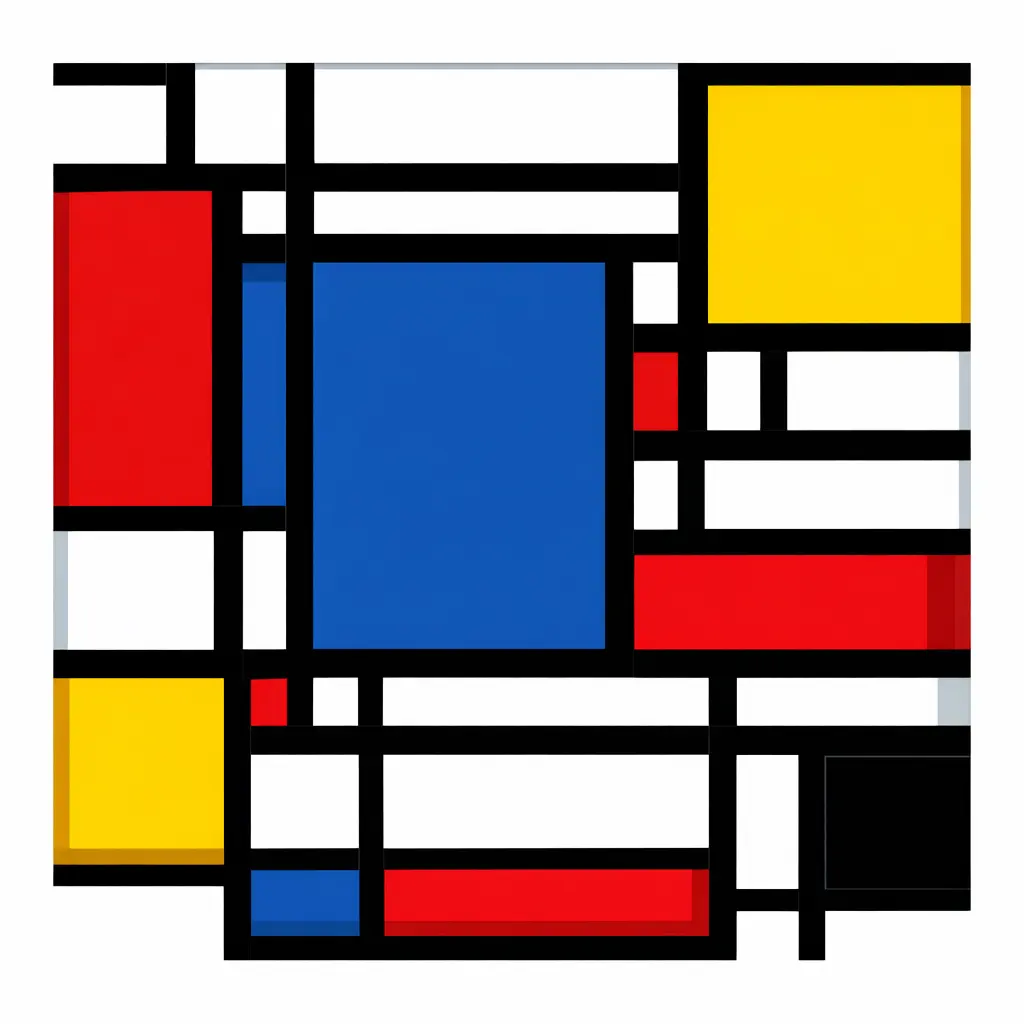
- Identify the signature visual language: grid-based layouts with vertical and horizontal lines and a limited palette of red, blue, yellow, black, and white.
- Know key figures and works, especially Piet Mondrian and Theo van Doesburg, and their iconic compositions.
- Recognize De Stijl's influence on architecture and product design, including simplified furniture and architectural designs by Gerrit Rietveld.
❓ Frequently Asked Questions
What is De Stijl?
De Stijl (The Style) is a Dutch art movement founded around 1917 that champions universal harmony through simplified geometric abstraction and the use of primary colors plus black, white, and gray. Key figures include Piet Mondrian and Theo van Doesburg; it influenced painting, architecture, and design.
What is Neoplasticism?
Neoplasticism is a theoretical approach to abstract art developed by Mondrian and collaborators, emphasizing pure plastic art made of simple straight lines, primary colors, and neutral tones to express universal order and harmony.
How are De Stijl and Neoplasticism related or different?
Neoplasticism provides the abstract language often associated with De Stijl. De Stijl is the broader movement encompassing art, architecture, and design, while Neoplasticism focuses on the reductionist principles of form and color.
What are common visual features of De Stijl/Neoplasticism works?
Grid-like compositions of vertical/horizontal lines; subdivided rectangles; a palette of red, blue, yellow, black, white, and gray; no representational imagery; emphasis on balance and universal order.