Deep breathing techniques are mindful exercises focused on slow, controlled inhalation and exhalation. These techniques activate the body’s relaxation response, reducing stress and anxiety while promoting emotional balance. By increasing oxygen flow, deep breathing helps lower heart rate and blood pressure, enhances mental clarity, and supports overall healing. Practiced regularly, it can improve sleep, boost mood, and strengthen the immune system, making it a valuable tool for holistic well-being.
Deep Breathing Techniques
Deep breathing techniques are mindful exercises focused on slow, controlled inhalation and exhalation. These techniques activate the body’s relaxation response, reducing stress and anxiety while promoting emotional balance. By increasing oxygen flow, deep breathing helps lower heart rate and blood pressure, enhances mental clarity, and supports overall healing. Practiced regularly, it can improve sleep, boost mood, and strengthen the immune system, making it a valuable tool for holistic well-being.
💡 Key Takeaways
- Define deep breathing and how diaphragmatic breathing works.
- Benefits include stress reduction, a calmer mind, and a slower heart rate.
- Learn and practice three common techniques: diaphragmatic breathing, box breathing, and 4-7-8 breathing.
- Get practical tips for daily use: when to breathe, duration, and posture.
❓ Frequently Asked Questions
What is deep breathing and why is it used?
Deep breathing slows and deepens each breath to activate the body's relaxation response, helping reduce stress and tension.
How do you perform diaphragmatic (belly) breathing?
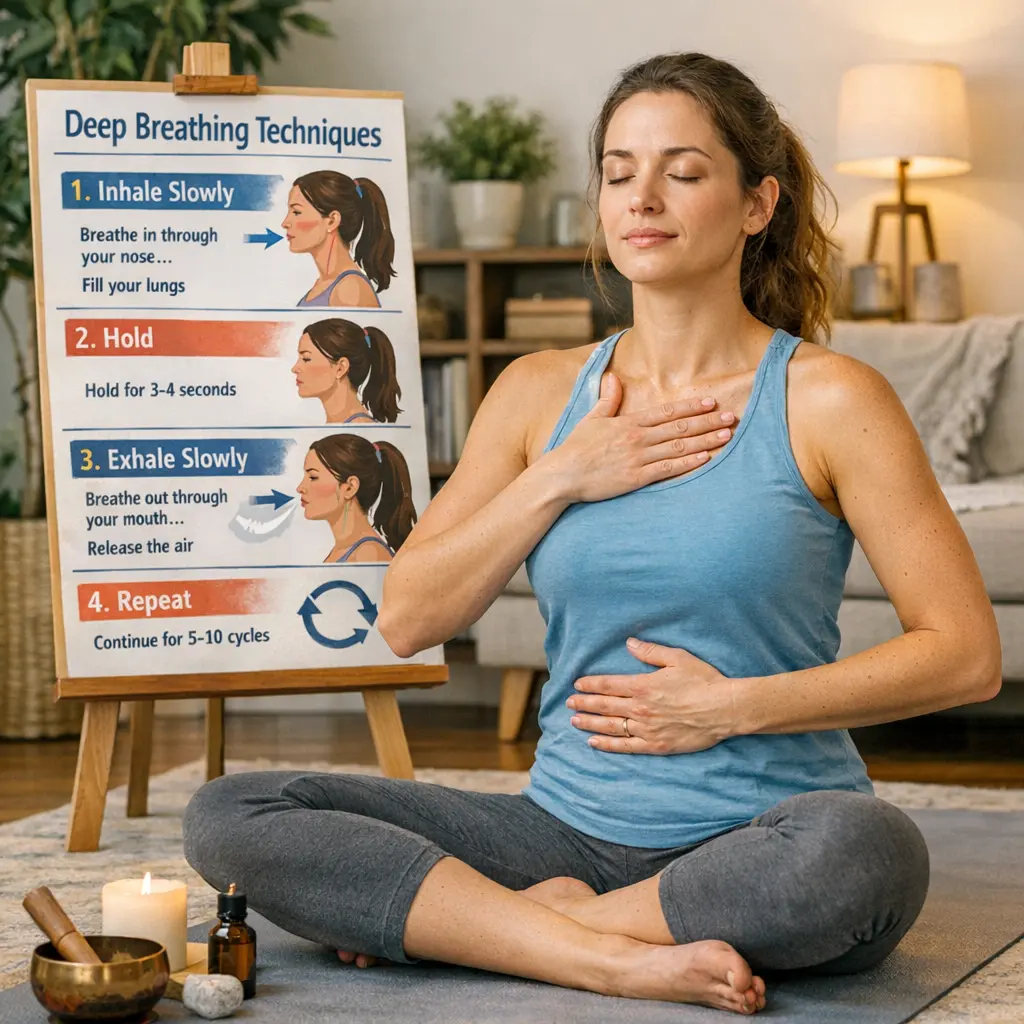
Sit or lie down. Place one hand on your chest and the other on your belly. Inhale through your nose, letting the belly rise while the chest stays still. Exhale slowly through pursed lips.
What are some common deep breathing techniques?
Diaphragmatic breathing, box breathing (inhale, hold, exhale, hold with equal counts), and the 4-7-8 method (inhale 4, hold 7, exhale 8).
What benefits and safety tips apply to deep breathing?
Benefits include reduced stress, improved focus, and better sleep. If you feel dizzy or have a medical condition, pause and consult a clinician before continuing.