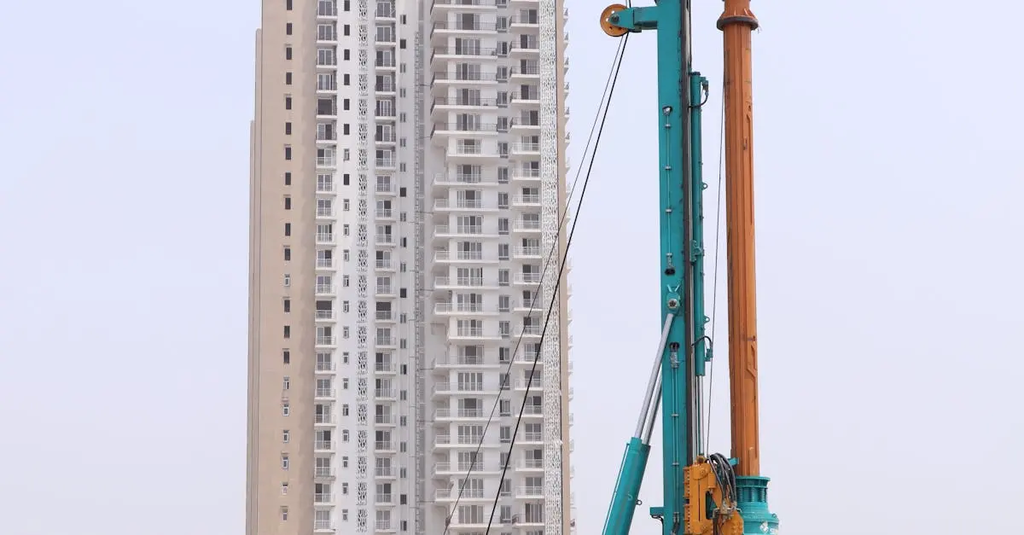
Deep foundations, such as piles and piers, are structural elements used in construction to transfer building loads to deeper, more stable soil layers or rock beneath the surface. Piles are long, slender columns driven or drilled deep into the ground, while piers are large, cylindrical supports cast in place. Both methods ensure stability for structures on weak or shifting soils, preventing settlement and providing support for heavy loads.
Deep Foundations: Piles and Piers
Deep foundations, such as piles and piers, are structural elements used in construction to transfer building loads to deeper, more stable soil layers or rock beneath the surface. Piles are long, slender columns driven or drilled deep into the ground, while piers are large, cylindrical supports cast in place. Both methods ensure stability for structures on weak or shifting soils, preventing settlement and providing support for heavy loads.
💡 Key Takeaways
- Understand what deep foundations are and why piles and piers are used to support structures.
- Distinguish piles from piers by load transfer mechanisms and typical applications.
- Identify common types of piles (driven, bored/caisson, screw) and piers (concrete, steel, timber) and their installation methods.
- Recognize key design factors and performance considerations, including soil conditions, loads, groundwater, and safety.
❓ Frequently Asked Questions
What is the difference between piles and piers in deep foundations?
Piles are slender columns driven or bored into the ground to transfer load to deeper, stronger layers. Piers (drilled shafts/caissons) are larger-diameter columns formed in place and filled with concrete, transferring load by end bearing or skin friction.
What are the main types of piles?
End-bearing piles transfer load to a hard layer at depth; friction piles rely on skin friction along the shaft to carry the load. Piles can be driven (precast or steel) or bored/cast-in-place.
How does a deep foundation transfer load to the soil?
Through end bearing on a competent layer or via skin friction along the shaft, with pile groups sharing load via a pile cap and possibly providing lateral resistance.
When would you choose a pile over a pier, or vice versa?
Choose piles when shallow soils are weak or when deep load transfer is required. Choose piers (drilled shafts/caissons) for very large vertical loads, better control of vibrations, or when a larger diameter is advantageous and site conditions allow drilling or excavation.