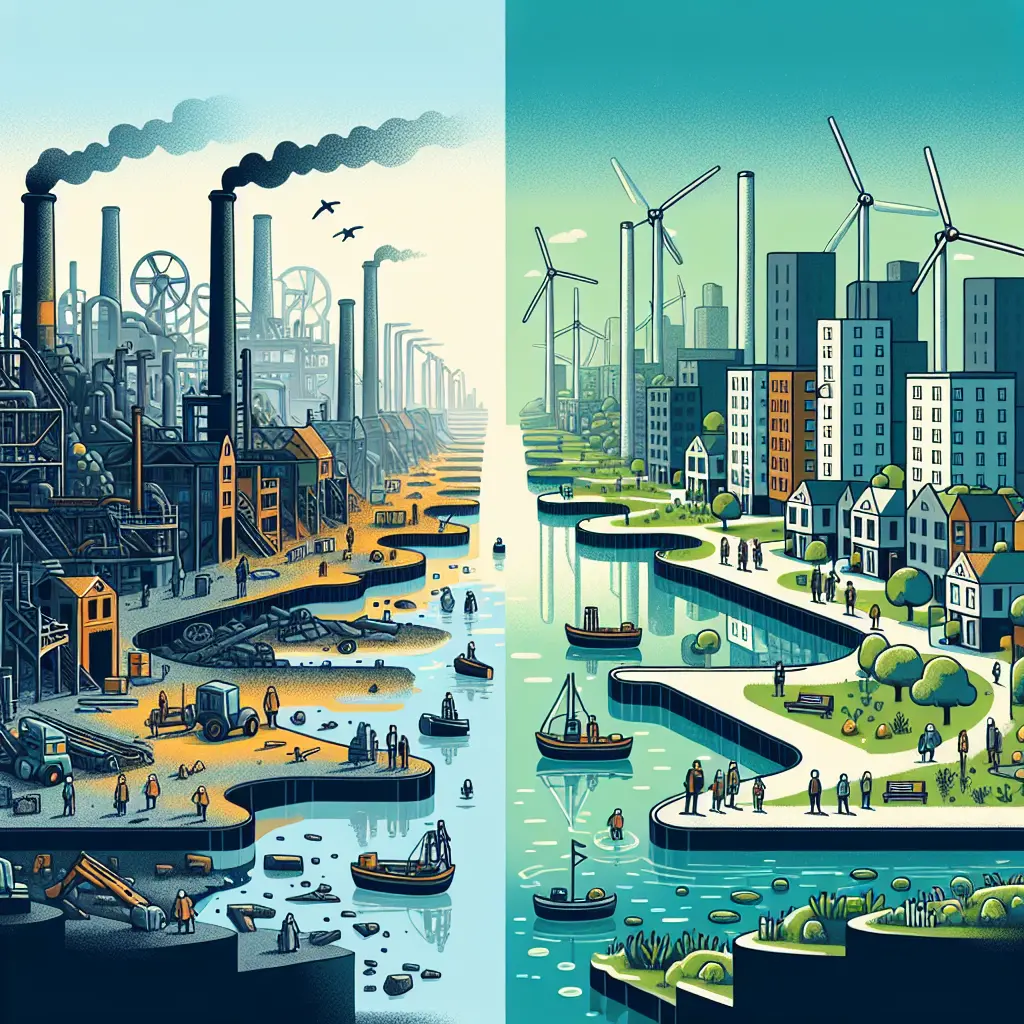
Deindustrialisation refers to the decline of industrial activity in a region, often resulting from technological advancements, globalization, or shifting economic priorities. This process leads to factory closures, job losses, and economic restructuring. Regional change accompanies deindustrialisation as affected areas experience population shifts, urban decay, and the emergence of new industries or service sectors. Communities must adapt to these transformations, often facing significant social and economic challenges during the transition.
Deindustrialisation and regional change
Deindustrialisation refers to the decline of industrial activity in a region, often resulting from technological advancements, globalization, or shifting economic priorities. This process leads to factory closures, job losses, and economic restructuring. Regional change accompanies deindustrialisation as affected areas experience population shifts, urban decay, and the emergence of new industries or service sectors. Communities must adapt to these transformations, often facing significant social and economic challenges during the transition.
💡 Key Takeaways
- Understand what deindustrialisation means and its drivers (technological change, globalization, and shifting economic priorities).
- Identify the short- and long-term consequences for regions, including factory closures, job losses, and economic restructuring.
- Explore how deindustrialisation and regional change manifest in the UK context, with patterns in employment and regional inequalities.
- Examine the social impacts on communities and workers, such as skills gaps, retraining needs, and migration pressures.
- Review policy responses and debates aimed at managing regional change and supporting affected regions and workers.
❓ Frequently Asked Questions
What is deindustrialisation?
The long-term decline of manufacturing and heavy industry in a region, leading to factory closures, job losses, and economic restructuring.
What causes deindustrialisation?
Technological advances (automation), globalization and competition from abroad, and shifts in the economy toward services and knowledge-based activities.
What are typical consequences for UK regions?
Unemployment and wage pressures in former industrial areas, population changes, weakened local economies, and potential strain on local services and government revenue.
How does deindustrialisation relate to regional change and policy in the UK?
It creates regional disparities as some areas diversify while others shrink. Policy responses include levelling up, targeted investment, infrastructure, and retraining programs to rebalance economies.
How can workers and communities respond to deindustrialisation?
Through retraining and upskilling, transitioning to growing sectors (like services or tech), and taking advantage of government and local programs that support workforce mobility and economic diversification.