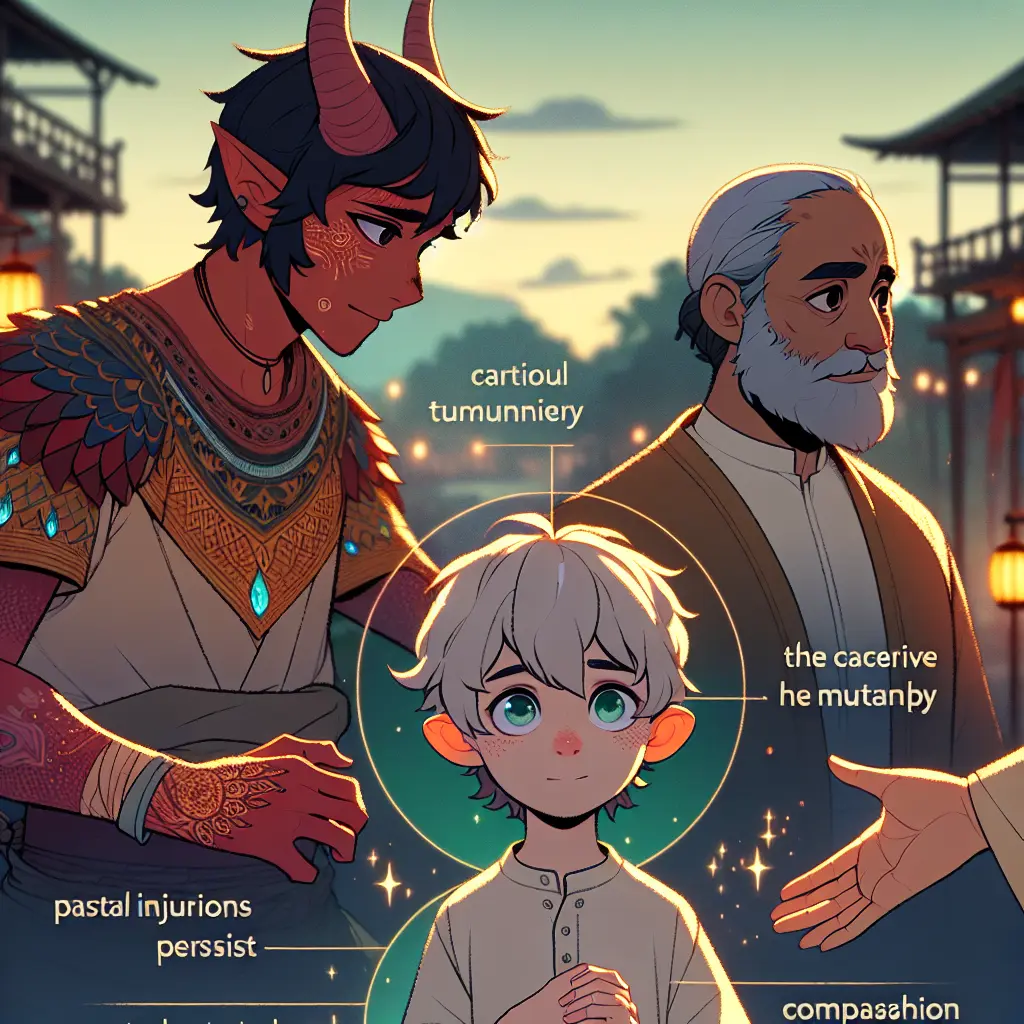
"Demon Slayer: Family, Trauma, and Humanization of Demons" explores the deep bonds between characters, especially familial relationships that drive their motivations. The series delves into the trauma experienced by both demon slayers and demons, showing how pain shapes their actions. By humanizing demons and revealing their tragic pasts, the story blurs the line between good and evil, fostering empathy and understanding for those who are often seen as villains.
Demon Slayer: Family, Trauma, and Humanization of Demons
"Demon Slayer: Family, Trauma, and Humanization of Demons" explores the deep bonds between characters, especially familial relationships that drive their motivations. The series delves into the trauma experienced by both demon slayers and demons, showing how pain shapes their actions. By humanizing demons and revealing their tragic pasts, the story blurs the line between good and evil, fostering empathy and understanding for those who are often seen as villains.
💡 Key Takeaways
- Explain how family bonds motivate Demon Slayer characters and drive their actions.
- Analyze how trauma from battles, loss, and pursuit shapes character decisions and relationships.
- Discuss how demons are humanized through backstories and perspectives that add moral complexity.
- Compare the portrayal of family, trauma, and humanity in the anime and manga to reveal narrative differences.
❓ Frequently Asked Questions
What are the core themes of the article's title?
Family bonds, trauma, and the humanization of demons—elements that shape characters’ motivations and actions.
How is trauma depicted in Demon Slayer as described?
It shows the lasting pain of both demon slayers and demons, influencing decisions, loyalties, and empathy.
What does 'humanizing demons' mean in this context?
Presenting demons with backstories, emotions, and struggles to understand them beyond being pure villains.
How do familial relationships drive character motivation?
They fuel protection, redemption, and growth, often motivating fights and sacrifices.