Density refers to the mass of a material per unit volume, indicating how compact its particles are. Specific gravity is the ratio of a material’s density to the density of water, providing a comparison without units. Porosity measures the proportion of void spaces within a material, affecting its ability to absorb fluids or gases. Understanding these properties is essential in science and engineering for material selection, quality control, and predicting behavior under various conditions.
Density, Specific Gravity, and Porosity Basics+50
Density refers to the mass of a material per unit volume, indicating how compact its particles are. Specific gravity is the ratio of a material’s density to the density of water, providing a comparison without units. Porosity measures the proportion of void spaces within a material, affecting its ability to absorb fluids or gases. Understanding these properties is essential in science and engineering for material selection, quality control, and predicting behavior under various conditions.
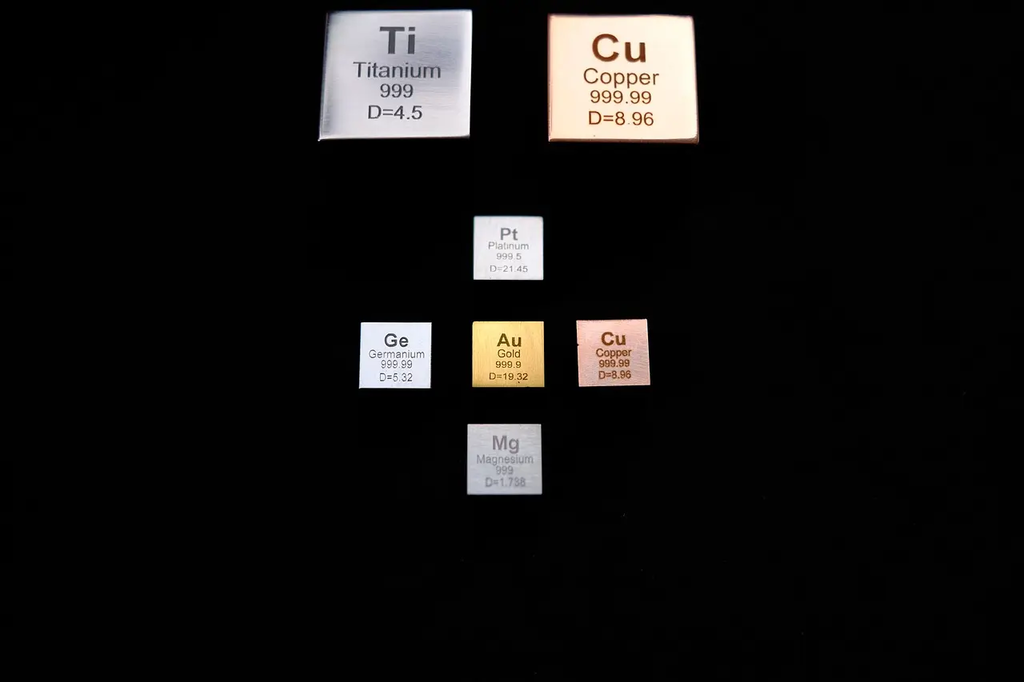
💡 Key Takeaways
- Understand density and specific gravity: density is mass per volume, while specific gravity is the dimensionless ratio of a material’s density to that of water.
- Define porosity as the fraction of a material’s volume that is pore space, and distinguish total porosity from open (connected) porosity.
- Learn how density, SG, and porosity relate in porous materials, using ρb = ρs(1 − n) and SG ≈ ρs/ρwater.
- Know common measurement methods and units: bulk density from mass/volume, particle density from pycnometry, and porosity from porosity calculations.
❓ Frequently Asked Questions
What is density?
Density is the mass per unit volume of a material. It indicates how heavy a material is for its size and is usually measured in g/cm³ or kg/m³.
What does specific gravity mean?
Specific gravity is the ratio of a material's density to the density of water (at a specified temperature). It is dimensionless and shows how dense the material is relative to water.
What is porosity?
Porosity is the fraction of a material's total volume that is empty space (pores). It is typically expressed as a percentage and indicates how much void space is available for fluids or air.
How are density, specific gravity, and porosity related?
Bulk density depends on both particle density and porosity. If ρp is particle density and φ is porosity, then ρbulk ≈ ρp × (1 − φ). Specific gravity is ρp/ρwater, so these concepts together describe how heavy and dense a material is and how much void space it contains.