Dermatology and Aesthetic Medicine Careers involve diagnosing, treating, and preventing skin conditions, as well as enhancing appearance through cosmetic procedures. Professionals in this field may address issues like acne, eczema, and skin cancer, alongside offering treatments such as laser therapy, chemical peels, and injectables. These careers require medical expertise, precision, and an understanding of both health and beauty, providing opportunities in hospitals, clinics, and private practices.
Dermatology & Aesthetic Medicine Careers
Dermatology and Aesthetic Medicine Careers involve diagnosing, treating, and preventing skin conditions, as well as enhancing appearance through cosmetic procedures. Professionals in this field may address issues like acne, eczema, and skin cancer, alongside offering treatments such as laser therapy, chemical peels, and injectables. These careers require medical expertise, precision, and an understanding of both health and beauty, providing opportunities in hospitals, clinics, and private practices.
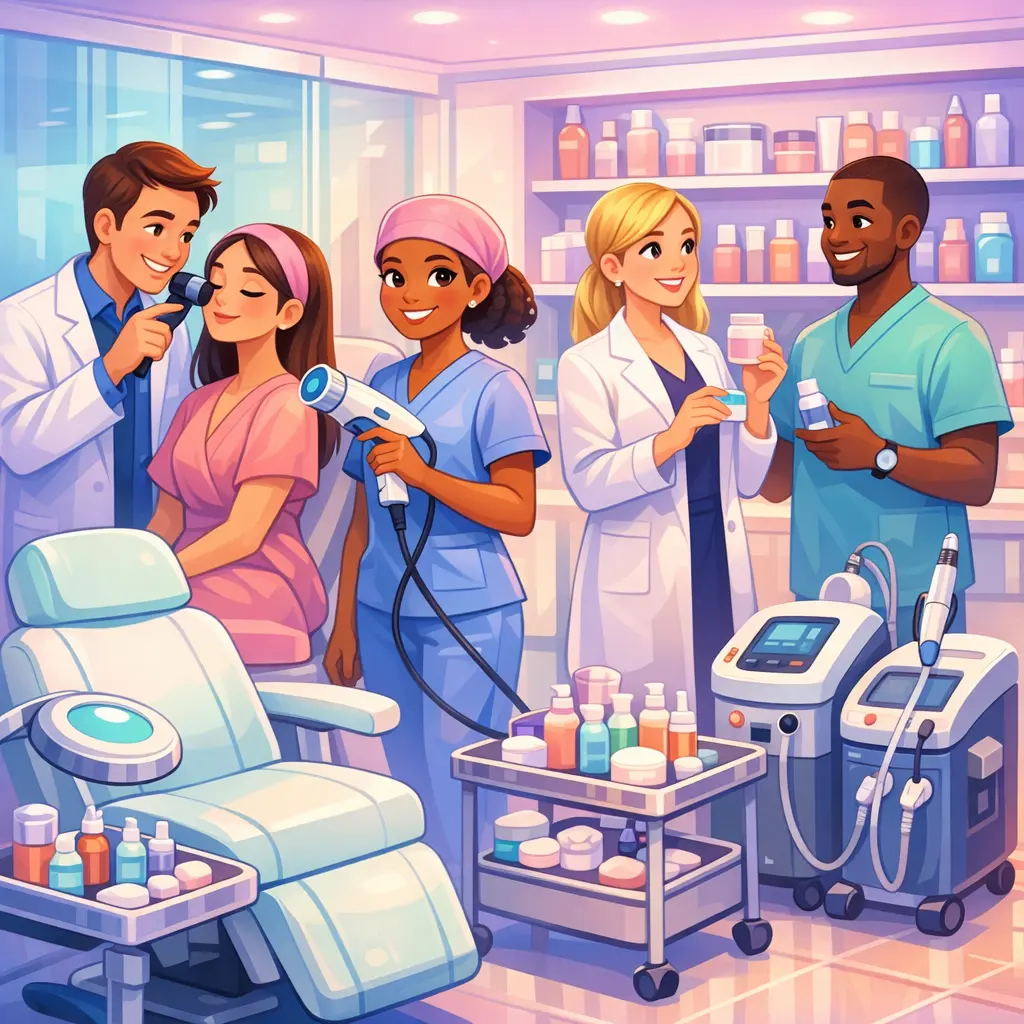
💡 Key Takeaways
- {Explore dermatology and aesthetic medicine career paths, from clinical practice to cosmetic procedures.}
- {Learn the education and certification requirements for common roles (physician, PA/NP, nurse, esthetician) in this field.}
- {Understand typical daily tasks, patient interactions, and clinic workflows in dermatology settings.}
- {Discover current trends and future opportunities, including non-surgical treatments, teledermatology, and private practice options.}
❓ Frequently Asked Questions
What is dermatology?
Dermatology is the medical specialty that focuses on diagnosing and treating conditions of the skin, hair, and nails.
What degree and training are typically required to become a dermatologist?
Typically, you earn a medical degree (MD/DO), complete a dermatology residency, and obtain licensure or board certification as required in your country.
How does dermatology differ from aesthetic medicine?
Dermatology addresses skin health and disease; aesthetic medicine focuses on cosmetic procedures to improve appearance, with overlap in cosmetic dermatology.
What are common career paths in dermatology and aesthetic medicine?
Clinical dermatologist in hospitals or private practice, cosmetic dermatology or laser/aesthetic clinics, research or teaching, and roles in skincare product development or patient cosmetic procedures.