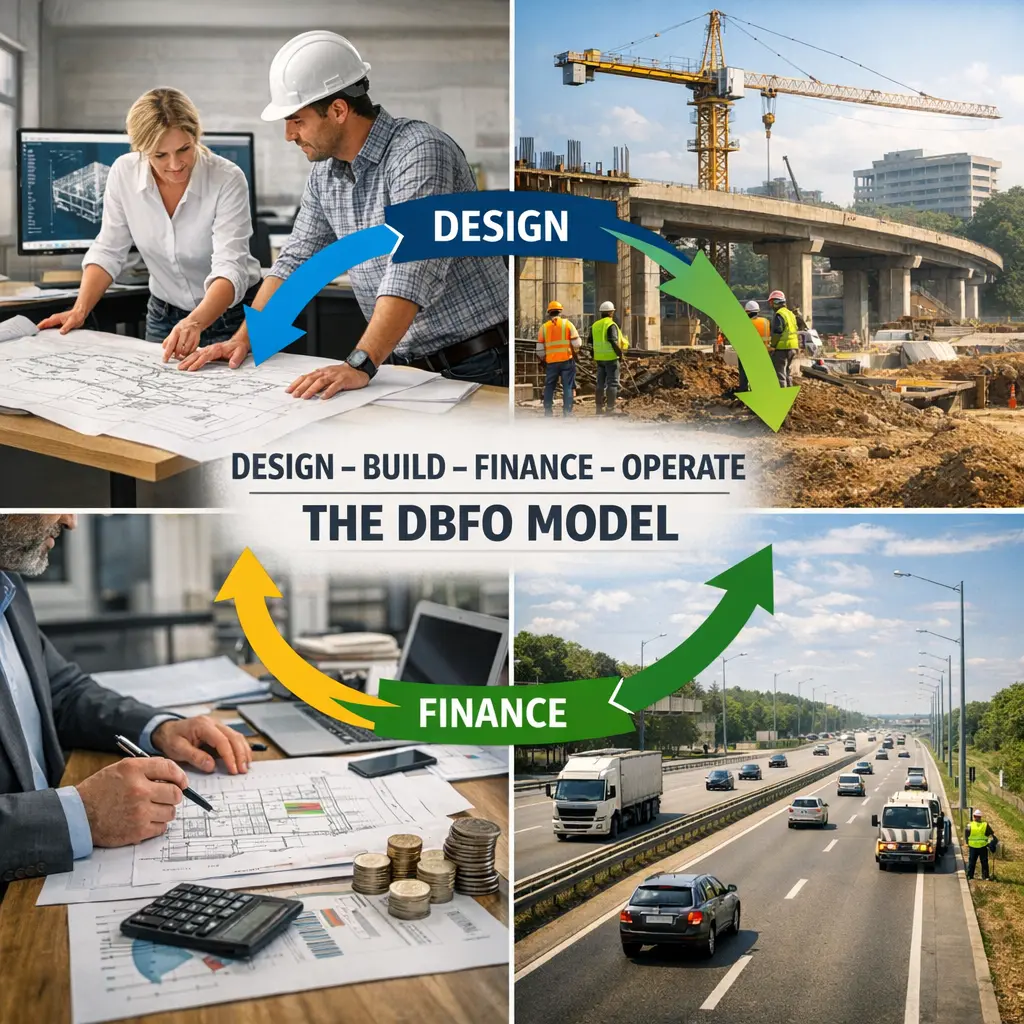
Design-Build-Finance-Operate (DBFO) models are public-private partnership frameworks where a private entity is responsible for designing, constructing, financing, and operating a project, typically infrastructure like roads or hospitals. Under tender and procurement processes, governments invite bids from private consortia, select a partner based on specific criteria, and enter into long-term contracts. This approach transfers significant risks to the private sector, aiming to enhance efficiency, innovation, and cost-effectiveness throughout the project lifecycle.
Design-Build-Finance-Operate (DBFO) Models
Design-Build-Finance-Operate (DBFO) models are public-private partnership frameworks where a private entity is responsible for designing, constructing, financing, and operating a project, typically infrastructure like roads or hospitals. Under tender and procurement processes, governments invite bids from private consortia, select a partner based on specific criteria, and enter into long-term contracts. This approach transfers significant risks to the private sector, aiming to enhance efficiency, innovation, and cost-effectiveness throughout the project lifecycle.
💡 Key Takeaways
- Understand what Design-Build-Finance-Operate (DBFO) means and how it combines design, construction, financing, and operation into a single delivery model.
- Recognize how DBFO transfers risk and responsibility from the public sector to the private partner and what that means for project performance.
- Identify typical contract elements in a DBFO project, including performance standards, payment mechanisms, and lifecycle maintenance responsibilities.
- Evaluate the advantages and potential challenges of DBFO, such as cost efficiency and innovation versus complexity and financing risk.
❓ Frequently Asked Questions
What is a Design-Build-Finance-Operate (DBFO) model?
A public-private procurement approach where a private partner designs, builds, finances, and operates a public facility under a concession, with the public sector paying for performance over the term and ownership typically reverting to the public sector at the end.
How is a DBFO project financed and paid for?
The private partner provides capital (debt/equity) and is repaid during the concession via availability payments from the government or through user fees, depending on the contract, with payments tied to meeting performance standards.
What are the main risks in DBFO and how are they managed?
Key risks include construction, financing, operations, and demand. They are managed by allocating risks to the party best able to control them, using performance-based payments, penalties, warranties, and guarantees.
In which sectors are DBFO models commonly used, and how long do contracts last?
Common in transportation (roads, bridges, rail), water/wastewater, and large public facilities (hospitals, schools); concession periods typically range from 15 to 30+ years.
How does DBFO differ from other public-private partnership models?
DBFO explicitly bundles design, construction, financing, and long-term operation under private control for a defined term, whereas other models may omit one or more phases or have different financing/ownership structures.