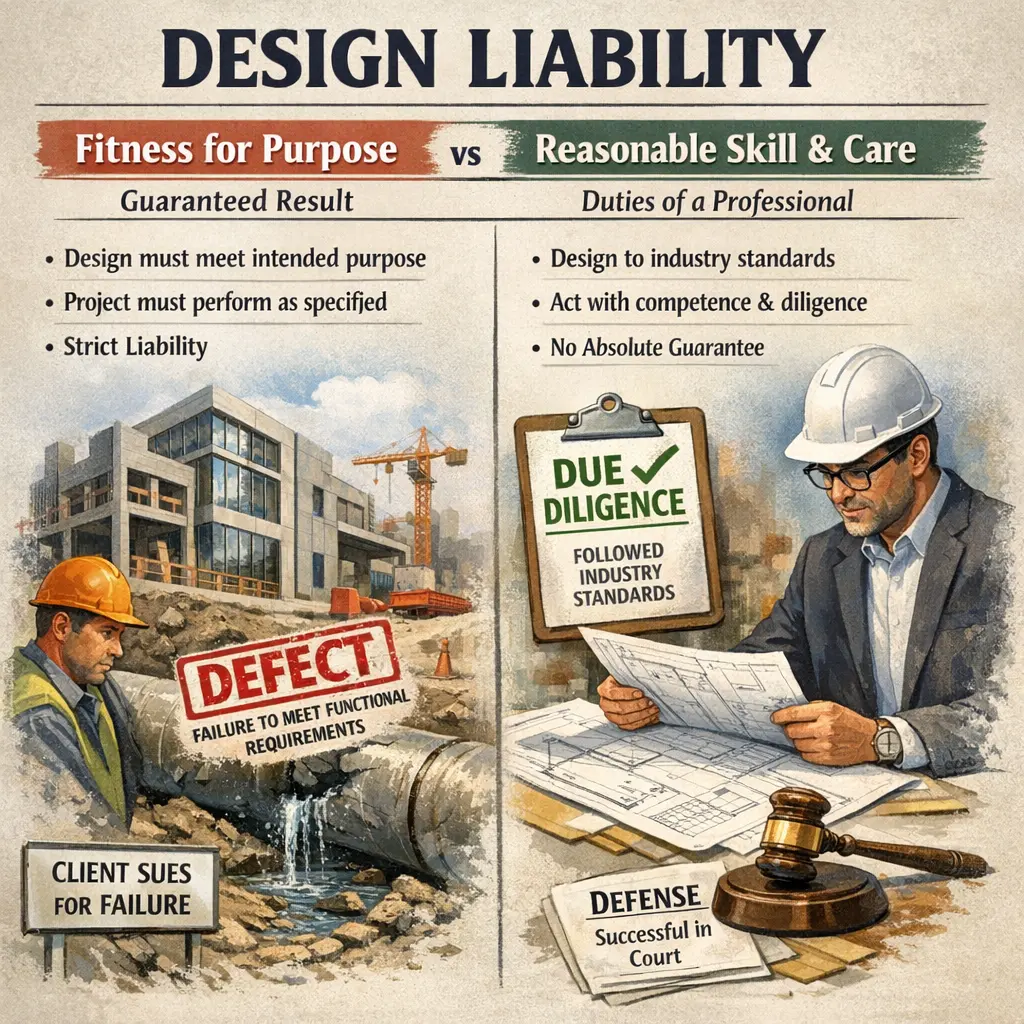
Design liability and fitness for purpose require that a design meets the specific intended function, ensuring it is suitable and safe for its purpose. In contrast, reasonable skill and care obligate designers or professionals to perform their duties to the standard expected of a competent person in their field. Legal and statutory requirements may dictate which standard applies, impacting the extent of responsibility and potential liability for design defects or failures.
Design liability and fitness for purpose vs reasonable skill and care
Design liability and fitness for purpose require that a design meets the specific intended function, ensuring it is suitable and safe for its purpose. In contrast, reasonable skill and care obligate designers or professionals to perform their duties to the standard expected of a competent person in their field. Legal and statutory requirements may dictate which standard applies, impacting the extent of responsibility and potential liability for design defects or failures.
💡 Key Takeaways
- Distinguish between fitness for purpose and reasonable skill and care in design liability and know when each standard applies.
- Identify the duty of care designers owe to users and how breaches are assessed under contract and tort.
- Understand how fitness for purpose claims focus on whether the design meets the intended use, while reasonable skill and care claims assess compliance with professional standards.
- Explore common risk factors and defenses in design liability.
- Learn practical steps to reduce risk, such as clear specifications, testing, documentation, and adherence to standards.
❓ Frequently Asked Questions
What does 'fitness for purpose' mean in design liability?
It means the product or design must be suitable for the specific use the buyer told the seller about or that is reasonably implied by the contract. If it isn’t, there may be a breach of the implied warranty of fitness for purpose.
What does 'reasonable skill and care' mean in design work?
It refers to the standard of care expected from a competent professional designer—using reasonable skill, diligence, and expertise in performing the service. It relates to negligence rather than just whether the product works.
How do fitness for purpose and reasonable skill and care differ?
Fitness for purpose concerns suitability for a stated or implied use (a contractual warranty). Reasonable skill and care concerns the quality of the designer’s workmanship (a negligence standard). They can overlap but are grounded in different legal concepts.
What remedies may be available if a design fails?
Possible remedies include repair, replacement, refund, or damages for losses caused by the failure, depending on the contract and applicable law. Specific remedies vary by jurisdiction and terms.