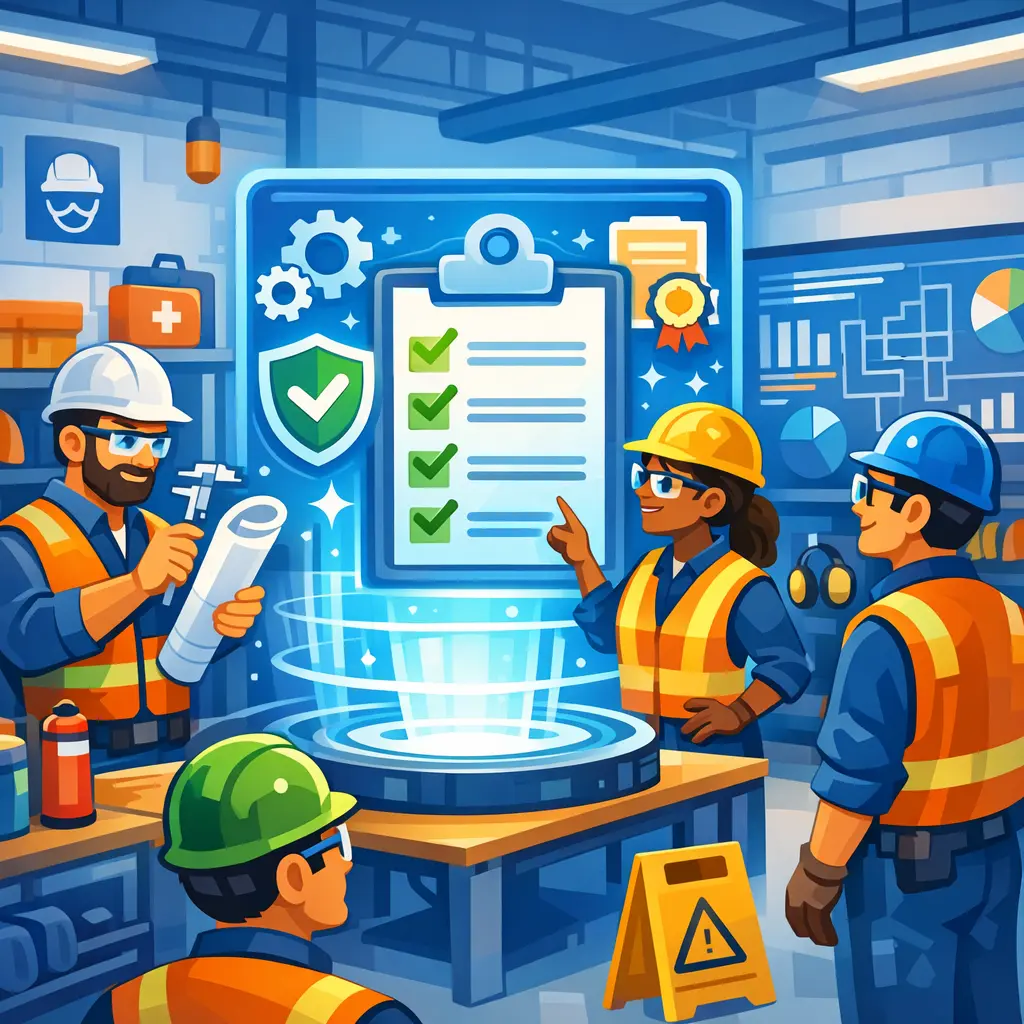
Designing Safety Culture & Organizational Reliability in engineering and technology careers involves creating systems, policies, and mindsets that prioritize safety and minimize risks. Professionals in this field develop frameworks, lead training, and implement best practices to ensure consistent, reliable operations. Their work fosters environments where safety is integral, not optional, and where organizational processes are resilient, reducing the likelihood of accidents and improving overall performance across technical teams and projects.
Designing Safety Culture & Organizational Reliability
Designing Safety Culture & Organizational Reliability in engineering and technology careers involves creating systems, policies, and mindsets that prioritize safety and minimize risks. Professionals in this field develop frameworks, lead training, and implement best practices to ensure consistent, reliable operations. Their work fosters environments where safety is integral, not optional, and where organizational processes are resilient, reducing the likelihood of accidents and improving overall performance across technical teams and projects.

💡 Key Takeaways
- Understand the core elements of a strong safety culture and their link to reliability.
- Discover how leadership, communication, and accountability drive reliable operations.
- Identify practical metrics (leading and lagging indicators) to assess safety culture and reliability.
- Learn to turn incidents into learning through root cause analysis and continuous improvement.
❓ Frequently Asked Questions
What is safety culture?
The shared values, norms, and practices that prioritize safety in daily work, guiding decisions, behaviors, and how risks are managed.
How does organizational reliability relate to safety culture?
Reliability is the ability to operate without failures; in safety, it means consistently preventing incidents through well-designed processes, learning from errors, and a culture that expects safe performance under normal and stressed conditions.
What are the core traits of high-reliability organizations (HROs)?
Persistent concerns about failure, sensitivity to operations, reluctance to oversimplify, deference to expertise, and continuous learning to prevent incidents.
How can leaders foster a stronger safety culture?
Lead by example, set clear safety goals, provide resources, encourage reporting without blame, and integrate safety into routines and performance metrics.
How can safety culture be measured and improved?
Use safety climate surveys, track near-miss reporting, analyze incident investigations, hold regular after-action reviews, and close the loop with timely feedback and learning actions.