The phrase refers to essential tools and processes used by engineers and technologists to develop, test, and deploy software efficiently. "Git" is a version control system for managing code changes. "Containers" (like Docker) package applications and dependencies for consistent deployment across environments. "CI/CD" (Continuous Integration/Continuous Deployment) automates code testing and delivery. Mastery of these tools is crucial for modern engineering and technology careers, ensuring streamlined, reliable, and collaborative software development.
Dev Toolchain: Git, Containers & CI/CD
The phrase refers to essential tools and processes used by engineers and technologists to develop, test, and deploy software efficiently. "Git" is a version control system for managing code changes. "Containers" (like Docker) package applications and dependencies for consistent deployment across environments. "CI/CD" (Continuous Integration/Continuous Deployment) automates code testing and delivery. Mastery of these tools is crucial for modern engineering and technology careers, ensuring streamlined, reliable, and collaborative software development.
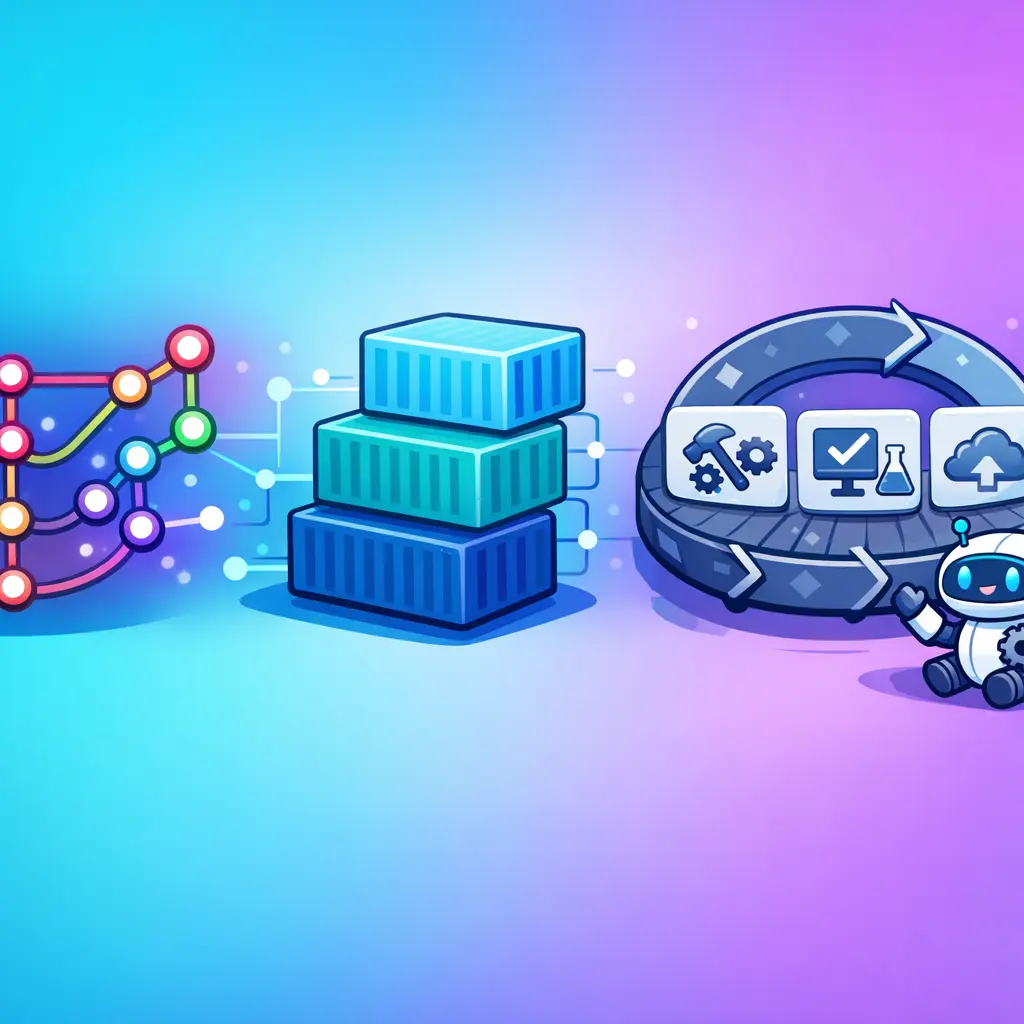
💡 Key Takeaways
- Understand Git basics: repositories, commits, branches, and merges
- Explain containerization with Docker and the difference between images and containers
- Describe how CI/CD pipelines automate build, test, and deployment
- Learn how Git workflows trigger CI/CD pipelines and promote automated deployments
❓ Frequently Asked Questions
What is Git and what is it used for?
Git is a distributed version control system that tracks code changes, supports branching/merging, and enables collaboration through repositories.
What is a container and how does it differ from a virtual machine?
A container packages an app and its dependencies in a lightweight, isolated runtime that shares the host OS kernel; a VM runs a full guest OS on virtualized hardware and is heavier.
What is a Dockerfile and what is a container image?
A Dockerfile is a text file with instructions to build a container image; the image is a portable package containing the app and dependencies that containers run from.
What is CI/CD and what does a typical pipeline do?
CI (continuous integration) automatically builds and tests code on changes; CD (continuous delivery/deployment) automatically deploys to staging or production, enabling faster, more reliable releases.