Diagnostics & Medical Technology refers to the field within healthcare and medicine focused on the development, operation, and application of tools, equipment, and procedures used to detect, monitor, and treat diseases. Careers in this area include laboratory technologists, radiologic technologists, and biomedical engineers, who play vital roles in analyzing patient samples, operating advanced imaging devices, and innovating medical equipment, ultimately supporting accurate diagnoses and effective patient care.
Diagnostics & Medical Technology+50
Diagnostics & Medical Technology refers to the field within healthcare and medicine focused on the development, operation, and application of tools, equipment, and procedures used to detect, monitor, and treat diseases. Careers in this area include laboratory technologists, radiologic technologists, and biomedical engineers, who play vital roles in analyzing patient samples, operating advanced imaging devices, and innovating medical equipment, ultimately supporting accurate diagnoses and effective patient care.
💡 Key Takeaways
- Understand the role of diagnostics in clinical decision-making and patient outcomes.
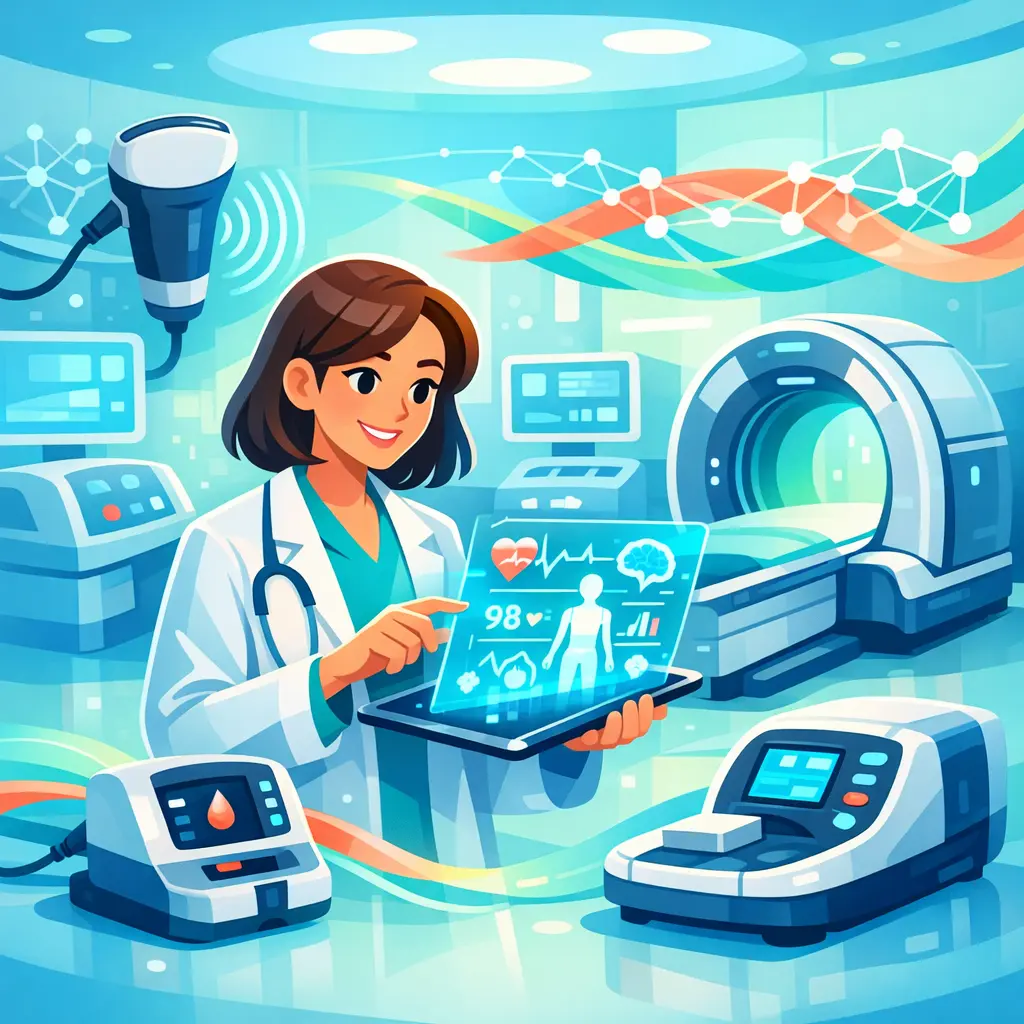
- Identify common diagnostic tools and technologies (imaging, laboratory tests, and point-of-care devices).
- Learn how diagnostic data is interpreted to guide treatment choices.
- Recognize safety, quality, and regulatory considerations for medical diagnostics and devices.
❓ Frequently Asked Questions
What is diagnostics in medicine?
The process of identifying the cause and nature of a patient's problem using history, physical exam, and tests (laboratory tests, imaging, genetics, etc.).
What are common medical imaging modalities used for diagnostics?
X-ray, ultrasound, CT, MRI, and PET scans provide structural and, sometimes, functional information to detect abnormalities.
What is a biomarker in diagnostics?
A measurable biological indicator—such as a protein, gene, or metabolite—that signals disease presence, stage, or response to treatment.
What is point-of-care testing and why is it useful?
Tests performed near or at the patient (e.g., glucose meters, rapid infectious tests) that give quick results to guide immediate care.
How do AI and digital technologies influence diagnostics?
AI analyzes large data sets (images, signals, EHRs) to improve accuracy, speed, and consistency in diagnostic decisions.