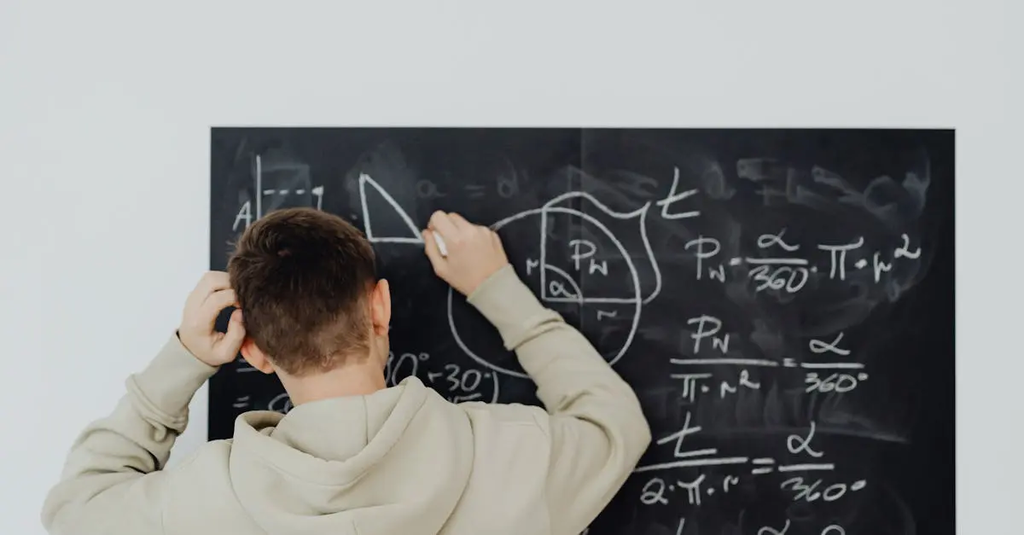
Differential equations are mathematical tools used to describe how quantities change over time or space. In modeling change, they express relationships involving rates of change, enabling scientists and engineers to predict behaviors in physical, biological, or economic systems. By formulating real-world problems as differential equations, one can analyze dynamic processes such as population growth, chemical reactions, or mechanical motion, making them essential for understanding and forecasting complex changes.
Differential Equations in Modeling Change
Differential equations are mathematical tools used to describe how quantities change over time or space. In modeling change, they express relationships involving rates of change, enabling scientists and engineers to predict behaviors in physical, biological, or economic systems. By formulating real-world problems as differential equations, one can analyze dynamic processes such as population growth, chemical reactions, or mechanical motion, making them essential for understanding and forecasting complex changes.
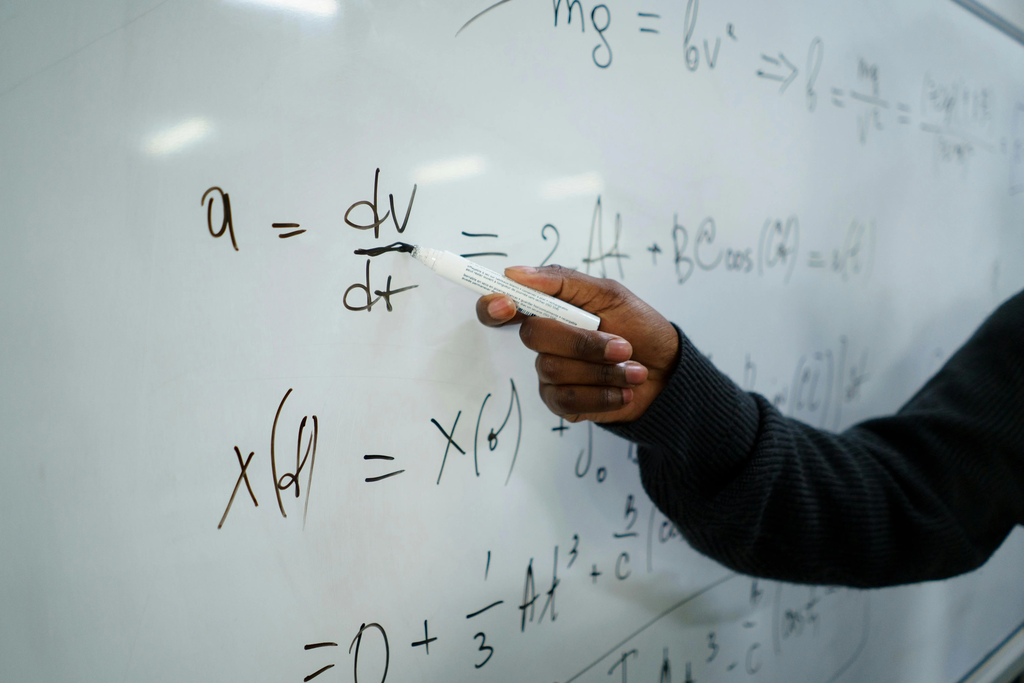
💡 Key Takeaways
- Grasp how differential equations model rates of change and predict system behavior over time or space.
- Learn to translate real-world situations into mathematical models using appropriate initial and boundary conditions.
- Master common solution techniques for different types of differential equations and know when to apply them.
- Interpret results to understand stability, long-term trends, and how parameters influence predictions.
❓ Frequently Asked Questions
What is a differential equation?
An equation that relates a function to its derivatives, describing how a quantity changes with respect to another variable, usually time or space.
How do differential equations model change over time?
They use rates of change (derivatives) to connect current values to future behavior, enabling predictions of a system's evolution.
What is the difference between ODEs and PDEs?
ODEs involve derivatives with respect to a single variable (often time); PDEs involve derivatives with respect to multiple variables (time and space).
What is an initial condition?
The starting value of the unknown function at a given point, which allows a unique solution to the differential equation.
What is a steady state (equilibrium) in a differential equation model?
A state where the rate of change is zero, so the system's quantities stop evolving unless external inputs change.