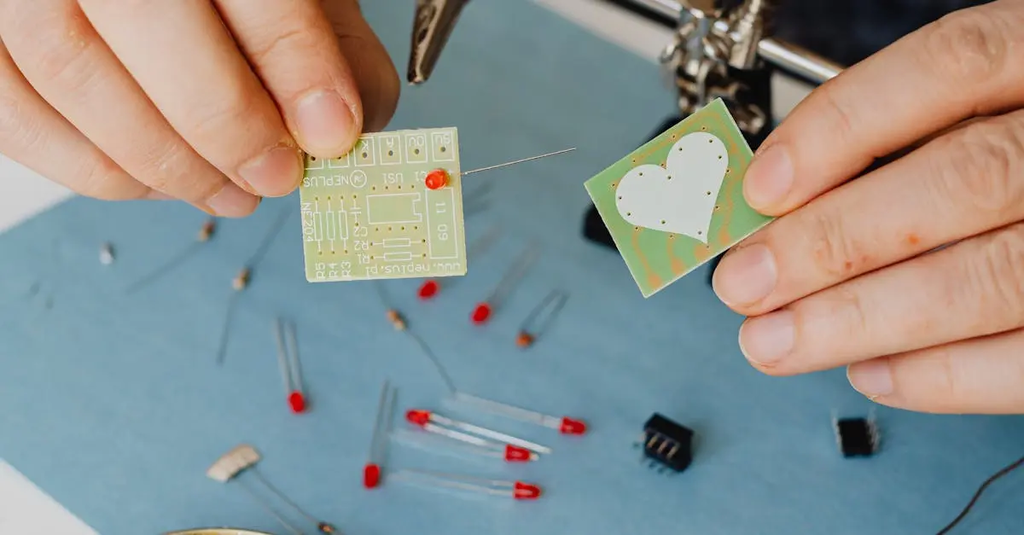
Diodes and rectifiers are essential electronic components used to control the direction of current flow in circuits. A diode allows current to pass in one direction only, acting as a one-way valve. Rectifiers, which are made from diodes, convert alternating current (AC) into direct current (DC), making them crucial in power supply systems. These components are widely used in electronic devices, signal demodulation, and voltage regulation applications.
Diodes & Rectifiers
Diodes and rectifiers are essential electronic components used to control the direction of current flow in circuits. A diode allows current to pass in one direction only, acting as a one-way valve. Rectifiers, which are made from diodes, convert alternating current (AC) into direct current (DC), making them crucial in power supply systems. These components are widely used in electronic devices, signal demodulation, and voltage regulation applications.
💡 Key Takeaways
- Understand what a diode is and how it conducts in one direction (forward bias) and blocks in the opposite direction (reverse bias).
- Learn how rectification converts AC to DC using diode bridges and half-wave/full-wave configurations.
- Compare half-wave and full-wave rectification and their efficiency, ripple, and component counts.
- Identify common diode types (e.g., standard PN junction, Schottky) and how forward voltage drop affects the output.
- Recognize basic smoothing concepts with diodes, such as using capacitors to reduce ripple and produce steadier DC output.
❓ Frequently Asked Questions
What is a diode and what does it do?
A diode is a two-terminal semiconductor device that conducts current mainly in one direction, acting as a one-way valve. In power circuits, it is used to rectify AC into DC.
What does forward bias mean in a diode?
Forward bias means the anode is more positive than the cathode, lowering the barrier and allowing current to flow. Silicon diodes typically turn on around 0.6–0.7 V; Schottky diodes turn on at lower voltages.
What is rectification and how do half-wave, full-wave, and bridge rectifiers differ?
Rectification converts AC to pulsating DC. A half-wave rectifier uses one diode; a full-wave rectifier uses two diodes (with a center-tapped transformer) or a bridge uses four diodes to convert both halves of the AC cycle.
What is peak inverse voltage (PIV) and why is it important?
PIV is the maximum reverse voltage a diode must withstand. Choose a diode with a PIV rating higher than the input voltage’s peak to prevent reverse breakdown.
Why is a smoothing capacitor often used after a rectifier?
A smoothing capacitor charges at the peaks and discharges between peaks, reducing ripple and producing a steadier DC output.