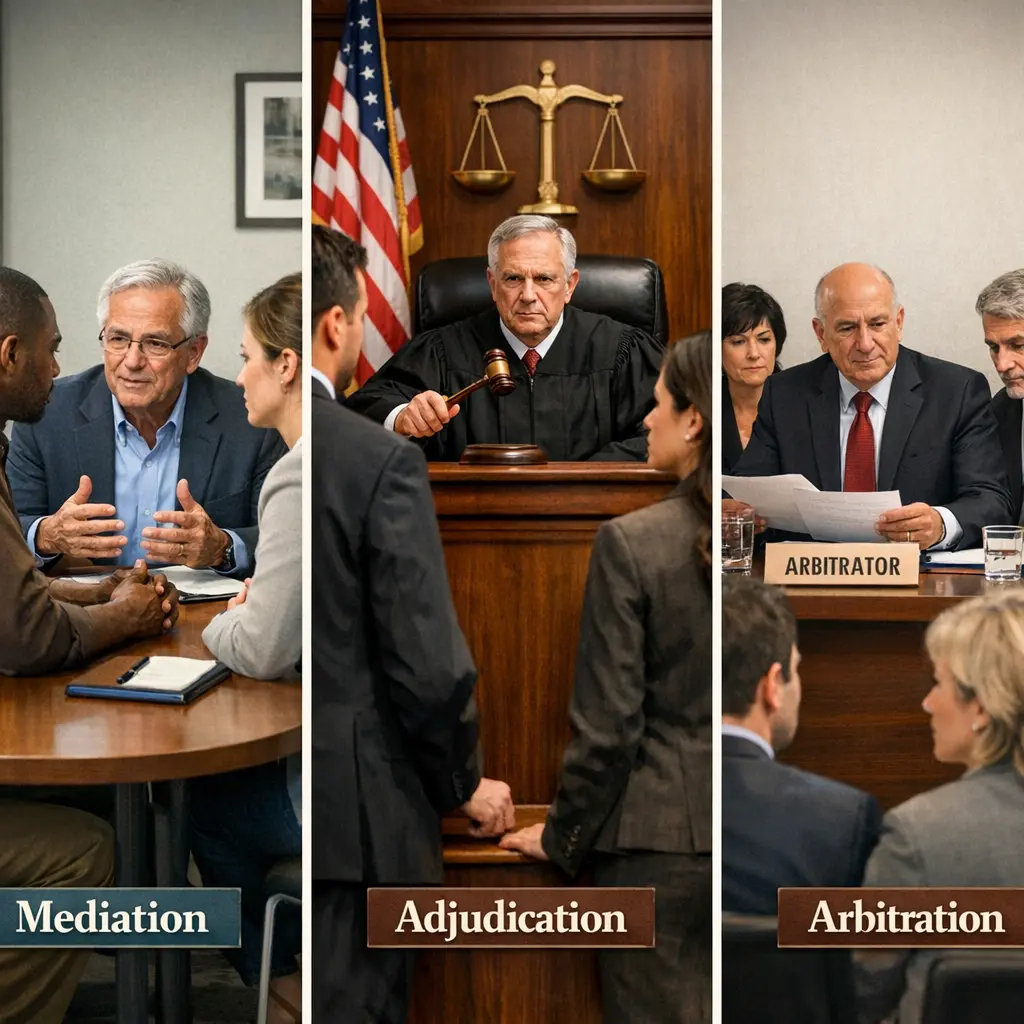
Dispute resolution in tender and procurement involves methods like mediation, adjudication, and arbitration to address conflicts between parties. Mediation is a voluntary, non-binding process where a neutral third party facilitates negotiation. Adjudication is a quicker, interim decision-making process, often used in construction, providing a temporarily binding outcome. Arbitration is a formal, binding process where an independent arbitrator issues a final decision. These methods aim to resolve disputes efficiently without lengthy litigation.
Dispute Resolution: Mediation, Adjudication, Arbitration
Dispute resolution in tender and procurement involves methods like mediation, adjudication, and arbitration to address conflicts between parties. Mediation is a voluntary, non-binding process where a neutral third party facilitates negotiation. Adjudication is a quicker, interim decision-making process, often used in construction, providing a temporarily binding outcome. Arbitration is a formal, binding process where an independent arbitrator issues a final decision. These methods aim to resolve disputes efficiently without lengthy litigation.
💡 Key Takeaways
- Distinguish mediation, adjudication, and arbitration and know when each method is most appropriate.
- Learn the typical steps and timeline for each dispute-resolution method—from initiation to resolution.
- Understand the nature of outcomes: voluntary settlements in mediation, decisions in adjudication, and binding arbitration awards.
- Identify the pros and cons of each method, including costs, speed, confidentiality, control over the process, and finality.
❓ Frequently Asked Questions
What is mediation?
A voluntary, non-binding process in which a neutral mediator helps the parties communicate, identify interests, and reach a mutually acceptable settlement.
What is arbitration?
A private, formal process where an impartial arbitrator hears evidence and issues a binding decision (an arbitral award) that resolves the dispute and can be enforced in court.
What is adjudication?
A rapid, interim decision by a neutral adjudicator to keep a project moving; the decision is typically binding for a limited period and can be revisited by later arbitration or court proceedings for final resolution.
How do mediation, adjudication, and arbitration differ?
Mediation is voluntary and non-binding unless a settlement is reached; arbitration yields a binding, enforceable award; adjudication provides a fast, interim decision to maintain progress, often followed by final resolution.