Diving cylinders and regulators are essential equipment for underwater breathing in scuba diving. The diving cylinder stores compressed air or other breathing gases, providing a portable supply for the diver. The regulator attaches to the cylinder and reduces the high-pressure air to ambient pressure, allowing the diver to breathe comfortably and safely underwater. Together, these devices enable divers to explore beneath the surface for extended periods while maintaining a reliable air supply.
Diving Cylinders and Regulators
Diving cylinders and regulators are essential equipment for underwater breathing in scuba diving. The diving cylinder stores compressed air or other breathing gases, providing a portable supply for the diver. The regulator attaches to the cylinder and reduces the high-pressure air to ambient pressure, allowing the diver to breathe comfortably and safely underwater. Together, these devices enable divers to explore beneath the surface for extended periods while maintaining a reliable air supply.
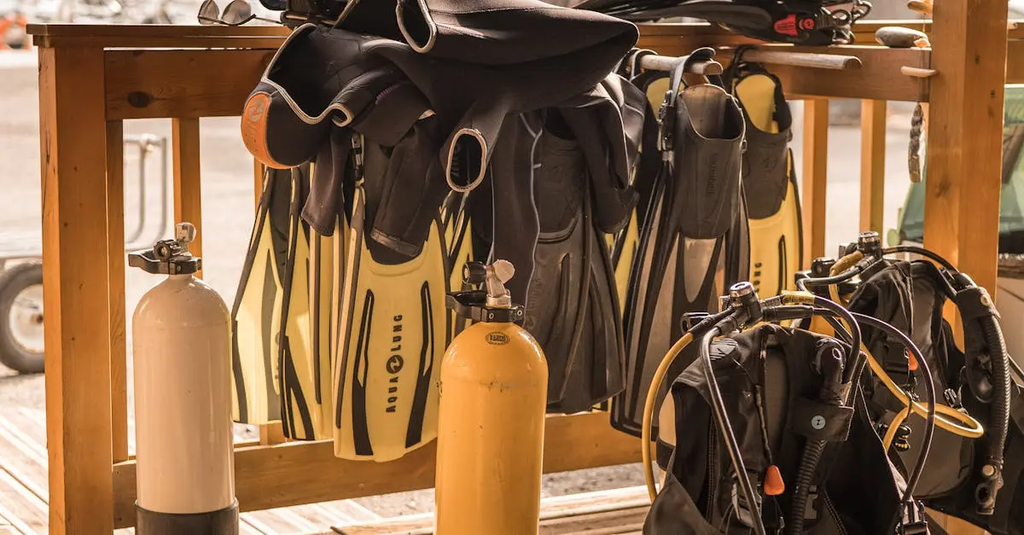
💡 Key Takeaways
- Understand how diving cylinders store compressed air and how gas duration depends on cylinder size, pressure, and breathing rate.
- Explain how a regulator reduces cylinder pressure to ambient pressure for safe breathing at depth.
- Identify common types of cylinders and regulators used in adventure diving, including material differences and safety considerations.
- Learn the essential pre-dive checks and basic maintenance steps for cylinders and regulators to prevent equipment failure.
❓ Frequently Asked Questions
What is a diving cylinder and what does it store?
A diving cylinder is a high-pressure tank that stores breathing gas (usually compressed air) for scuba divers. It provides a portable supply that, with a regulator, lets you breathe underwater.
How does a scuba regulator work to deliver air at ambient pressure?
The regulator has a first stage that reduces the cylinder’s high pressure to an intermediate pressure, and a second stage (demand valve) that delivers air on demand at the surrounding ambient pressure when you inhale.
What are common cylinder materials and gas types used in recreational diving?
Cylinders are typically made of aluminum or steel. Gas options include air for standard dives and nitrox (enriched air) for longer bottom times; other mixes exist for advanced diving and require specialized training.
What safety checks should be performed before a dive with cylinders and regulators?
Ensure the cylinder has an up-to-date hydrostatic test and service tag, inspect for damage, verify regulators breathe freely without leaks, check O-rings and connections, and confirm the valve is closed properly before mounting.