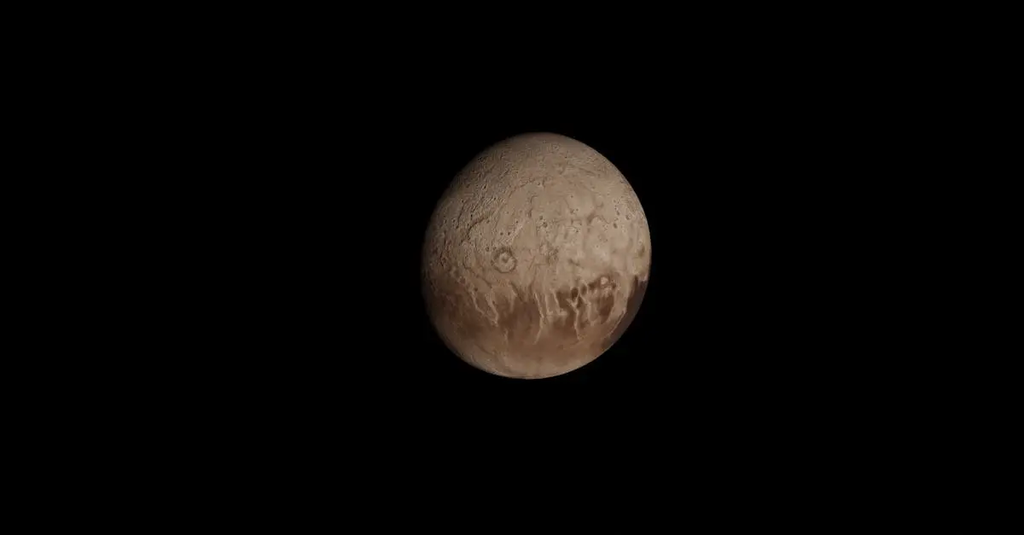
Dwarf planets are celestial bodies in the solar system that orbit the Sun and have enough mass for their gravity to form a nearly round shape. Unlike full-fledged planets, they have not cleared their orbital path of other debris. Notable examples include Pluto, Eris, and Ceres. Dwarf planets typically reside in the Kuiper Belt or asteroid belt, and while they share some features with planets, their inability to dominate their orbits sets them apart.
Dwarf Planet Characteristics
Dwarf planets are celestial bodies in the solar system that orbit the Sun and have enough mass for their gravity to form a nearly round shape. Unlike full-fledged planets, they have not cleared their orbital path of other debris. Notable examples include Pluto, Eris, and Ceres. Dwarf planets typically reside in the Kuiper Belt or asteroid belt, and while they share some features with planets, their inability to dominate their orbits sets them apart.
💡 Key Takeaways
- Understand the official criteria for a dwarf planet: it orbits the Sun, is nearly spherical in shape, and has not cleared its orbital neighborhood.
- Differentiate dwarf planets from full planets using examples such as Ceres (in the asteroid belt) and Pluto (in the Kuiper Belt).
- Recognize common features: many dwarf planets are icy bodies with diverse surfaces, and some may have thin atmospheres.
- Learn how scientists study dwarf planets with telescopes and spacecraft to learn about their size, composition, and geology.
❓ Frequently Asked Questions
What defines a dwarf planet?
A dwarf planet orbits the Sun, has enough mass to become nearly round (hydrostatic equilibrium), and has not cleared its orbital neighborhood of other debris; it is not a moon.
What does it mean to 'clear its orbital neighborhood'?
It means the body is not gravitationally dominant in its path; many other objects share or cross that region, so the body hasn’t cleared away or absorbed them.
What is hydrostatic equilibrium, and why does it matter for dwarf planets?
Hydrostatic equilibrium means gravity shapes the body into a rounded, near-spherical form. Dwarf planets are massive enough for this shape, unlike small irregular bodies.
Where are most dwarf planets found?
They’re usually far from the Sun—in the Kuiper Belt or scattered disc (e.g., Pluto, Eris, Haumea, Makemake). Ceres is in the asteroid belt.
Can dwarf planets have moons?
Yes. Dwarf planets can have one or more moons; for example, Pluto has moons such as Charon.